foundyou.online - Directory for New Media Art
Open Filters

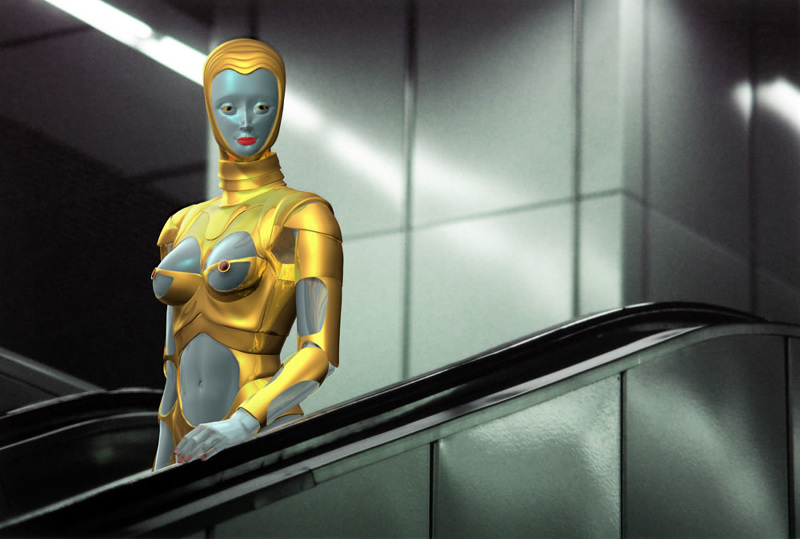
Claudia Hart (born 1955 in New York, NY) is an artist and associate professor in the Department of Film, Video, New Media, Animation at the School of the Art Institute of Chicago, Chicago, Illinois. She is represented by bitforms gallery, New York. Hart has been active as an artist, curator and critic since 1988. She creates virtual representations that take the form of 3D imagery integrated into photography, animated loops and multi-channel animation installations. [1]

Hart's work applies a feminist perspective to a discussion of digital technology and a critique of the media. Much of her work attempts to introduce women into a male-dominated technological culture and condemn the violent impulses of a masculine digital production environment. In her artist statement, Hart says, "By creating virtual images that are sensual but not pornographic within mechanized, clockwork depictions of the natural, I try to subvert earlier dichotomies of woman and nature pitted against a civilized, "scientific" and masculine world of technology. In my own way, I am staging a romantic rebellion against technocratic and bureaucratic culture." [1]

https://player.vimeo.com/video/274701383

From the artist's website:

Stasis in Flux is an experimentation of animation's potential to mimic the real. I began by building a functional zoetrope within 3D space to test if persistence of vision is replicated accurately. From this experiment I realized 3D animations potential to go beyond the physical limits of the real, allowing me to coordinate movements between both the camera and the zoetrope to replicate much more advanced cinematic techniques. The result is a carefully choreographed animation that represents the ebb and flow of the creative process. [1]

CYFEST is one of the largest international media art festivals, it was founded in St. Petersburg in 2007 by independent artists and curators. The festival promotes the emergence of new forms of art and high technology interactions, developing professional connections between artists, curators, engineers and programmers around the world and exposing wide audiences to the works in the field of robotics, video art, sound art and net art.

Super Mario MovieSuper Mario MovieSuper Mario Movie
https://www.youtube.com/embed/oDDCoa71-yY
https://www.youtube.com/embed/JN-WCA5-Qxs

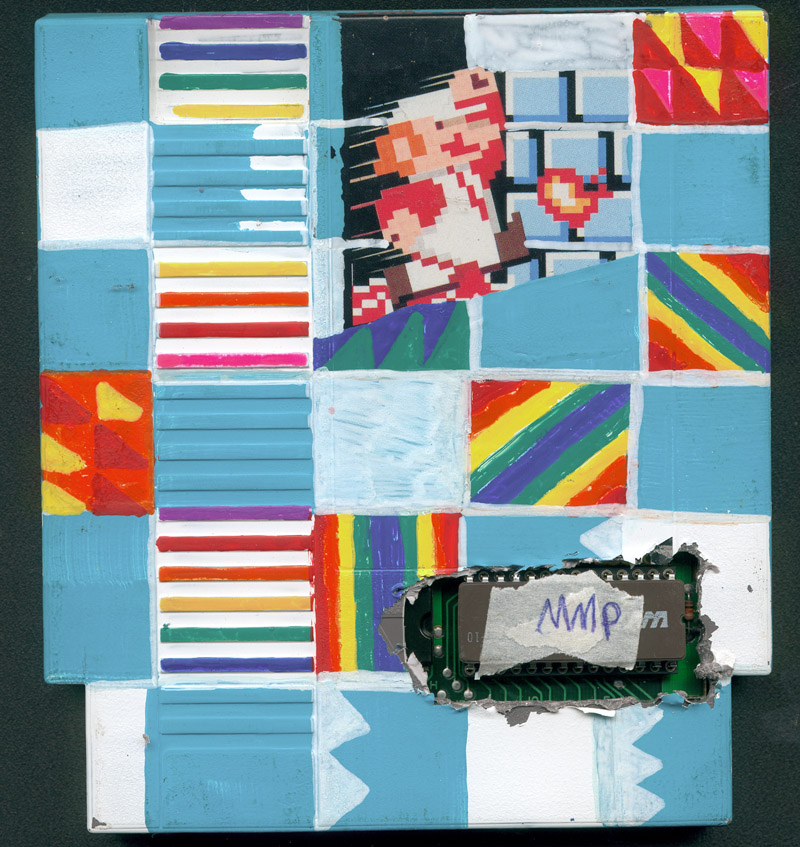
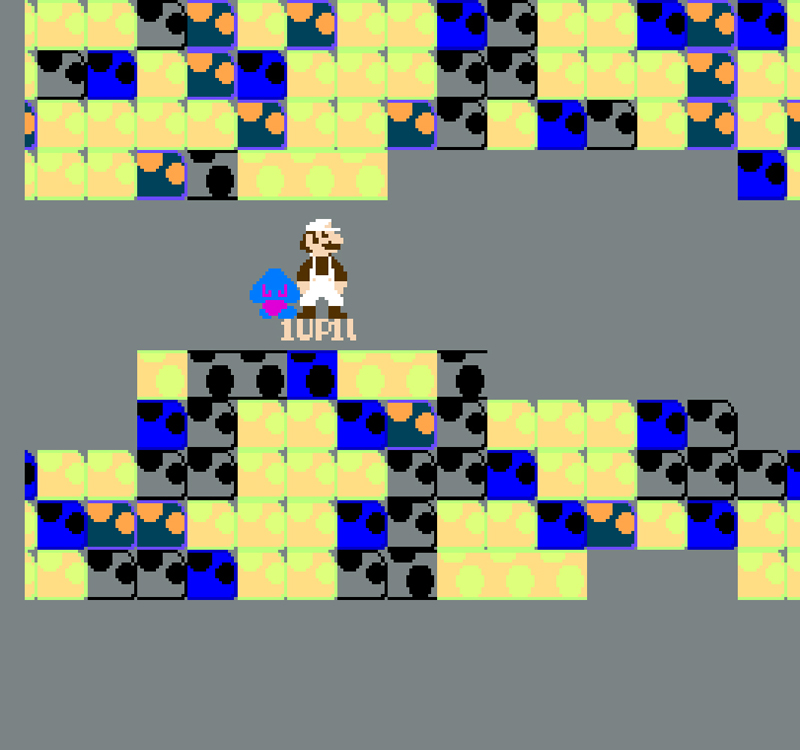
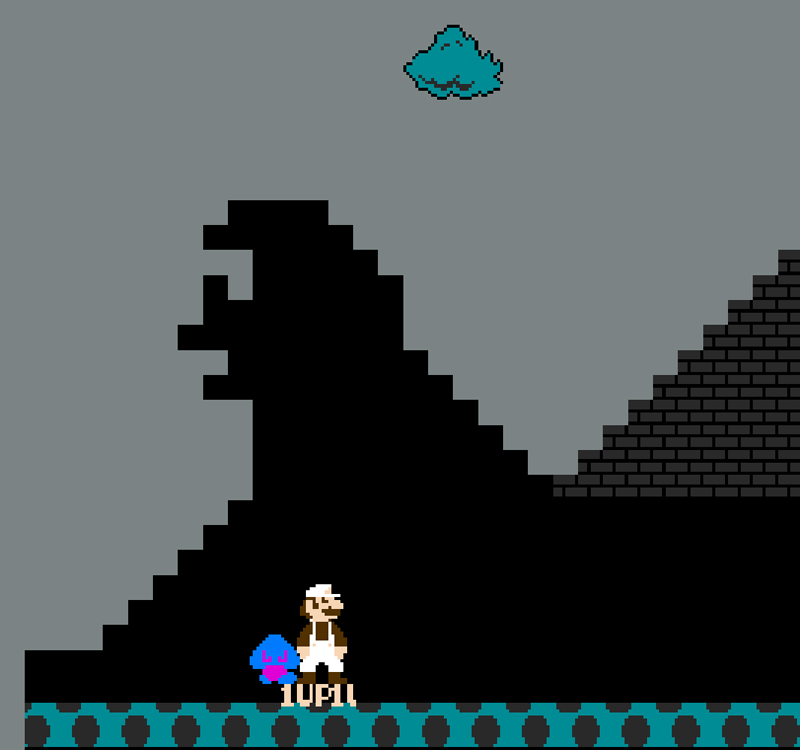
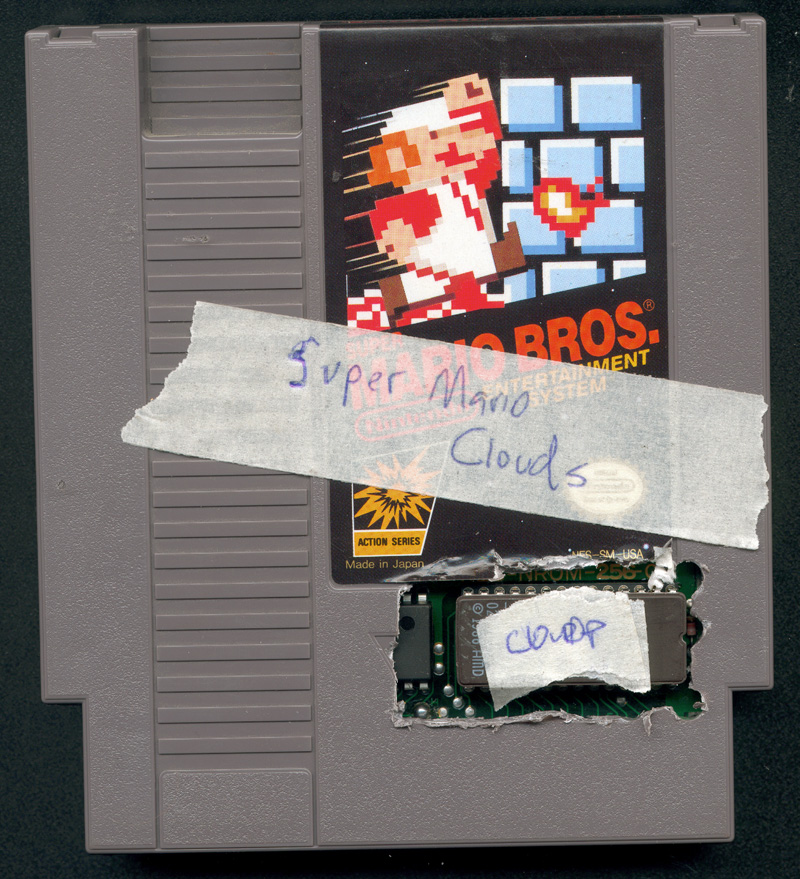
Super Mario Movie is a reprogrammed 8-bit Nintendo game cartridge revolving around the famed Italian plumber Mario who first made his appearance in 1981 as a character in the videogame ‘Donkey Kong’. Since Mario’s rise to fame he has become the main character in approximately 200 different videogames, making him somewhat of a pop-culture icon. In this work Arcangel hacks the game cartridge to produce a 15-minute movie showing how Mario’s life has spiralled out of control as a result of the gradual decay of his outdated technology. In the opening scene we read the following text; “as a video game grows old its content and internal logic deteriorate. For a character caught in this breakdown problems affect every area of life.” Whilst being partly satirical, Arcangel is also describing the natural degradation process that eventually affects all information storage devices and the short life-span that these technologies experience. This is partly due to the rapidly evolving pace of technological advancement and as such can be read as a comment on our insatiable hunger for constantly new and updated technology. [1]

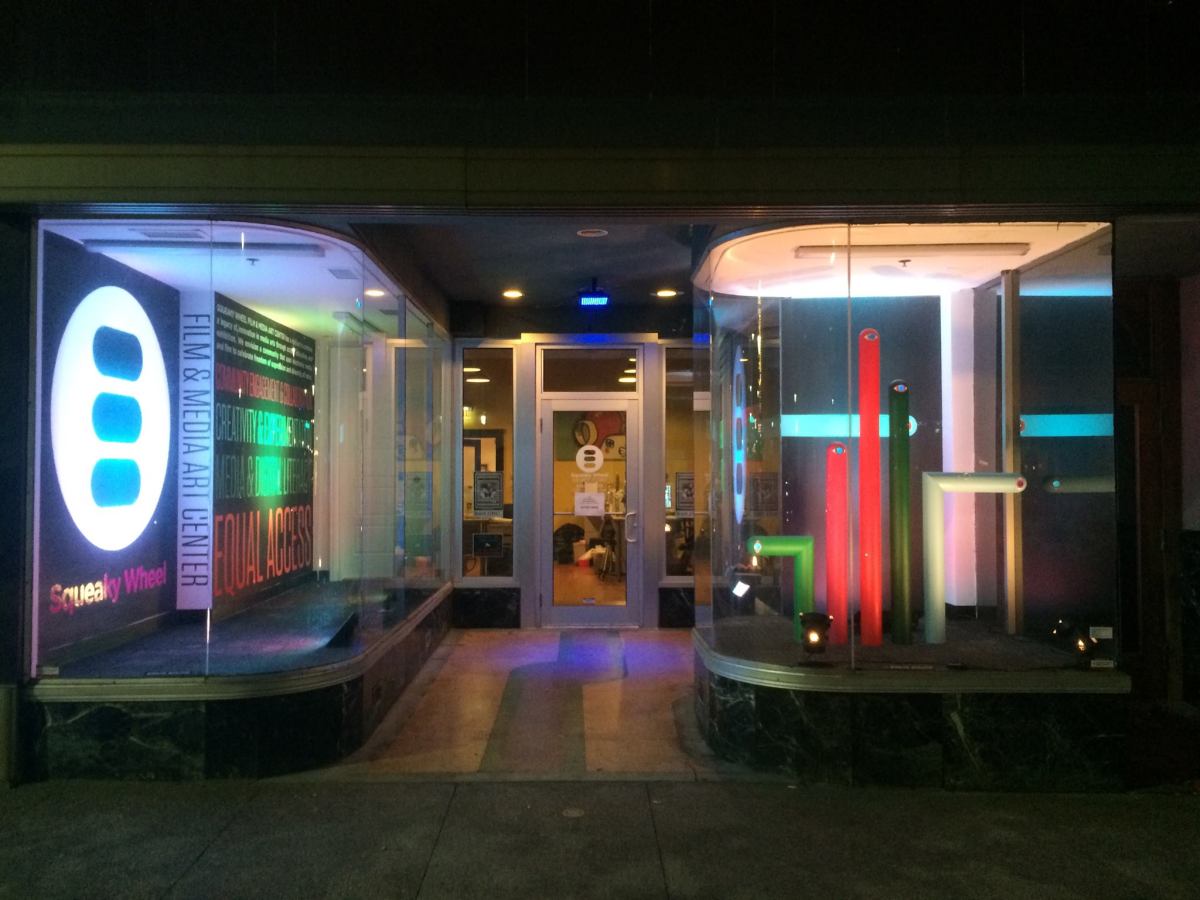
Squeaky Wheel Film & Media Art Center is an artist-run, non-profit, media arts center based in Buffalo, New York. Founded in 1985, the organization provides the Western New York region with low-cost media equipment rentals, media arts education for youth and adults, residencies for artists and researchers, and exhibitions, screenings, and other public programming. [1]

Squeaky Wheel Film & Media Art Center has a mission to continue a legacy of innovation in media arts through access, education, and exhibition. We envision a community that uses electronic media and film to celebrate freedom of expression and diversity of voice.

Established in 1985, Squeaky Wheel Film & Media Art Center is the only organization in Western NY to offer education, equipment access, and exhibition programming dedicated to exploring film & digital media arts. Squeaky Wheel’s reputation in the media arts field continues to grow nationally and internationally. We have won awards for Best Workshops of Any Kind (2010); Best Curation (2012); Best Youth Workshops (2013) from regional publication, Buffalo Spree Magazine of Western New York. In 2014, the Arts Services Initiative of Western New York nominated Squeaky Wheel “Cultural Organization of the Year”. [2]

And/Or Gallery is a contemporary gallery in Pasadena with an emphasis on new media exhibitions and editions.

The gallery originally operated in Dallas, Texas from 2006 to 2009 and has been written about in Art Forum and ARTnews, and was featured in the New Museum/MIT Press anthology Mass Effect: Art and the Internet in the Twenty-First Century. [1]

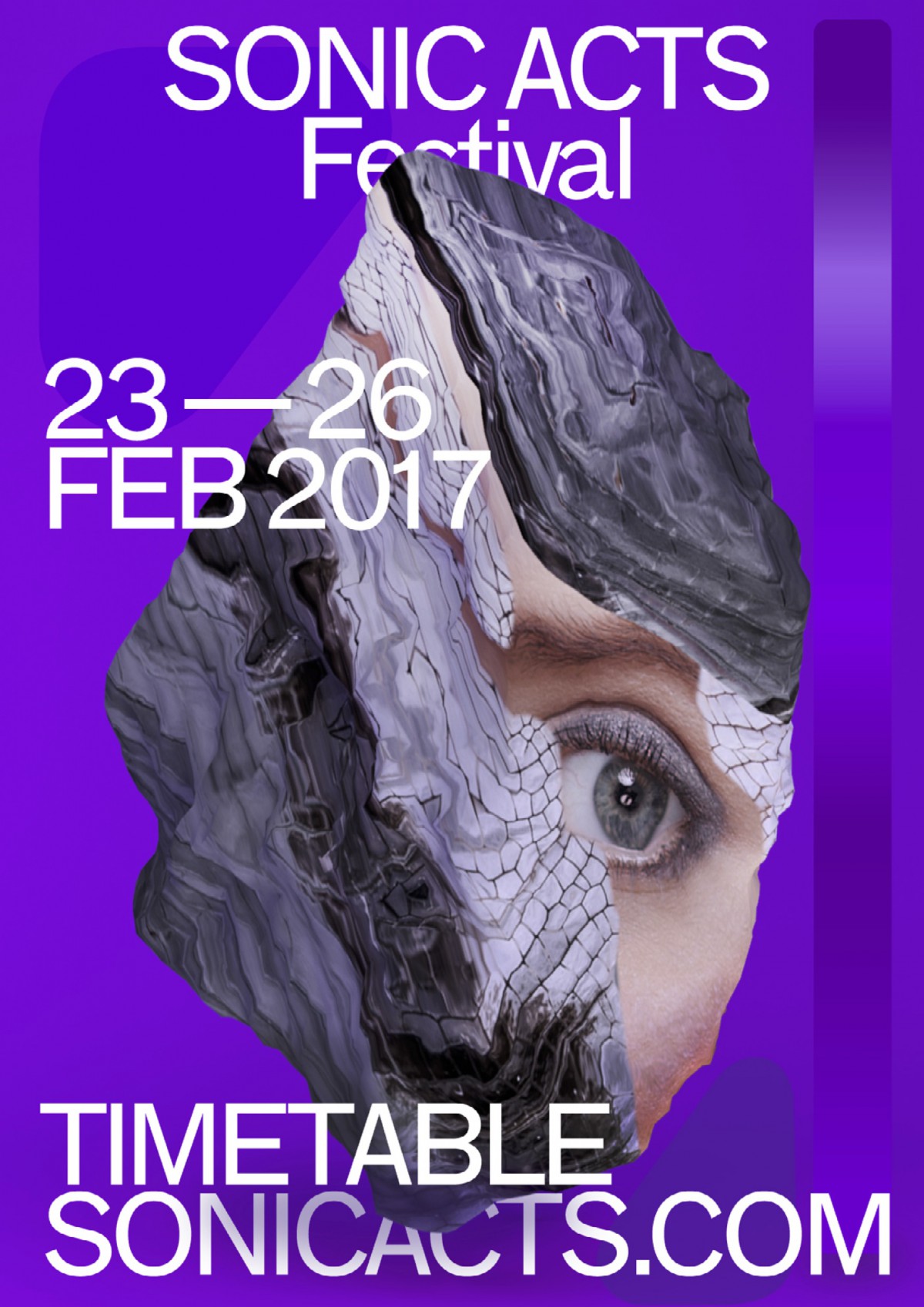
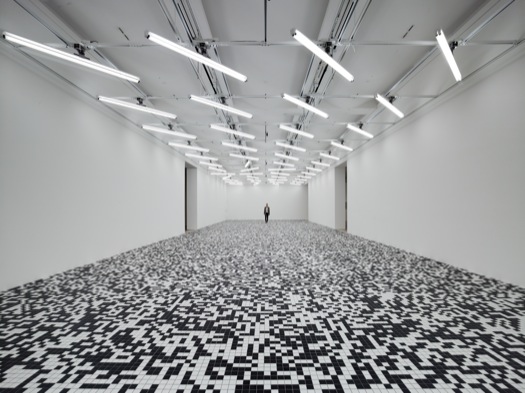
Sonic Acts was founded in 1994. Over the years, it has established itself as a thematic festival with a strong focus on contemporary and historical developments at the intersections of art, technology, music and science. Each festival edition explores the chosen theme by means of an international conference, a wide range of concerts and performances, exhibitions and screenings, and embraces a broad spectrum of fields, practices and disciplines.

Sonic Acts has developed into an organisation for the research, development and production of works at the intersection of art, science and theory. It also commissions and co-produces new works, often in collaboration with international festivals, arts organisations, funders and other partners. Recent projects include the three-year art, research & commissioning project Dark Ecology, predominantly taking place in the Arctic region, and its globally touring programme Vertical Cinema. [1]

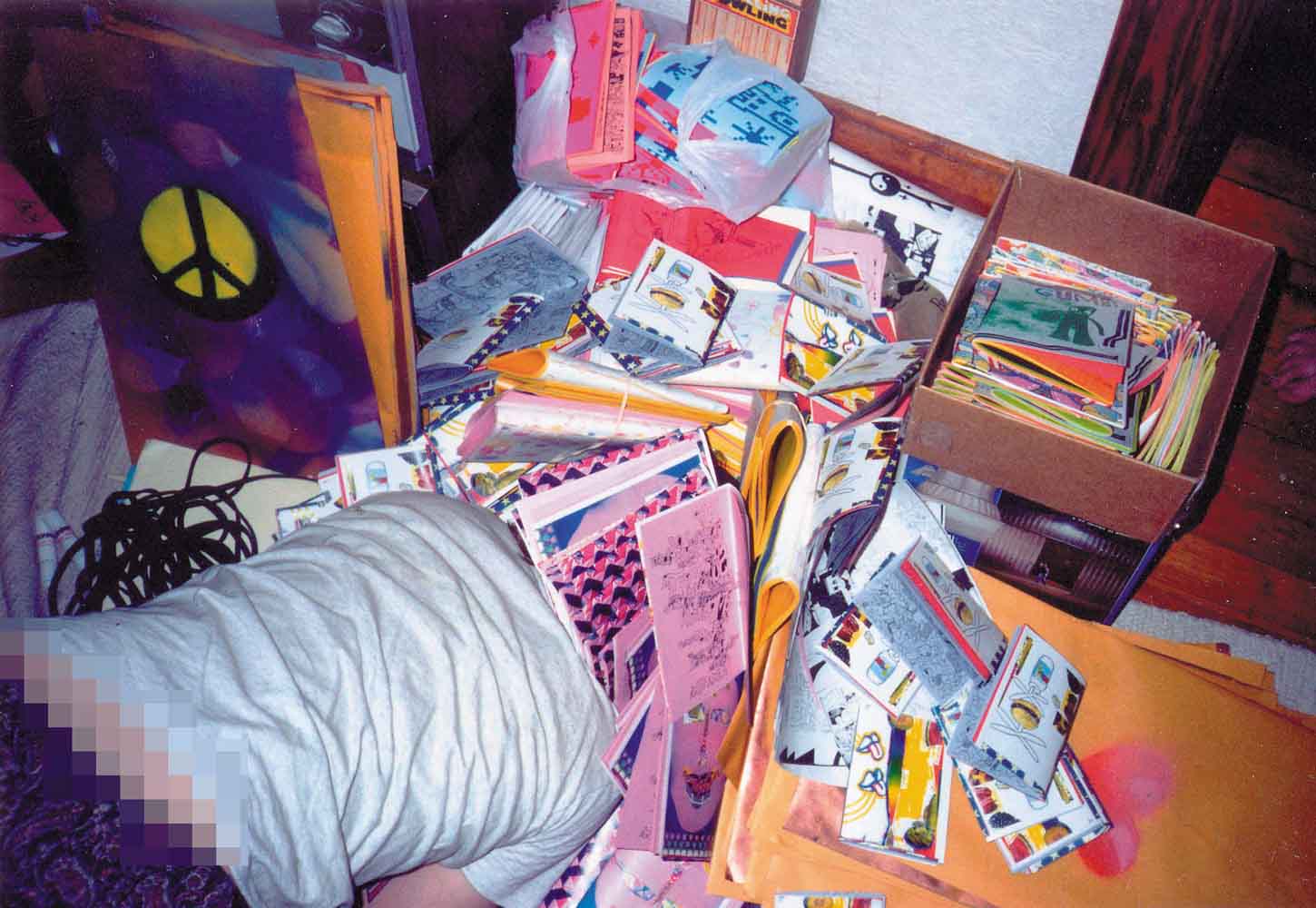
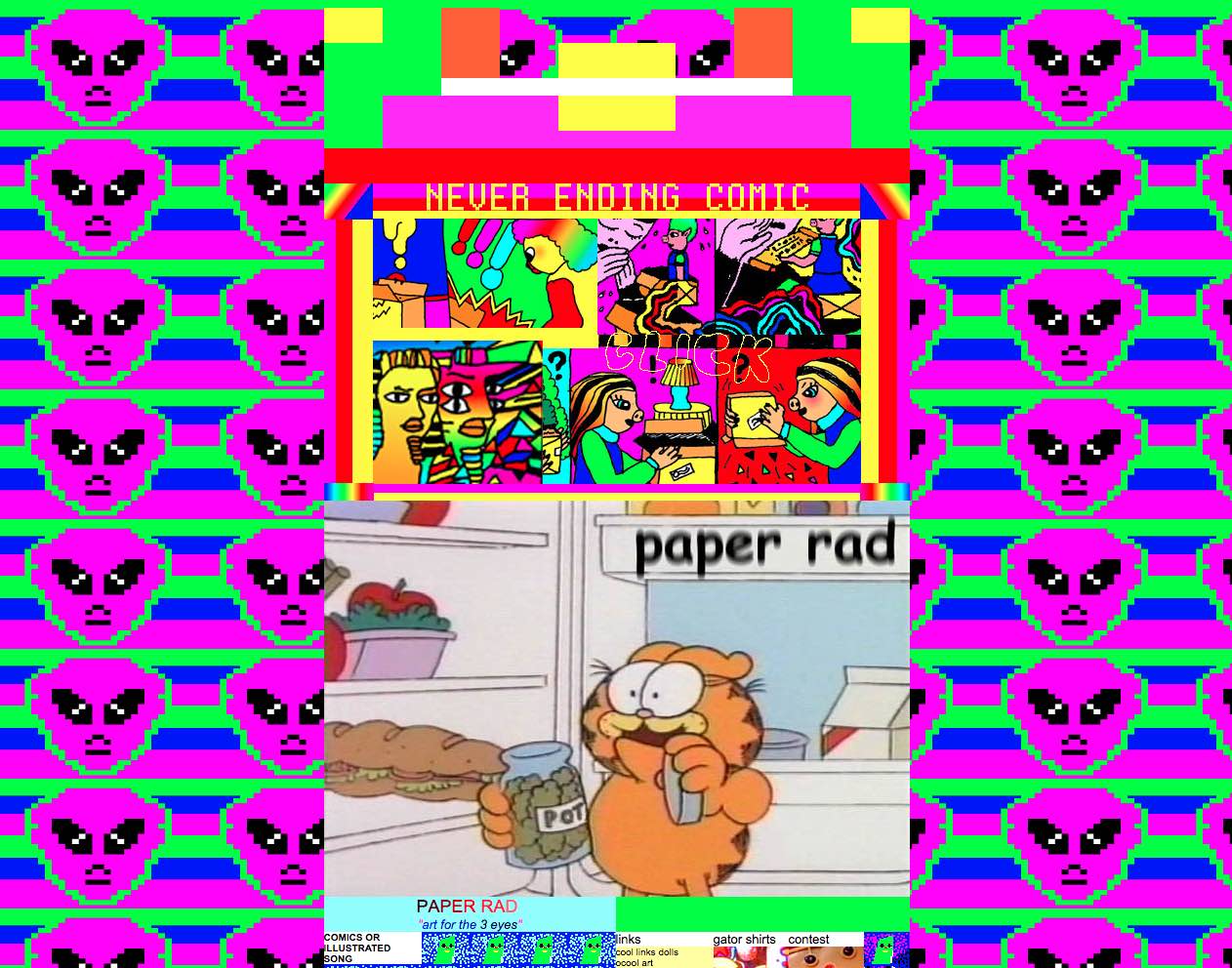
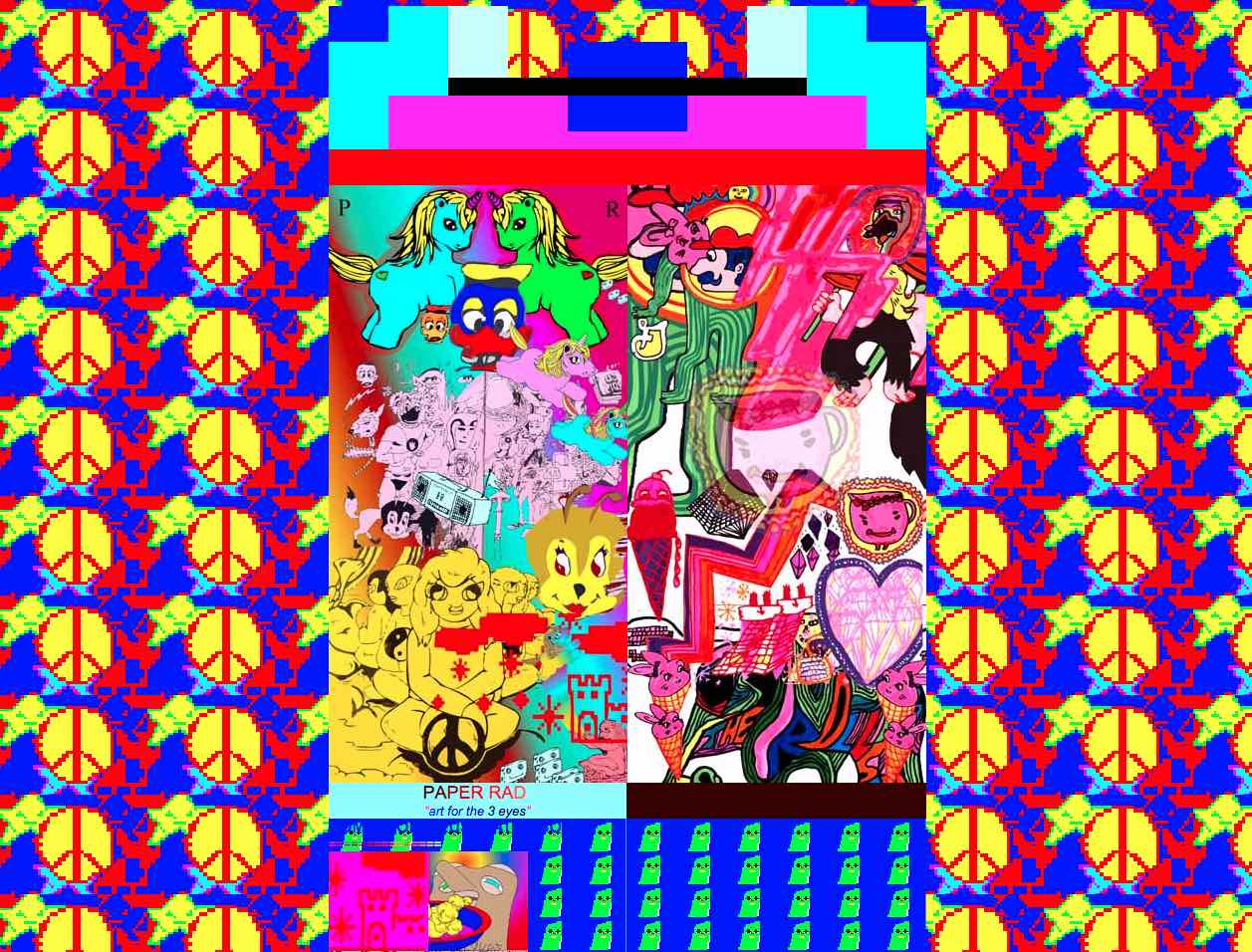
One of the most important collectives to emerge in the last decade, Paper Rad exploded at the edge of a cultural time zone—before the social web—when subculture was still palpable and also clearly becoming impossible to sustain. They emerged in the early ’00s within a community dedicated to DIY art practice that had strong roots in Providence, Rhode Island, as well as cities like Detroit, Baltimore, Boston, and towns in Western Massachusetts became known for a cartoon cosmos that felt like a psychedelic, subversive response to American pop culture that was hatched out of a sincere and deep engagement to it. Their work began with ’zines and music, and eventually grew to encompass digital animation, videos, installations, and their website—paperrad.org—which became an increasingly central part of their work as it drew attention and followers. [1]

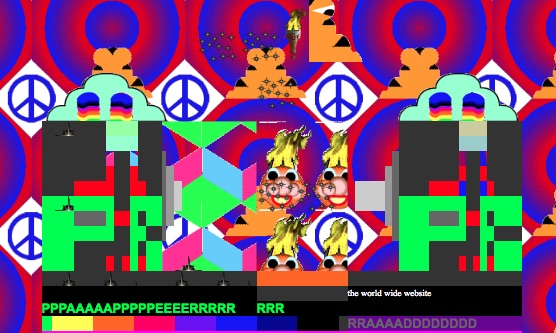
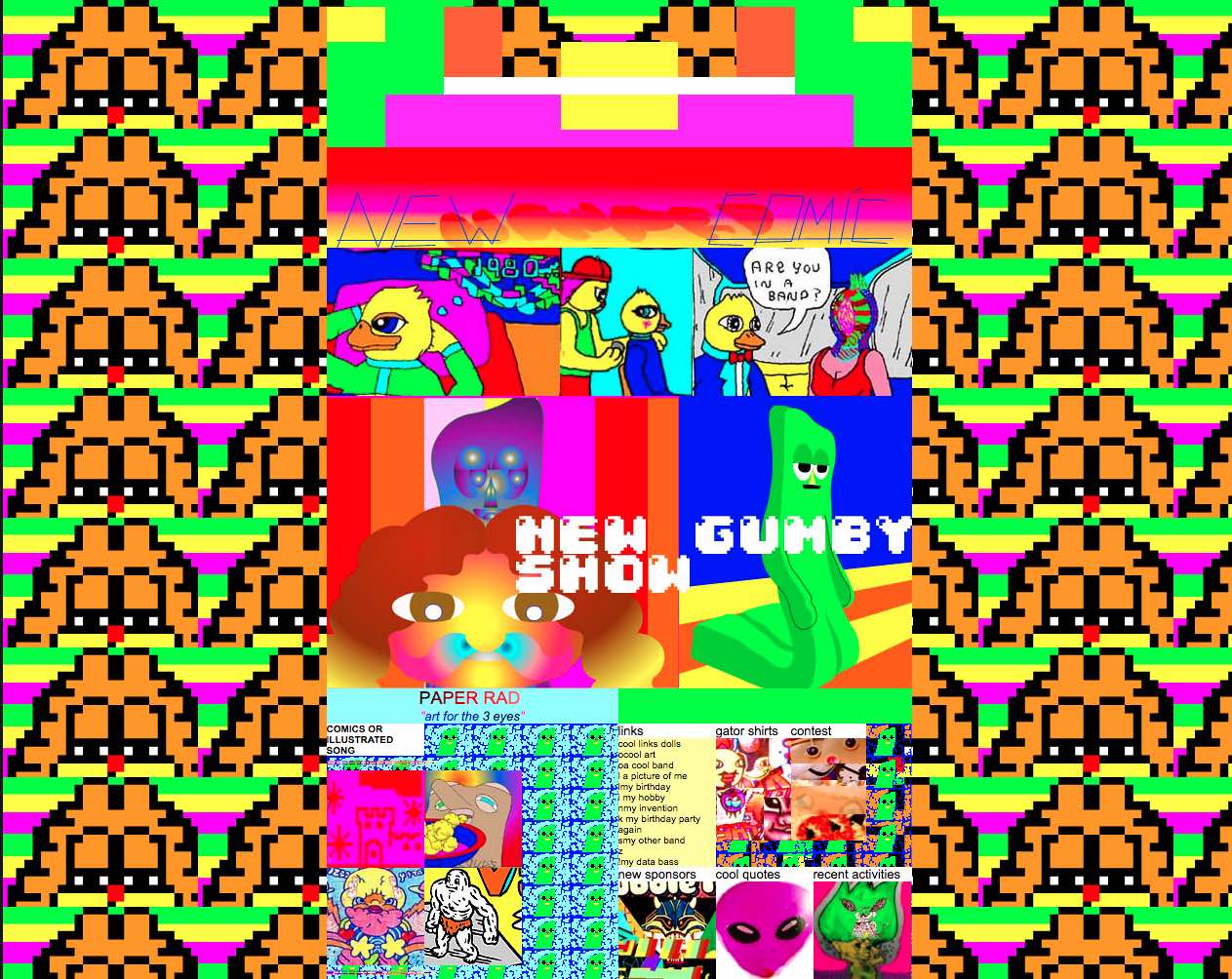
... the page was changed daily, continually layered with new content or reorganized spatially. Amid this constant development, there are a few distinguishing elements to the website that endured throughout its seven-year life. First, it carried over the DIY ethos and aesthetics from the culture from which it emerged—paperrad.org was not an easy-to-navigate online artist’s CV but existed more like a maze of found, remixed, and original content. Visitors were only able to track the identities of participating members through deep research, which lent the site a mysterious and open feel, as if Paper Rad could be as small as one person or as large as a thriving subculture. A second distinguishing factor was that Paper Rad created their own discreet world that blended influences from both analog and digital culture. In the Paper Rad cosmos, hacked and re-versioned My Little Ponies mingled with animated gifs and characters originally rendered in printed ’zines, like Tux Dog, which were digitized and made open source. This straddling of different pop cultural realms—television and the internet, mass media and amateur media—became a trademark of Paper Rad, as did a disregard for medium specificity. The Paper Rad website, presenting recycled cartoon characters like Gumby in Flash animation sagas, was evidence of the eroding boundaries between media we are so familiar with today. [1]

Paper Rad's visual projects often employ bright fluorescent palettes juxtaposed with primary colors to create a distinctive "lo-fi" look. It adopts a variety of techniques and elements to achieve this look, including pop art, collage, punk art, as well as imagery from popular culture. The multimedia projects incorporate MIDI audio, poor recordings of original sound effects and voices, pixelization, and other crude audio and visual components. Paper Rad recycled or appropriated obscure sounds and images from a variety of sources, including old cartoons, commercials, and late-night television. [2]

The collective–which consisted of siblings Jessica and Jacob Ciocci, Ben Jones, and other collaborators–cultivated a unique interest in exploring artistic strategies from other media, especially comics and zines, through web-based and multimedia works. Serially updated during the group’s most active period (2001-2008), paperrad.org was both an archive and a artwork, a riot of brightly colored compositions featuring graphics and a mazelike compilation of characters from otherwise overlooked aspects of ’70s and ’80s pop culture. [3]

Paper Rad Homepages 01-08 Collected by Rhizome

Selected Webpages
From Wikipedia:

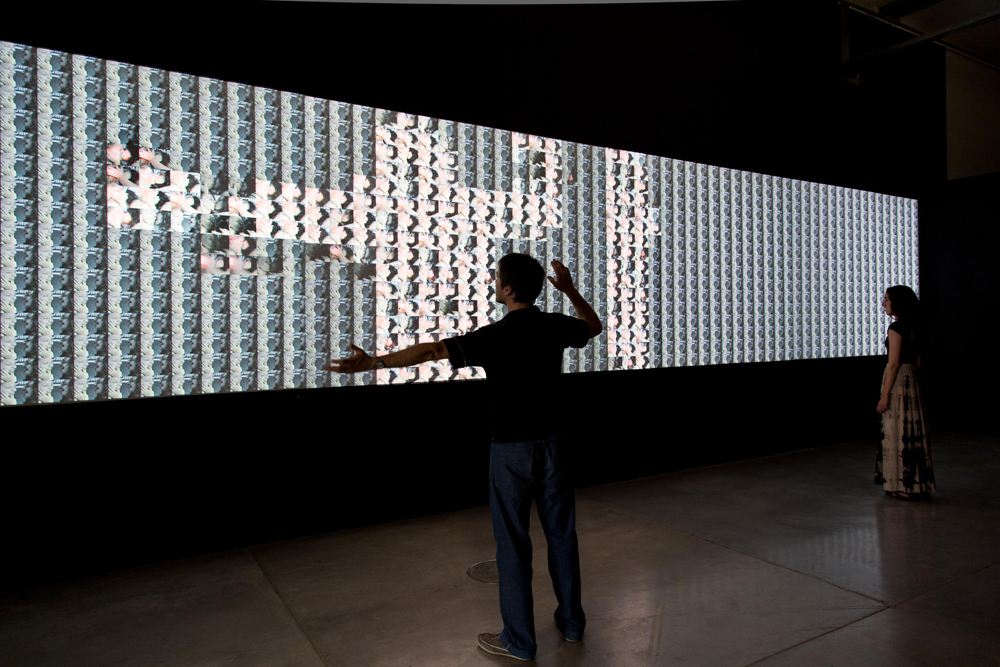
Lozano-Hemmer is best known for creating and presenting theatrical interactive installations in public spaces across Europe, Asia and America. Using robotics, real-time computer graphics, film projections, positional sound, internet links, cell phone interfaces, video and ultrasonic sensors, LED screens and other devices, his installations seek to interrupt the increasingly homogenized urban condition by providing critical platforms for participation. Lozano-Hemmer’s smaller-scaled sculptural and video installations explore themes of perception, deception and surveillance. As an outgrowth of these various large scale and performance-based projects Lozano-Hemmer documents the works in photography editions that are also exhibited.

Cory Arcangel (born May 25, 1978) is a Brooklyn, New York post-conceptual artist who makes work in many different media, including drawing, music, video, performance art, and video game modifications, for which he is perhaps best known.

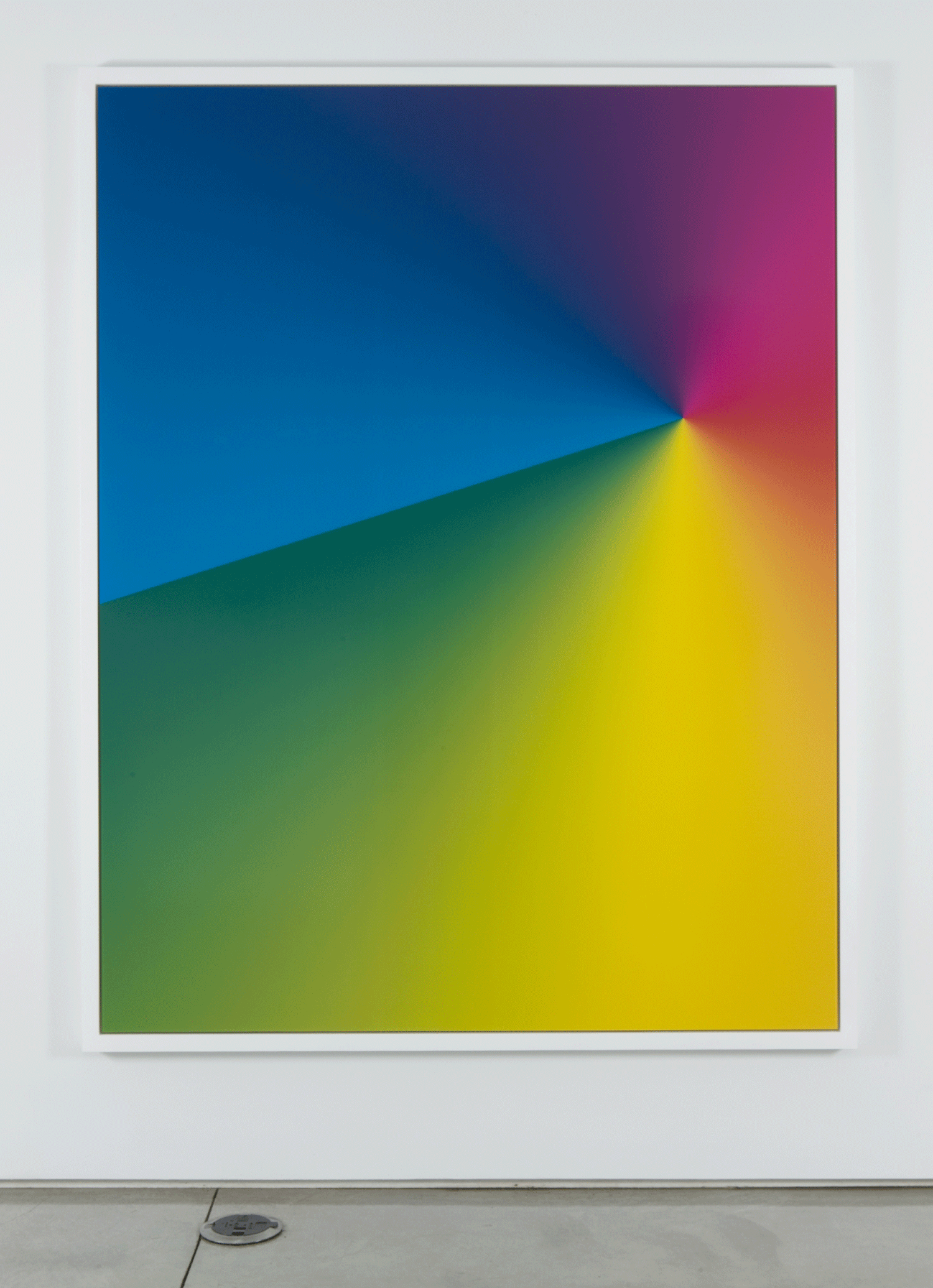
Arcangel often uses the artistic strategy of appropriation, creatively reusing existing materials such as dancing stands, Photoshop gradients and YouTube videos to create new works of art. His work explores the relationship between digital technology and pop culture. He is a recipient of a 2006 Creative Capital Emerging Fields Award. [1]

Notable Works:

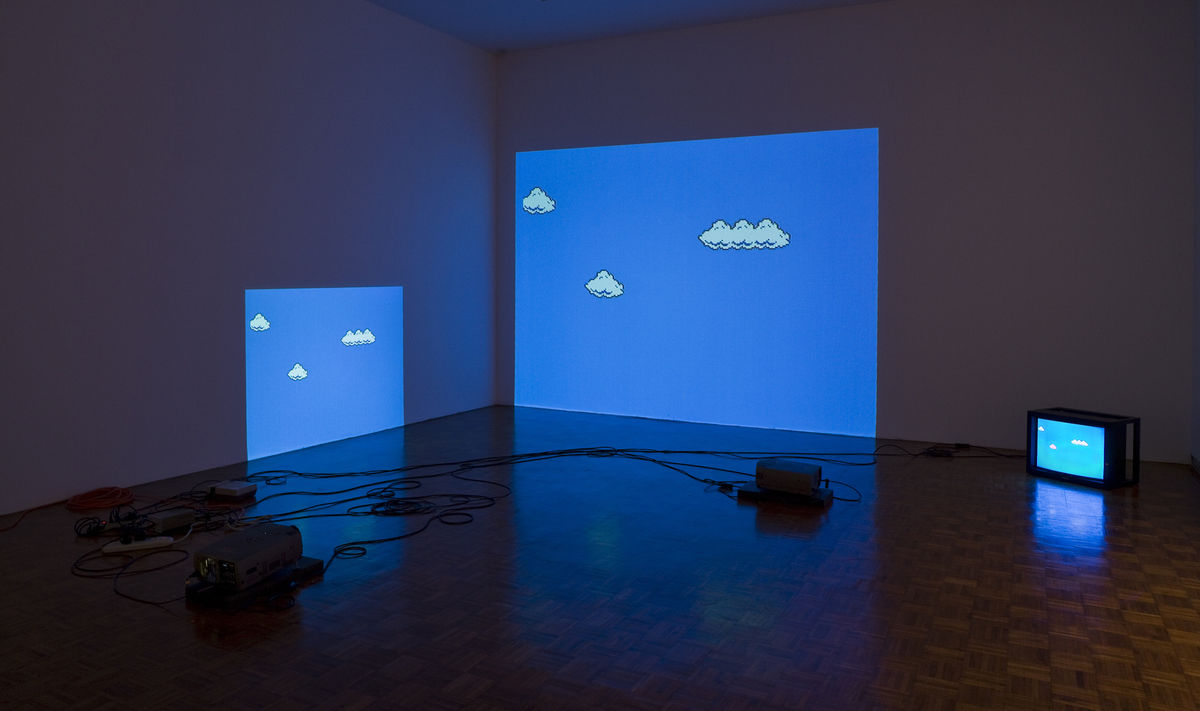
Super Mario Clouds Arcangel's best known works are his Nintendo game cartridge hacks and reworkings of obsolete computer systems of the 1970s and 80s. One example is Super Mario Clouds (2002), a modified version of the video game Super Mario Bros. for Nintendo's NES game console in which all of the game's graphics have been removed, leaving a blue background with white clouds scrolling slowly from right to left. [1]

Pizza Party Pizza Party (2004) was a free, functional software package that could be used to order Domino's Pizza through a command-line interface. The program allowed users to order pizza by typing in commands such as pizza_party -pmx 2 medium regular, which - according to the artist - would order two medium crust pizzas with pepperoni, mushrooms and extra cheese. The piece was commissioned by Eyebeam and implemented by Mike Frumin. [1]

Punk Rock 101 Punk Rock 101 (2006) is an example of Arcangel's work with the web as an artistic medium. For this piece, he re-published Kurt Cobain's alleged suicide letter alongside a series of Google Ads. The ads are tailored to the content of any given page, and the piece juxtaposed Cobain's angst with ads selling social anxiety treatment and motivational speaking. Art critic Paddy Johnson wrote of the work, "This is quite possibly the most brilliant subversion of the medium I have seen." [1]