foundyou.online - Directory for New Media Art
Open Filters

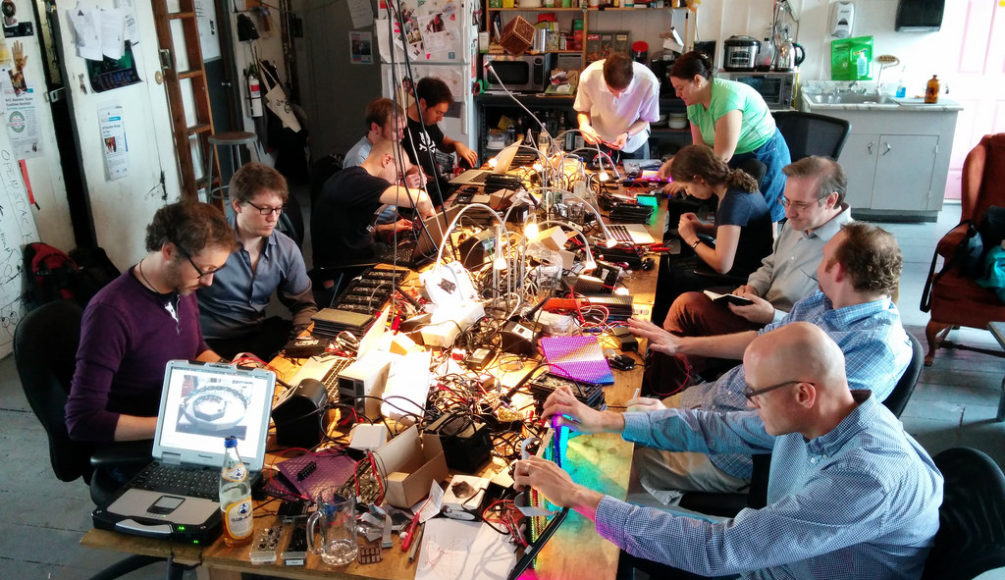
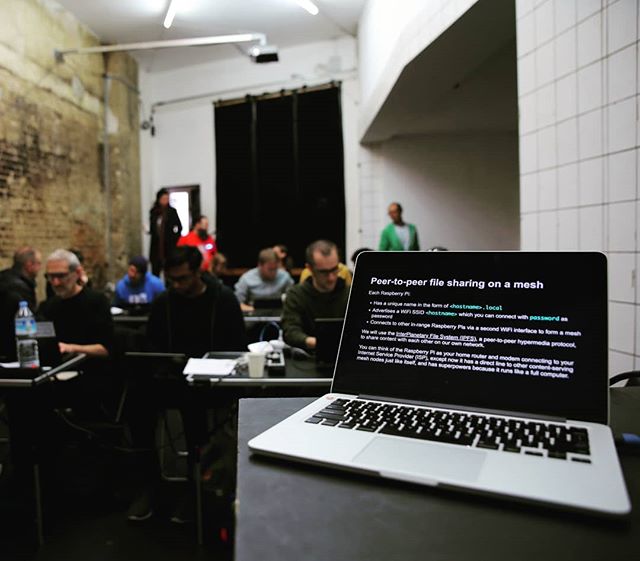
NYC Resistor is a hackerspace in New York, inspired by Chaos Computer Club and other hacker organizations. According to the NYC Resistor's website, "NYC Resistor is a hacker collective with a shared space located in downtown Brooklyn. We meet regularly to share knowledge, hack on projects together, and build community." [1]

NYC Resistor encourages participation by anyone who feels they can contribute. Nonmembers are welcome to attend Craft Nights and other public events, as well as take part in classes on a variety of subjects. Visiting beyond this can be arranged on a case by case basis with current members. [1]

Internet provocateurs JODI pioneered Web art in the mid-1990s. Based in The Netherlands, JODI (Joan Heemskerk and Dirk Paesmans) were among the first artists to investigate and subvert conventions of the Internet, computer programs, and video and computer games. Radically disrupting the very language of these systems, including interfaces, commands, errors and code, JODI stages extreme digital interventions that destabilize the relationship between computer technology and its users. [1]

JODI (Joan Heemskerk and Dirk Paesmans) was formed in 1994. Joan Heemskerk was born in 1968 in Kaatsheue, The Netherlands. Dirk Paesmans was born in 1965 in Brussels, Belgium. Heemskerk and Paesman both attended Silicon Valley's electronic arts laboratory CADRE at San Jose State University in California; Paesmans also studied with Nam June Paik at the Kunstakademie in Dusseldorf. JODI's works are typically seen online. Their recent solo exhibitions include INSTALL.EXE at Eyebeam, New York, which toured to [plug-in], Basel, and BuroFriedrich, Berlin; and Computing 101B at FACT Centre, Liverpool, England. Their works have also been exhibited at Centre for Contemporary Art, Glasgow; Kunstverein Bonn; Stedelijk Museum, Amsterdam; Zentrum fur Kunst und Medientechnologie, Karlsruhe, Germany; Documenta X, Kassel, Germany; Harvard Art Museum, Massachusetts; EAI at ICA, Phillidelphia; and Lisson Gallery, New York, among many others. [1]

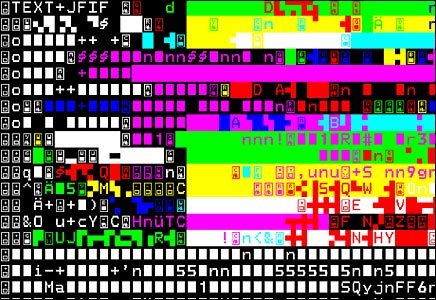
Misusing technological tools and languages has been a trademark for Jodi.org (Joan Heemskerk and Dirk Paesmans) since the mid-nineties, when they emerged as the pioneers of a movement which later became internationally known as net.art. Starting by applying this creative strategy to browsers, subverting websurfing logics and hacking the graphic interface, they then moved to videogames and finally to the so-called Web 2.0, deconstructing platforms such as Blogger, Google Maps and now Twitter. [2]

Selected net art pieces [3]

Gray Area Foundation for the Arts, Inc. is a 501(c)3 non-profit organization supporting art and technology for social good in San Francisco, California. Gray Area hosts exhibitions and music events, software and electronics classes, a media lab and resident-artist program. Gray Area Foundation for the Arts’ stated purpose is to bring “together the best creative coders, data artists, designers, and makers to create experiments that build social consciousness through digital culture.” [1]

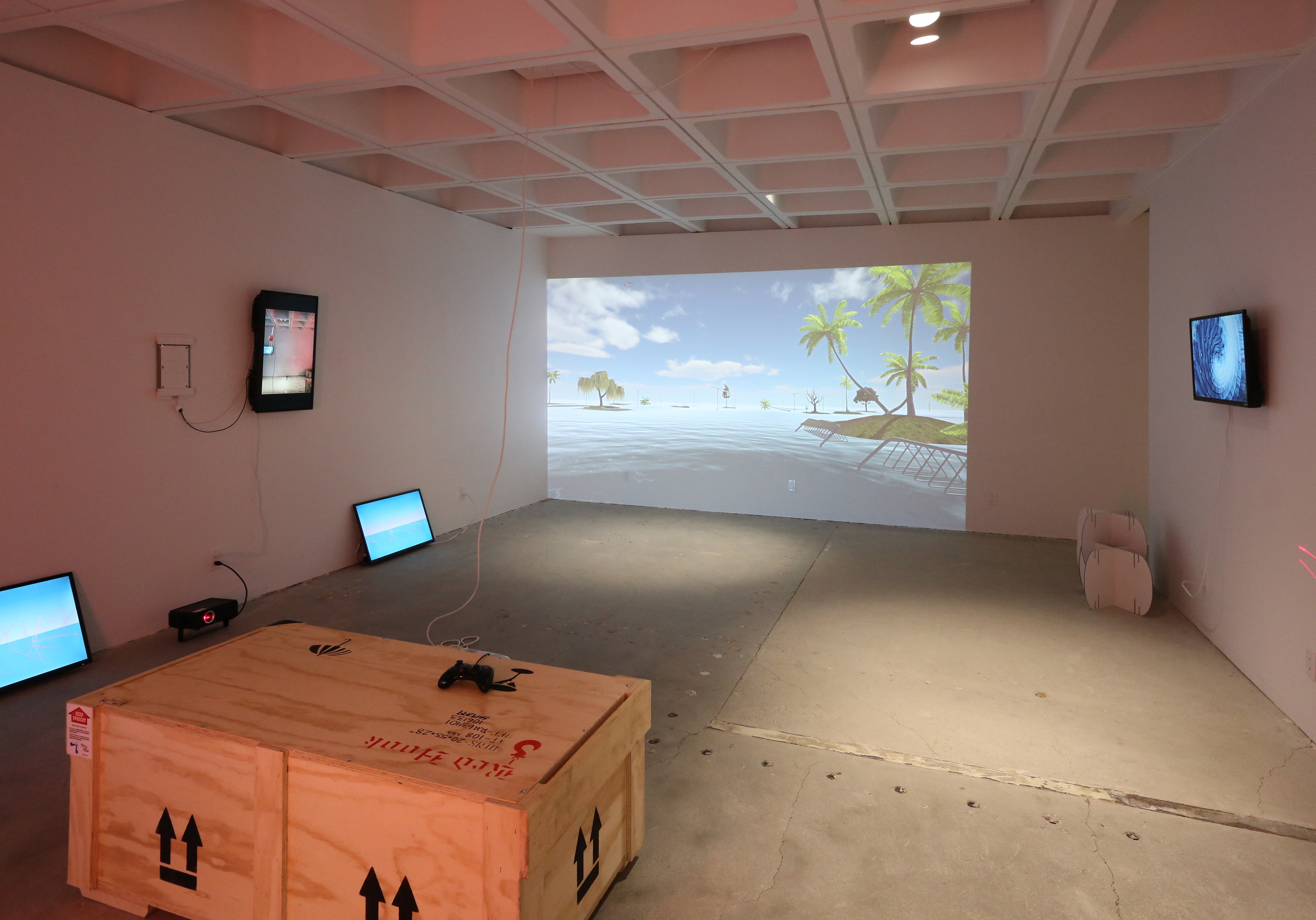
And/Or Gallery is a contemporary gallery in Pasadena with an emphasis on new media exhibitions and editions.

The gallery originally operated in Dallas, Texas from 2006 to 2009 and has been written about in Art Forum and ARTnews, and was featured in the New Museum/MIT Press anthology Mass Effect: Art and the Internet in the Twenty-First Century. [1]

Radical Networks is a conference that celebrates the free and open Internet, with hands-on workshops, speakers, and a gallery exhibiting artworks centered around radio and networking technology. It fosters critical discussion on contemporary issues that include surveillance, the spread of misinformation, ownership of personal data, and the increasing opacity of “The Cloud”.

Radical Networks is also an arts festival that considers networking technology as an artistic medium, featuring works that run the gamut from ethical hacks to creative experiments to live performances. [1]

From transparencygrenade.com:

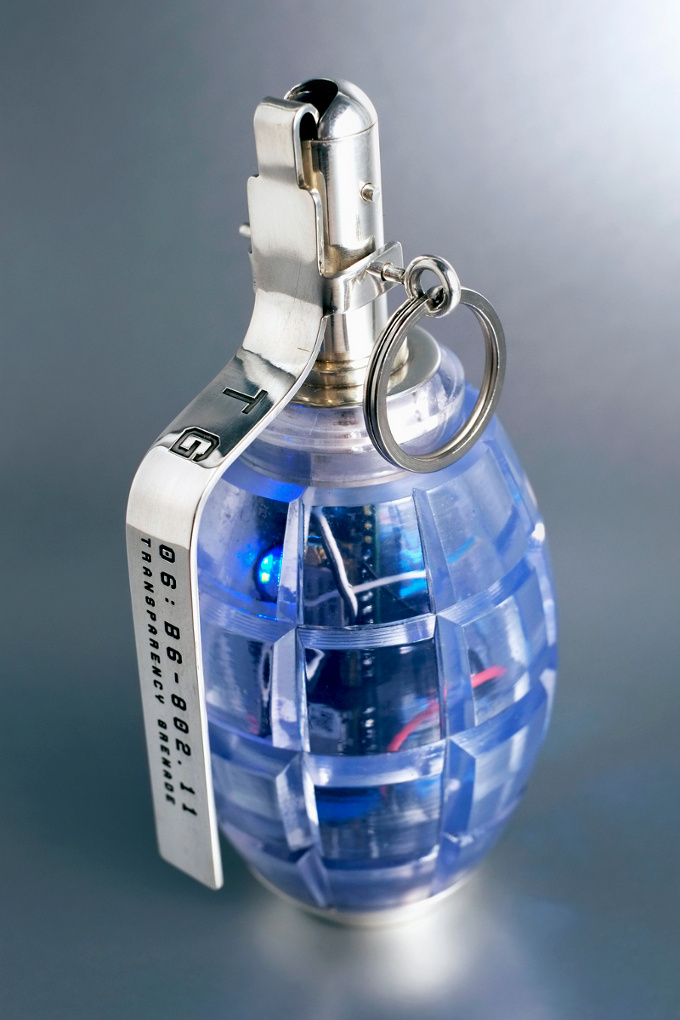
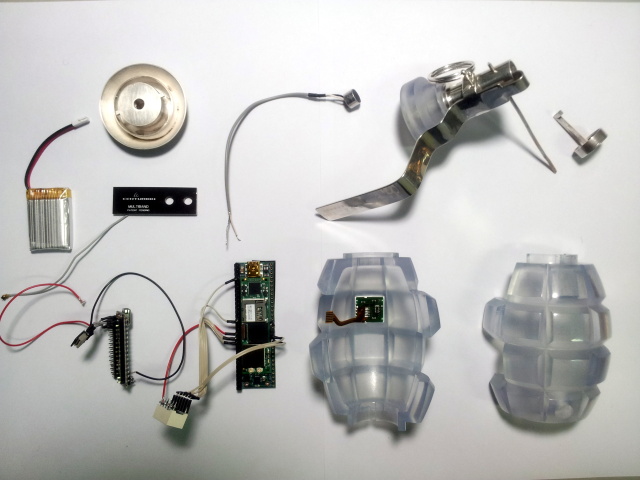
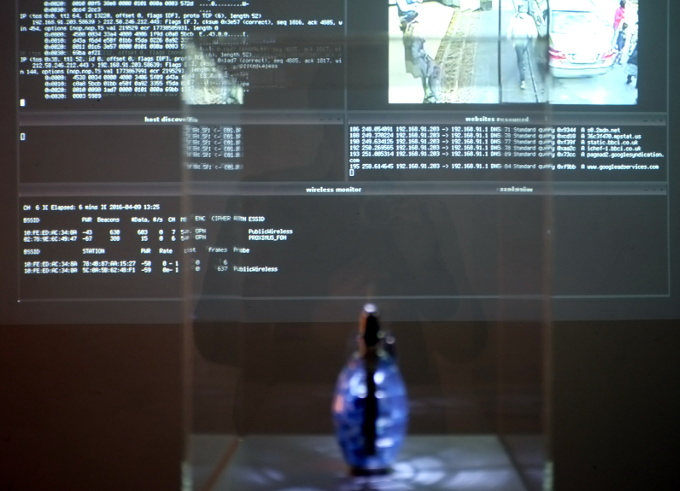
Equipped with a tiny computer, microphone and powerful wireless antenna, the Transparency Grenade captures network traffic and audio at the site and securely and anonymously streams it to a dedicated server where it is mined for information. User names, hostnames, IP addresses, unencrypted email fragments, web pages, images and voice extracted from this data and then presented on an online, public map, shown at the location of the detonation.

The volatility of information in networked, digital contexts frames a precedent for clamouring (and often unrealistic) attempts to contain it. This increasingly influences how we use networks and think about the right to information itself; today we see the fear of the leak actively exploited by law makers to afford organisations greater opacity and thus control..

This anxiety, this 'network insecurity', impacts not just upon the freedom of speech but the felt instinct to speak at all. It would now seem letting public know what's going on inside a publicly funded organisation is somehow to do 'wrong' -Bradley Manning a sacrificial lamb to that effect..

Meanwhile, civil servants and publicly-owned companies continue to make decisions behind guarded doors that impact the lives of many, often leaving us feeling powerless to effect change, both in and out of a democratic context.

The Transparency Grenade seeks to capture these important tensions in an iconic, hand-held package while simultaneously opening up a conversation about just how much implicit trust we place in network infrastructure; infrastructure that reaches ever more deeply into our lives.

Cory Arcangel (born May 25, 1978) is a Brooklyn, New York post-conceptual artist who makes work in many different media, including drawing, music, video, performance art, and video game modifications, for which he is perhaps best known.

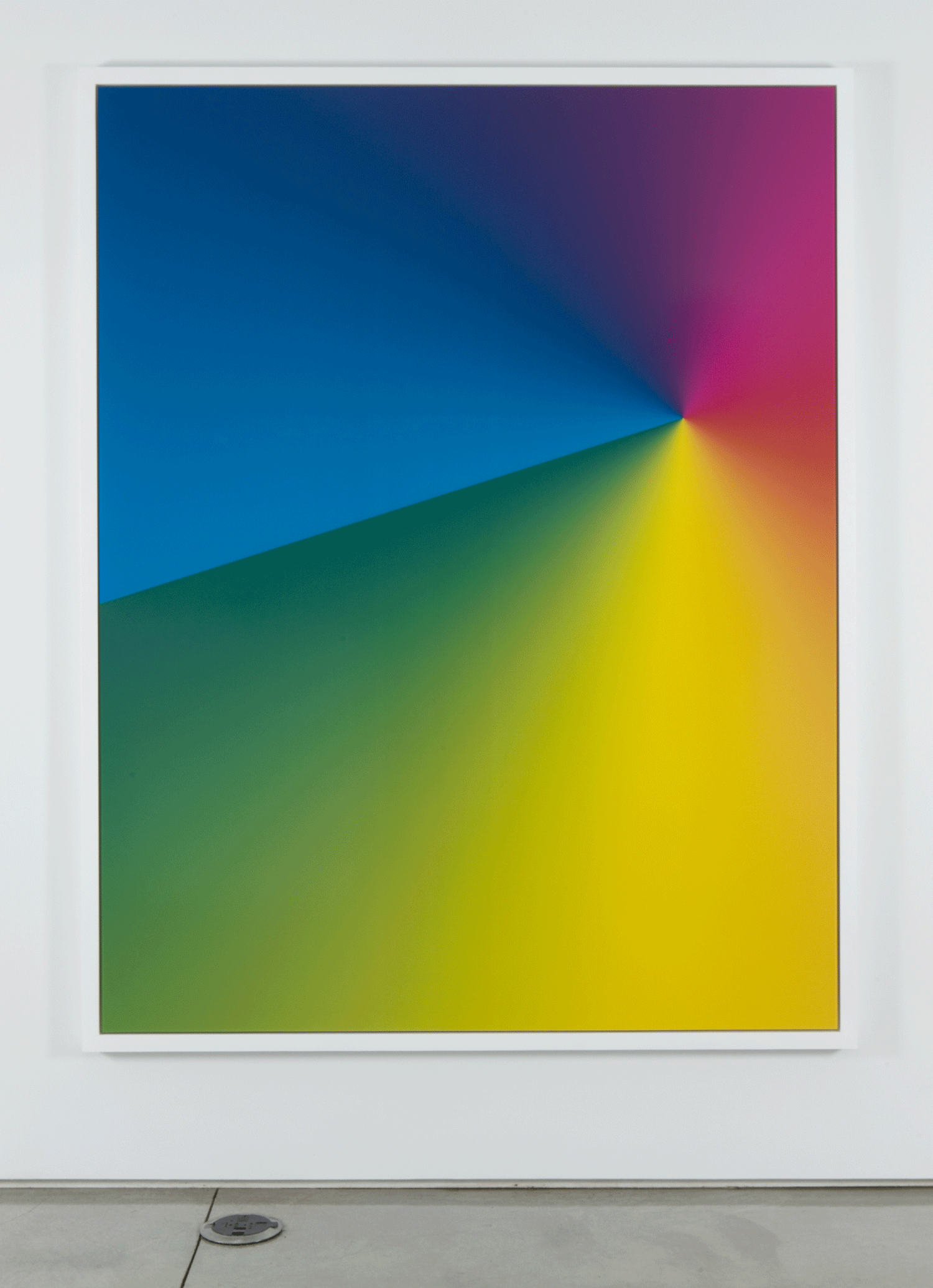
Arcangel often uses the artistic strategy of appropriation, creatively reusing existing materials such as dancing stands, Photoshop gradients and YouTube videos to create new works of art. His work explores the relationship between digital technology and pop culture. He is a recipient of a 2006 Creative Capital Emerging Fields Award. [1]

Notable Works:

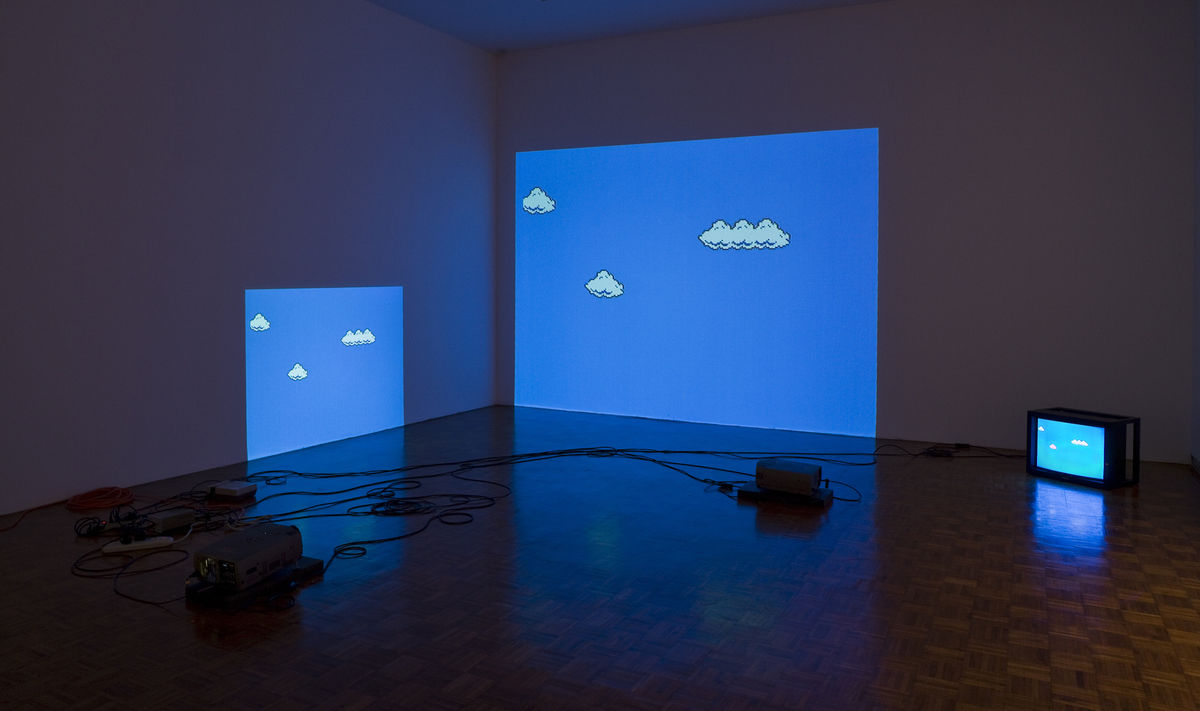
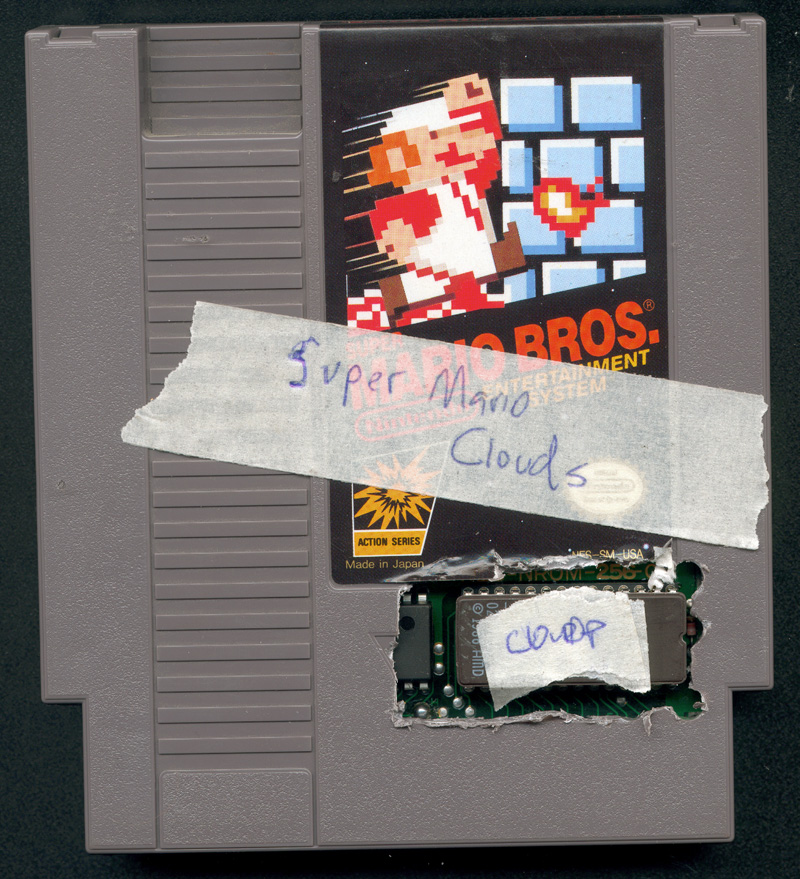
Super Mario Clouds Arcangel's best known works are his Nintendo game cartridge hacks and reworkings of obsolete computer systems of the 1970s and 80s. One example is Super Mario Clouds (2002), a modified version of the video game Super Mario Bros. for Nintendo's NES game console in which all of the game's graphics have been removed, leaving a blue background with white clouds scrolling slowly from right to left. [1]

Pizza Party Pizza Party (2004) was a free, functional software package that could be used to order Domino's Pizza through a command-line interface. The program allowed users to order pizza by typing in commands such as pizza_party -pmx 2 medium regular, which - according to the artist - would order two medium crust pizzas with pepperoni, mushrooms and extra cheese. The piece was commissioned by Eyebeam and implemented by Mike Frumin. [1]

Punk Rock 101 Punk Rock 101 (2006) is an example of Arcangel's work with the web as an artistic medium. For this piece, he re-published Kurt Cobain's alleged suicide letter alongside a series of Google Ads. The ads are tailored to the content of any given page, and the piece juxtaposed Cobain's angst with ads selling social anxiety treatment and motivational speaking. Art critic Paddy Johnson wrote of the work, "This is quite possibly the most brilliant subversion of the medium I have seen." [1]