foundyou.online - Directory for New Media Art
Open Filters

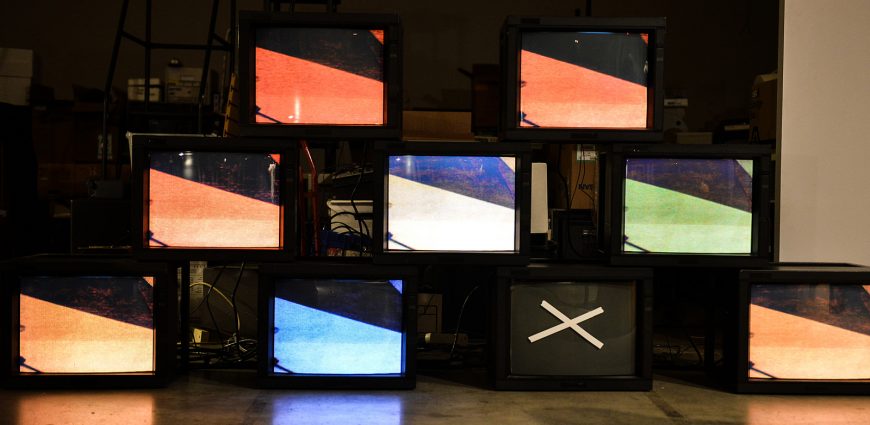
At the New Westminster New Media Gallery, you’ll experience art that has been created in a world transformed by technology. Discover art that plugs in, lights up, responds, senses, and communicates. Encounter art that reflects our contemporary world and sheds light on our past. Respond to challenging materials, ideas, and issues. Take away a little bit of wonder and a wealth of inspiration.[1]

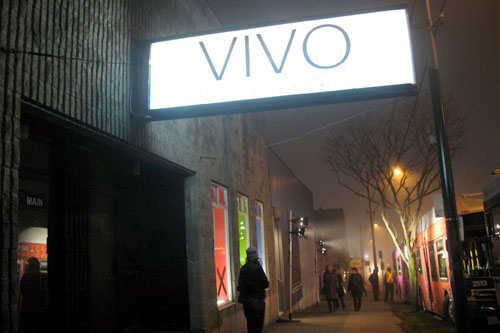
VIVO Media Arts Centre, a member of British Columbia Museums Association, brings together artists, video and filmmakers, researchers and activists interested in the history of video-making and its evolution towards the art form. VIVO’s educational program extends beyond the boundaries of video distribution and video archiving. The workshops program offers beginner and intermediate level classes on programming, projection mapping, lighting, sound recording by local experts. VIVO accepts research applications to work closely with the Crista Dahl Media Library and Archive thus contributing to the local and international art and research community and encouraging curatorial collaborations.[1]

VIVO’s mandate is to directly support artists and independent community-based producers to develop, exchange, and disseminate their skills in a supportive environment through accessible services and programs. Our vision is a robust, diverse, and vibrant media arts sector: a catalyst for critical and innovative engagement with the material forms and cultural meanings of media and technology. VIVO’s programs offer a broad range of services and opportunities to artists and the public. They include:

  • Access to the material necessities for quality production through affordable equipment rentals, editing 
facilities, software, and production space.
  • A broad range of skill development and education opportunities that encourage the exploration of 
technology and aesthetics within a critical, artistic framework.
  • Public programming: events, exhibitions, residencies, co-productions, and critical forums.
  • International distribution, work exchange, and media art preservation which supports the aspirations and 
livelihood of artists.
  • Western Canada’s largest public reference library and archive of media art, independent video, and 
related publications, documents, audio recordings, and photographs.

[2]

School for Poetic ComputationSchool for Poetic Computation
https://player.vimeo.com/video/279146924
https://player.vimeo.com/video/86799888

School for Poetic Computation is an artist run school in New York that was founded in 2013. A small group of students and faculty work closely to explore the intersections of code, design, hardware and theory — focusing especially on artistic intervention. It’s a hybrid of a school, residency and research group.Our motto is: more poetry, less demo [1]

The school for poetic computation is organized around exploring the creative and expressive nature of computational approaches to art and design. The school approaches writing code like creative writing — focusing on the mechanics of programming, the demystification of tools, and hacking the conventions of art-making with computation.[2]

We value the craft necessary to realize an idea, recognizing that every writer needs space and time to hone their trade. Our school aims to provide a safe haven for you to get acquainted with the craft of coding at your own pace, make it your own, and investigate the space between creative process and craft. This takes conversations with colleagues and the right push at the right time.[2]

The school aims to be more than a technical bootcamp. It is an opportunity to work intensively with a small group of students, faculty, and artists to explore questions about the poetics of computation. For us, computation is poetic when technology is used for critical thinking and aesthetic inquiry – a space where logic meets electricity (hardware), math meets language (software) and analytical thinking meets creative experimentation.[2]

This is also a school for teaching. Every student who comes here will be asked to share their expertise with their classmates in the form of workshops and outreach.[2]

The goal of the school is to promote completely strange, whimsical, and beautiful work – not the sorts of things useful for building a portfolio for finding a job, but the sort of things that will surprise and delight people and help you to keep creating without a job. However, employers tell us they appreciate this kind of work as well.[2]

This is not a program to get a degree, there are large programs for that. This is not a program to go for vocational skills, there are programs for that. This is a program for self initiated learners who want to explore new possibilities. This is a program for thinkers in search of a community to realize greater dreams.[2]
The Center for Digital Arts and Experimental Media, or DXARTS, is a program offering PhD studies in new media art at the University of Washington. The goal of doctoral education in Digital Arts and Experimental Media is to create opportunities for artists to discover and document new knowledge and expertise at the most advanced levels higher education can offer. While creating new art is at the center of all activities in the program, the DXARTS PhD is a research-oriented degree requiring a substantial commitment to graduate-level study and reflection. The Ph.D. degree prepares artists to pursue original creative and technical research in Digital Arts and Experimental Media and pioneer lasting innovations on which future artists and scholars can build.[1]

DXARTS fosters the invention of new forms of digital and experimental arts by synthesizing expanded studio research with pioneering advances in digital computing, information technologies, performance, science, and engineering. Embracing an expansive range of arts practice, theory, and research across multiple disciplines, DXARTS creates opportunities for artists to discover and document new knowledge and expertise in an evolving field of media arts.[2]

Electric Perfume is a studio and event space where interactive and immersive projects are built, playtested, curated, and exhibited with a focus on public feedback and learning.[1]

Set up in the mid-1990s, Ljudmila Art and Science Laboratory has been bringing together technology, art, science and civil society ever since. As such, it is not only a place where hackers, researchers and artists meet, but also a platform for reflecting and modifying culture through the lens of politics, as generated by the developments in communications technologies.

Ljudmila's programmes are rather diverse and wide-reaching. It runs the Strictly Analog Festival and the art&hacking meeting PIFcamp. Since 2010, it operates the Culture.si portal and, as of 2013, also the metasearch engine and culture aggregator Kulturnik.si. Since 2011, it acts as a public lead of Creative Commons Slovenia. It organises workshops on the uses of open source software and on making DIY technological hacks; supports the production of new media artworks; has an orchestra; and more. [1]

Established by artists in 1968, SPACE runs 20 artist studio buildings across 7 London boroughs and Colchester, providing affordable creative workspace plus support programmes, such as exhibitions, artists residencies, bursaries and training opportunities, to enable artists to be sustainable. SPACE also delivers Learning projects for schools, young people and communities neighbouring SPACE studio sites, to promote engagement with creativity and the arts.[1]

SPACE Art + Technology provides a test ground and critical exchange platform for artists and thinkers whose work engages with technology. We do this by offering artists residencies as well as regular events and workshops, enabling the public to gain a deeper insight into the challenges and opportunities that technology presents us with today.[2]

Originally conceived as a digital effects and coding atelier and center for youth education, Eyebeam has become a center for the research, development, and curation of new media works of art and open source technology. Eyebeam annually hosts up to 20 residents and co-produces youth educational programs, exhibitions, performances, symposia, workshops, hackathons and other events with these residents as well as with partner organizations. Projects developed at Eyebeam have received awards and recognition including Webby Awards, Guggenheim Fellowships, and the Prix Ars Electronica. [1]

Eyebeam provides both space and support for a community of diverse, impact-driven artists. The residency program brings artists’ work to life and into the world by providing access to advanced tools and resources and launching dynamic public events, assisted by an engaged community of alumni.[2]

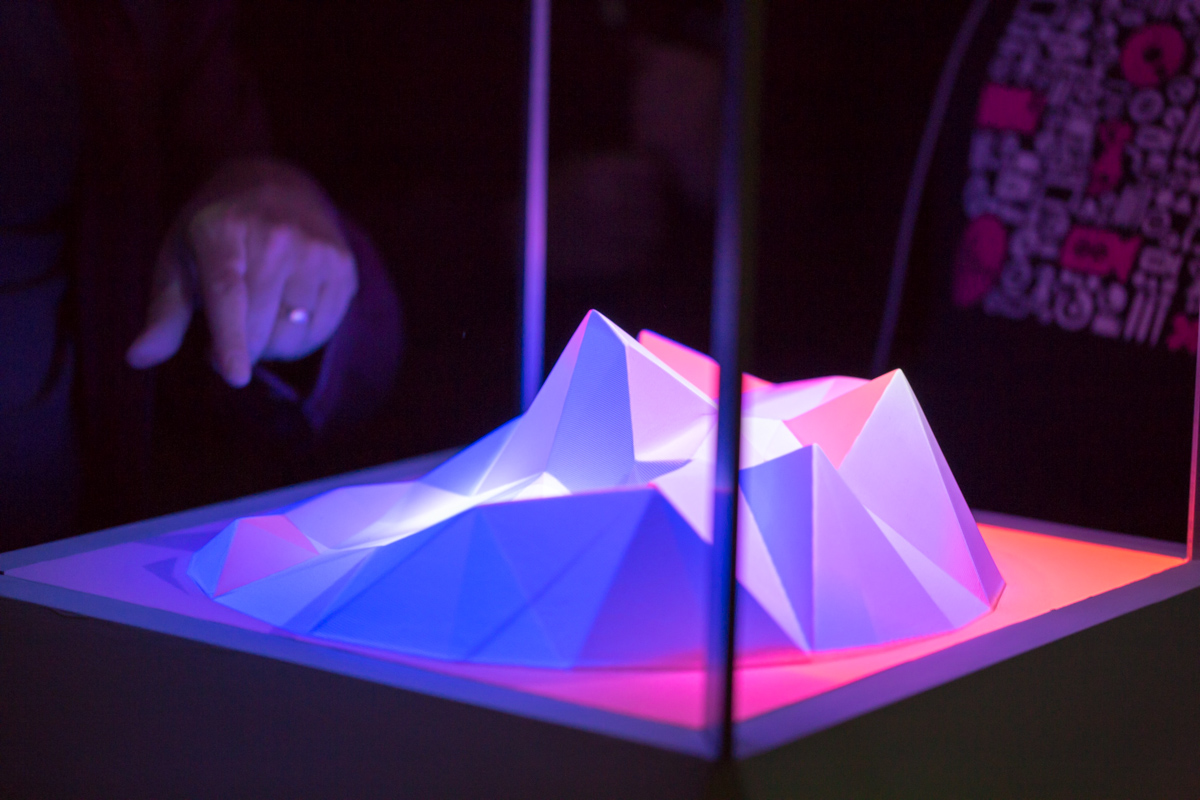
Now in its fourth edition, the Gray Area Festival is a unique global event focused on advancing open culture and the common good through holistic innovation and aesthetic practice. Our programming presents a survey of culture through the lens of art and technology, offering a deeper understanding of the present moment along with visions of the trails and opportunities ahead. Held at our Grand Theater in San Francisco's Mission district, the Festival highlights Gray Area's continued pursuit of integrated art and technology applied toward civic, educational, entrepreneurial, aesthetic, and social practice.[1]

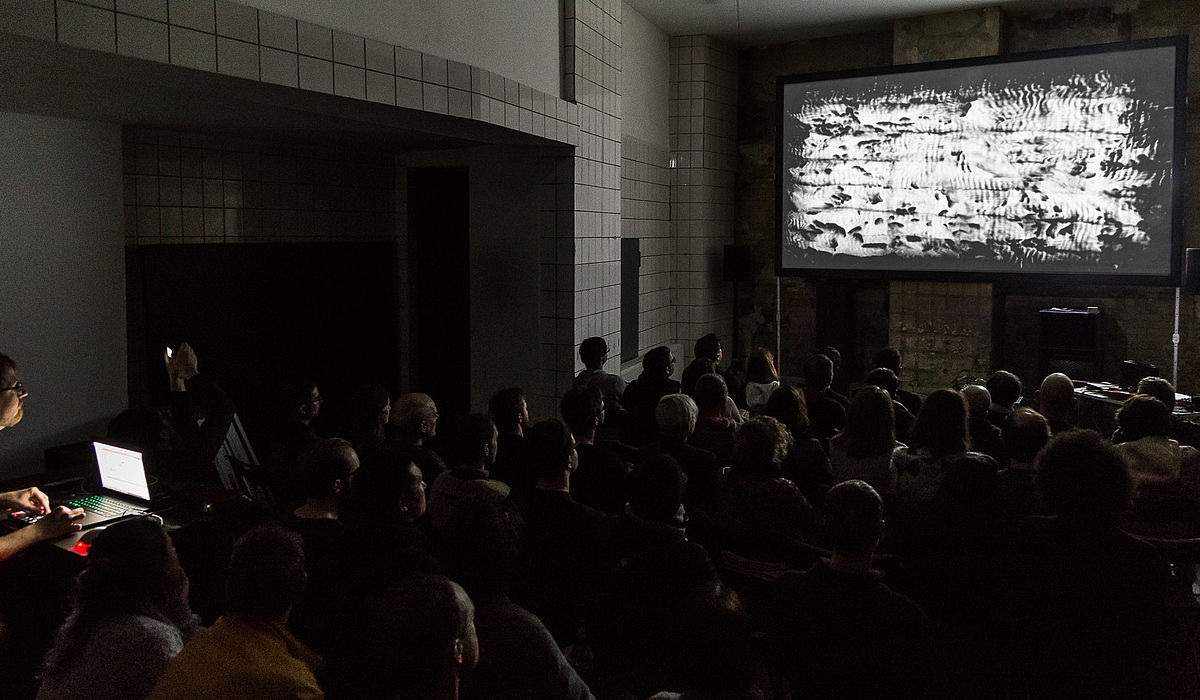
SPEKTRUM is a space of convergence for cultural communities and transdisciplinary groups emerging and operating in and off Berlin. The project aims to bring confrontation, open knowledge and a platforms for idealisation, realisation and presentation of technology-based artworks, science-focused events and futuristic utopias based on the principle “do-it-together-with-others”. Above all, we are an open organization promoting participatory processes to co-define and co-design a social and physical playground for curiosity and critical understanding. [1]

The venue is part of a monumental architecture in the heart of Kreuzberg/Neukölln realised by Franz Hoffmann and Bruno Taut, one of the main expressionist architects of the modernist period. The inner space is characterised by a multi-layered approach to heights, with an unusual 5 meter high ceiling for the event room and other sections organised as split-levels. These architectural qualities tell us a story of planes and volumes, offering guests a surprising walk around with secret spots to discover. [1]