From Theartstory.org:
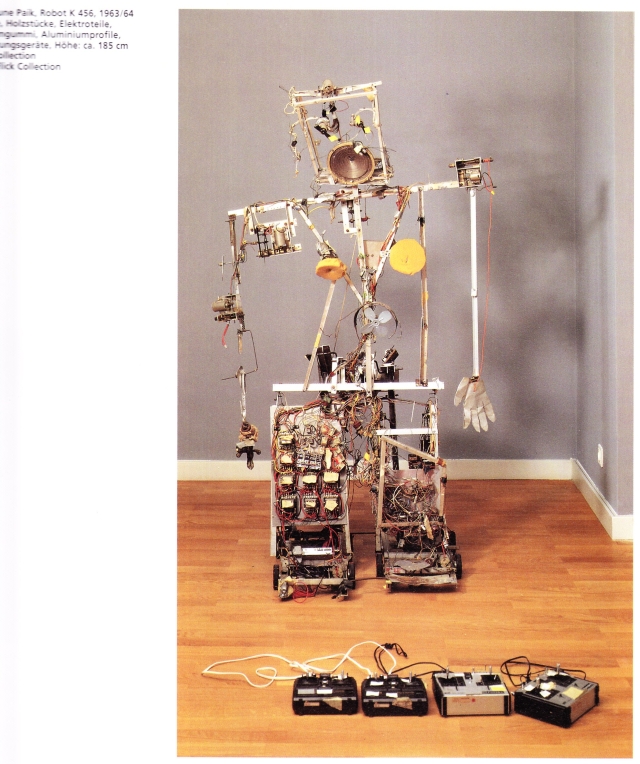
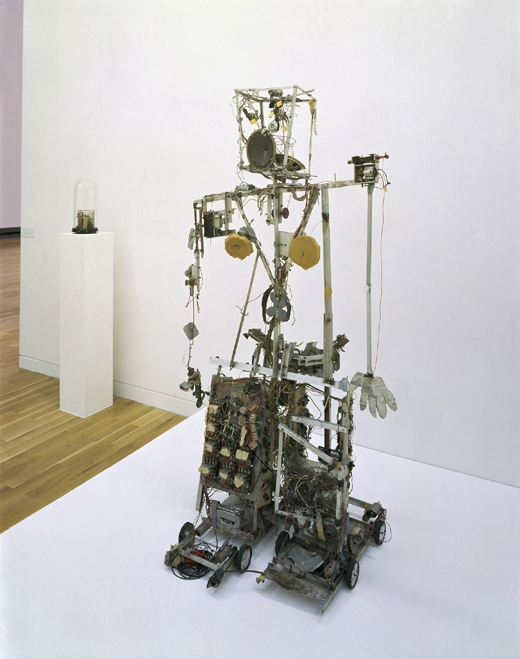
After Paik's departure from Germany and before his arrival in the United States in 1964, he spent a year in Tokyo with his family where he met Shuya Abe, an engineer specialized in experimental physics and electronics, who became Paik's long-term collaborator and technical assistant. During the sojourn in Japan, Paik devised his first automated robot, Robot K-456, with Abe's help. Paik humorously named this life-sized anthropomorphic robot after Mozart's piano concerto No. 18 in B-flat major, K. 456 (a catalogue number in the Köchel listing - an inclusive, chronological catalogue of compositions by Mozart). Robot K-456 is made out of bits and pieces of metal, cloth, a data recorder, wheels for walking, and a loudspeaker playing John F. Kennedy's speeches. The materials reflect Paik's long-term interest in transforming cheap, disposable objects into aesthetic forms associated with new technologies. Originally androgynous - with breasts and a penis, the robot was programmed to walk, talk, and defecate beans via twenty radio channels and a remote control. Its physical composition, hybrid-gendered nature, and remote-controlled movement embody Paik's desire to humanize robotics without hiding its bare-bone structure and materiality under the glossy metallic skin.
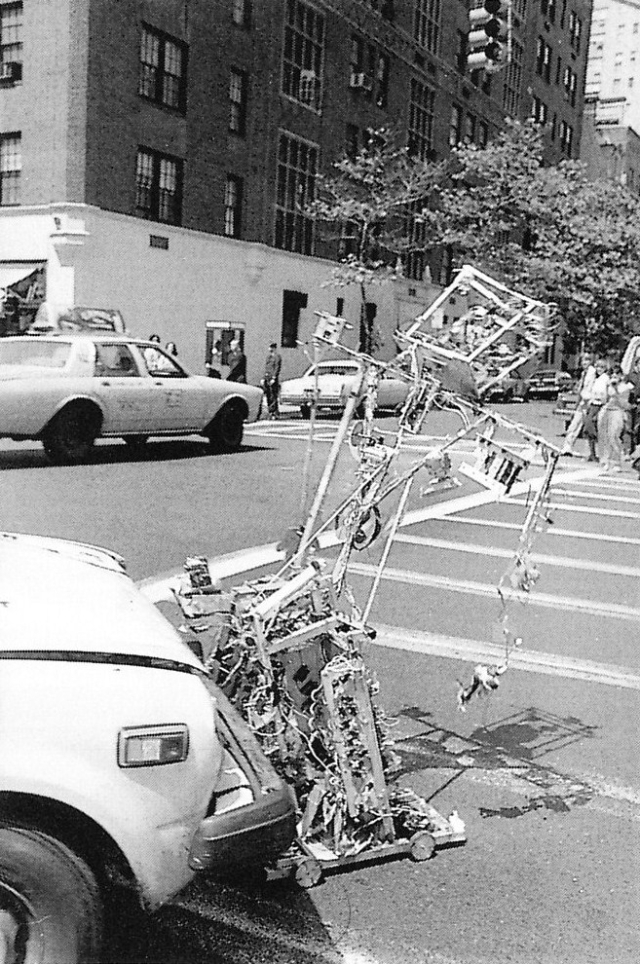
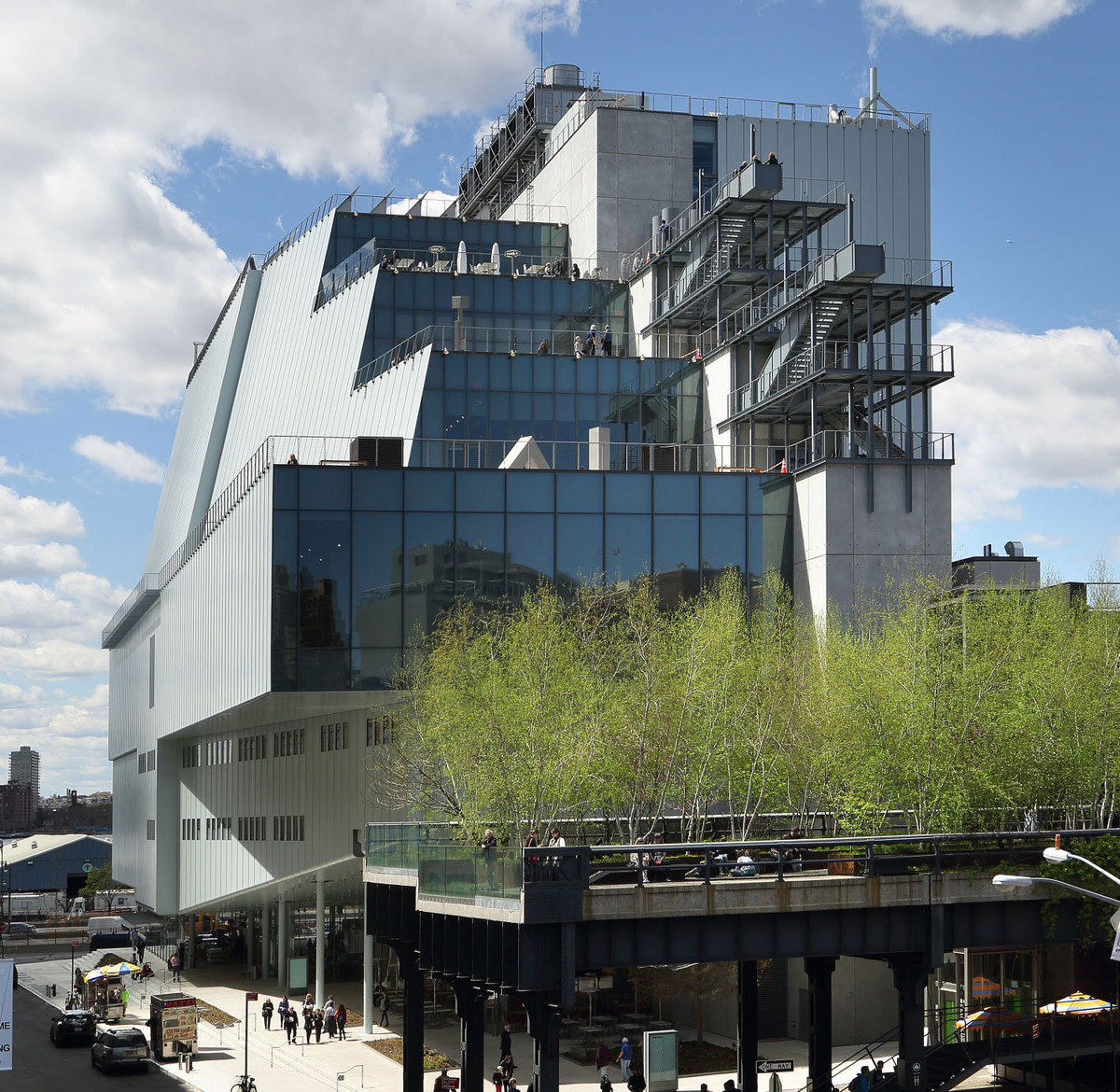
Robot K-456 was built for impromptu street performances, as Paik recounted, "I imagined it would meet people on the street and give them a split-second surprise, like a sudden show." It was first featured in the performance project Robot Opera (1964) at Judson Hall in New York, alongside Charlotte Moorman's cello performance, and in a series of performance-based projects through the end of the 1960s. In 1982, the robot returned to action during the artist's first major museum exhibition at the Whitney Museum of American Art. At one point of the exhibition, Paik took the robot out of the museum to orchestrate an "accident" on the streets, a performance titled First Accident of the Twenty-First Century. The robot was made to walk up the sidewalk outside the building across Madison Avenue. While crossing 75th Street, it was struck and thrown onto the crosswalk by a car driven by artist William Anastasi. The local CBS affiliate covered the incident. When the CBS reporter asked Paik what it all meant, Paik answered that he was practicing how to cope with the catastrophe of technology in the 21st century. He also noted that the robot was twenty years old and had not had its Bar Mitzvah (the Jewish coming-of-age ceremony) yet. Playful and extravagant, the performance concluded with the "body" of the robot being wheeled into the museum. This street performance demonstrated that Paik did not see his artworks as inert and complete but rather as "living" objects that could be constantly remade and refashioned.
The hybrid, complex nature of Robot K-456, with its unexpected juxtaposition of visual materials, sounds, performances, and popular culture, embodied Paik's foresight into the future of robotics. He was also revolutionary because he claimed robotics as a viable medium for use in multimedia art, triumphantly declaring the potential for artistic innovation through technological means. Throughout his career, Paik would adamantly advocate that the artist's duty was to reimagine technology in the service of art and culture.
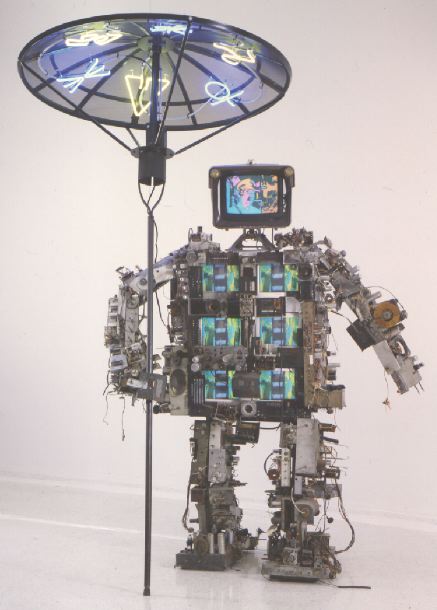 Nam June Paik - Global Encoder, via Panix
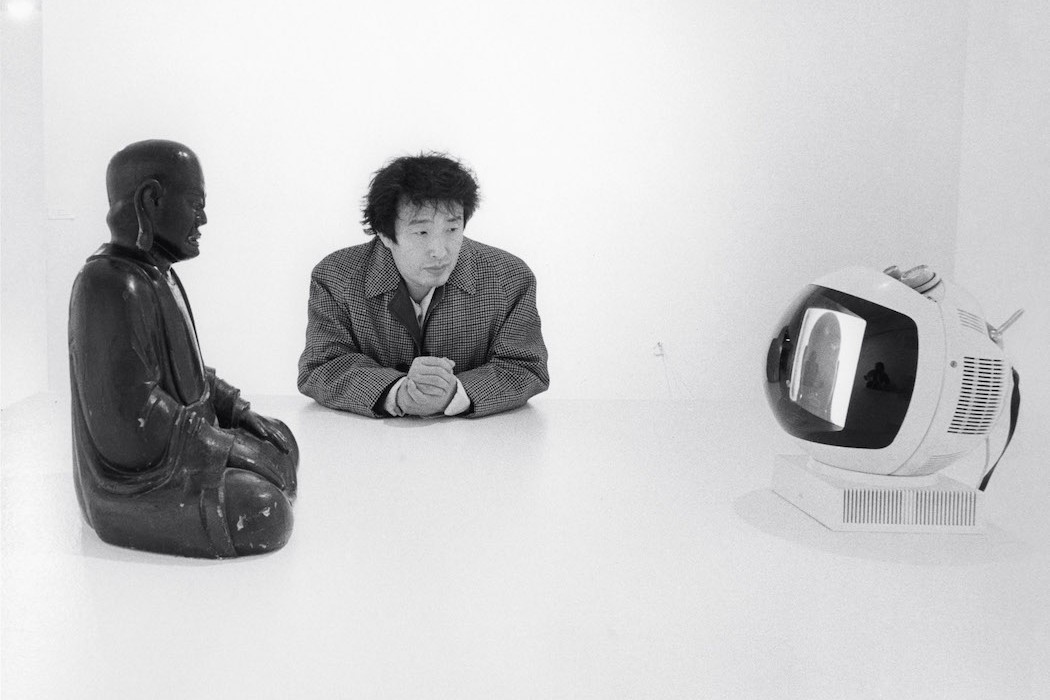 Nam June Paik - TV Buddha (1976)
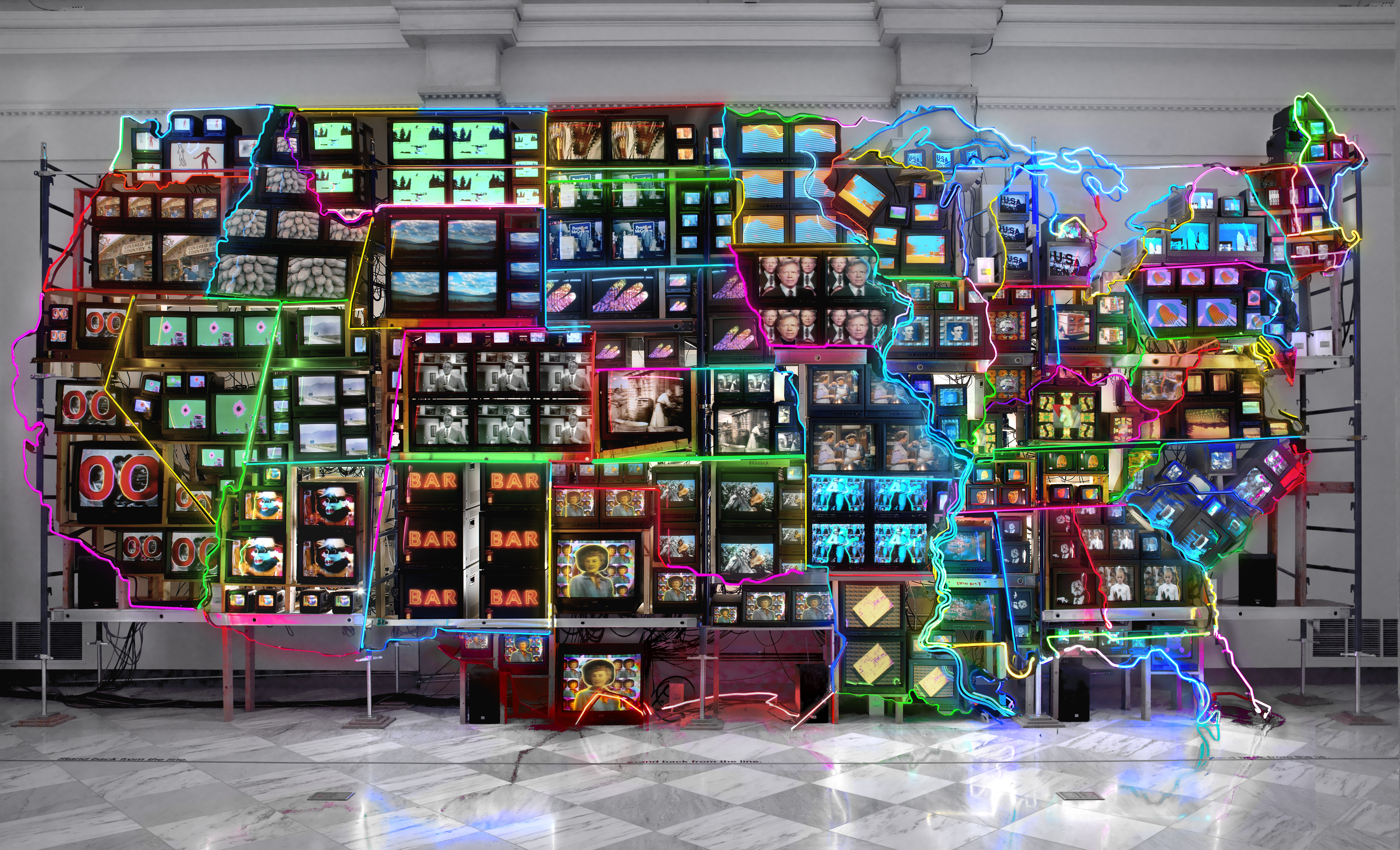 Nam June Paik - Electronic Superhighway: Continental U.S. Alaska, Hawaii (1995) via Smithsonian
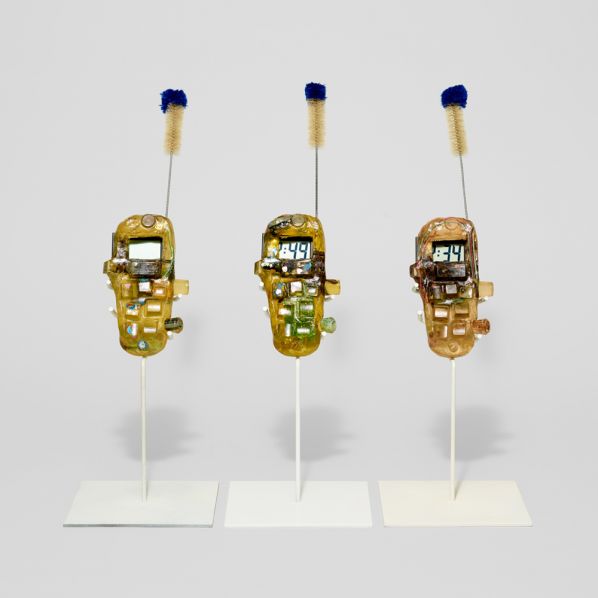 Nam June Paik - Telephone X Editions via Whitney
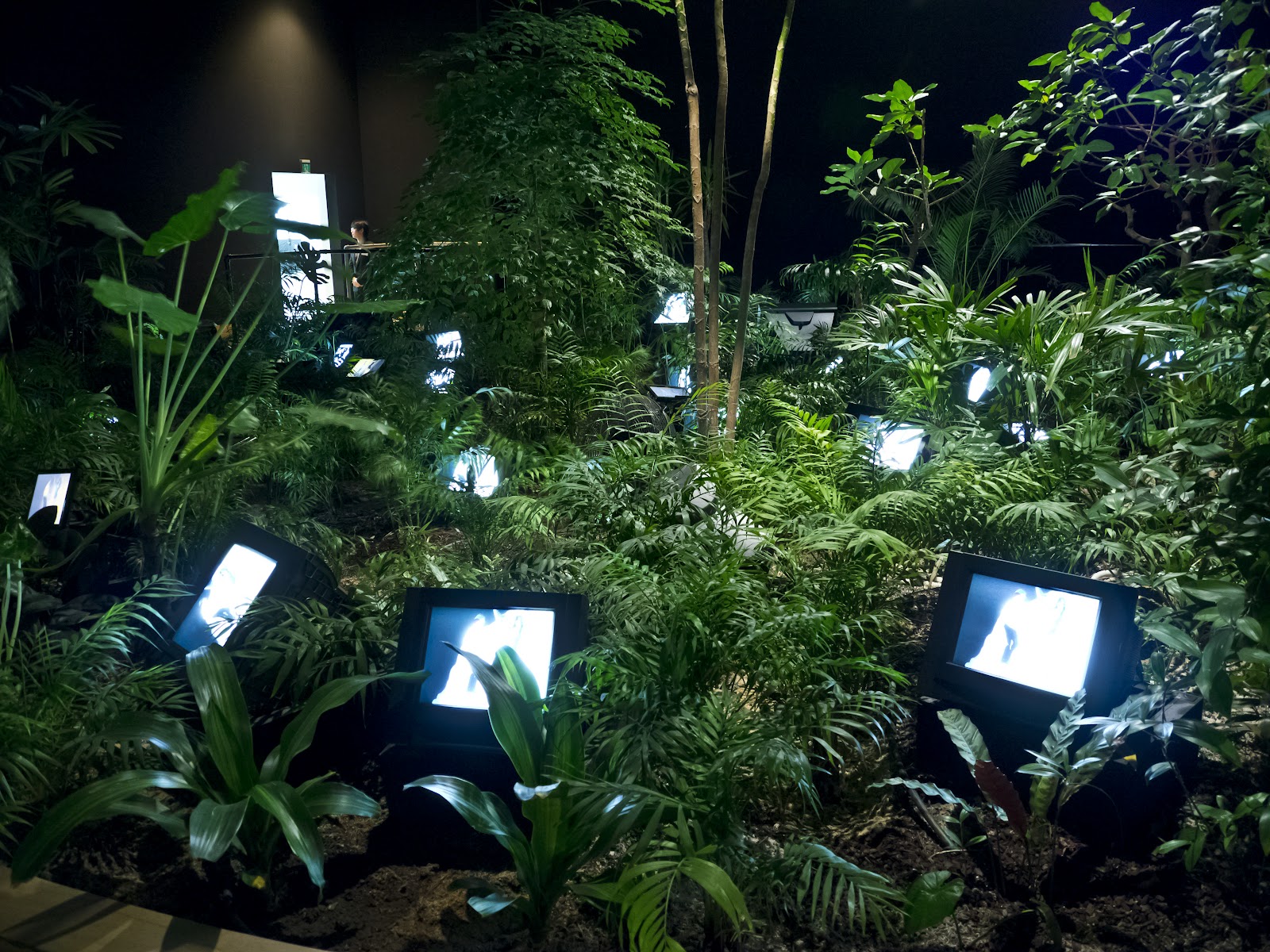 Nam June Paik - TV Garden (1974 - 2000)