foundyou.online - Directory for New Media Art
Open Filters

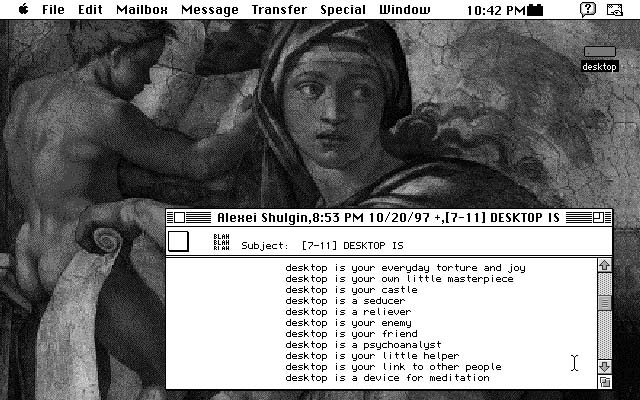
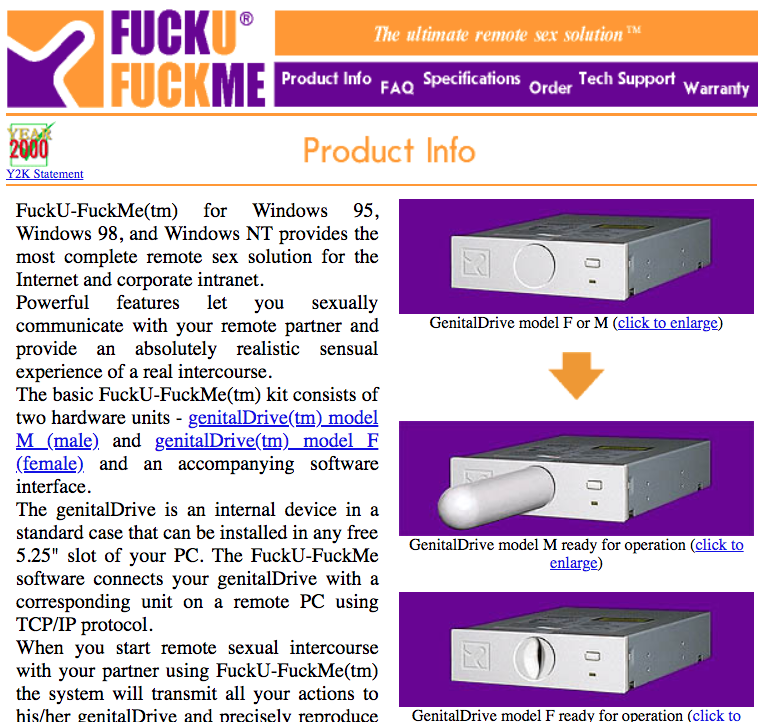
Alexei Shulgin, born in 1963 in Moscow. Since mid 80’s e has been working in the fields of photography, media and contemporary arts. In the 90’s he was one of the pioneers of Net Art. His cyberpunk rock band, 386 DX has toured extensively all over the world. Alexei has participated in numerous exhibitions, media art and music festivals in Russia and internationally. He was teaching at Proarte Institute in St. Petersburg in 2000-2001 and performed as a guest teacher at a number of art schools in Europe and the US. Alexei has curated several exhibitions; in 2001-2004 he was a co-organizer of Readme software art festival (Moscow-Helsinki-Aarhus-Dortmund). He is a co-admin of Runme.org software art repository on the Internet. In 2004 he has co-founded Electroboutique gallery in Moscow. At present, he teaches at Rodchenko school of Photography and Media Art in Moscow. Alexei Shulgin lives and works in Moscow.[1]

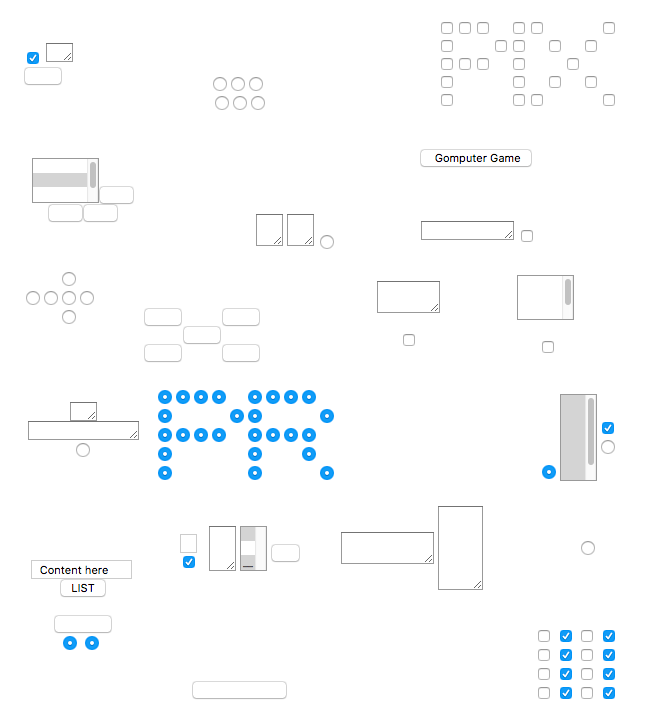
Particularly involved with software art and internet art, he is a part of the readme culture and uses code as a form of art. In 1997, he released his first interactive work, Form Art, in which only minimum factors are programmed in the form of HTML. Shulgin describes this page as a "formalistic" aesthetic art site - a play on words taking into account the clean composition as well as the tools of its creation. Navigating this site requires aimless click-throughs of blank boxes and links, which lead the viewer through 19 pages of "form art" animations. Behavioral expectations are subverted by frequently overriding default functionality of basic form elements such as radio buttons and list boxes.[2]

Many links on his site are now 404, selected online works:

From Rhizome:

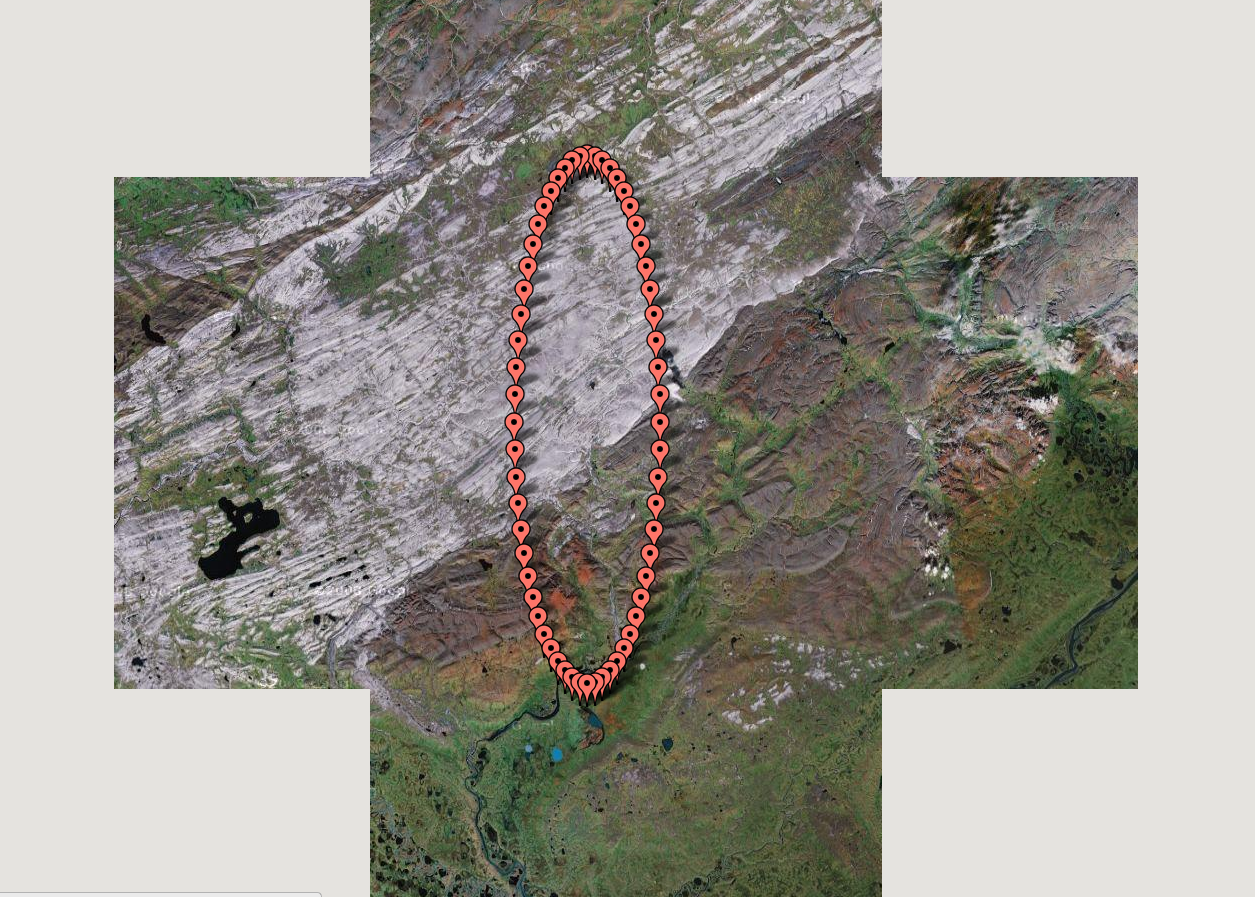
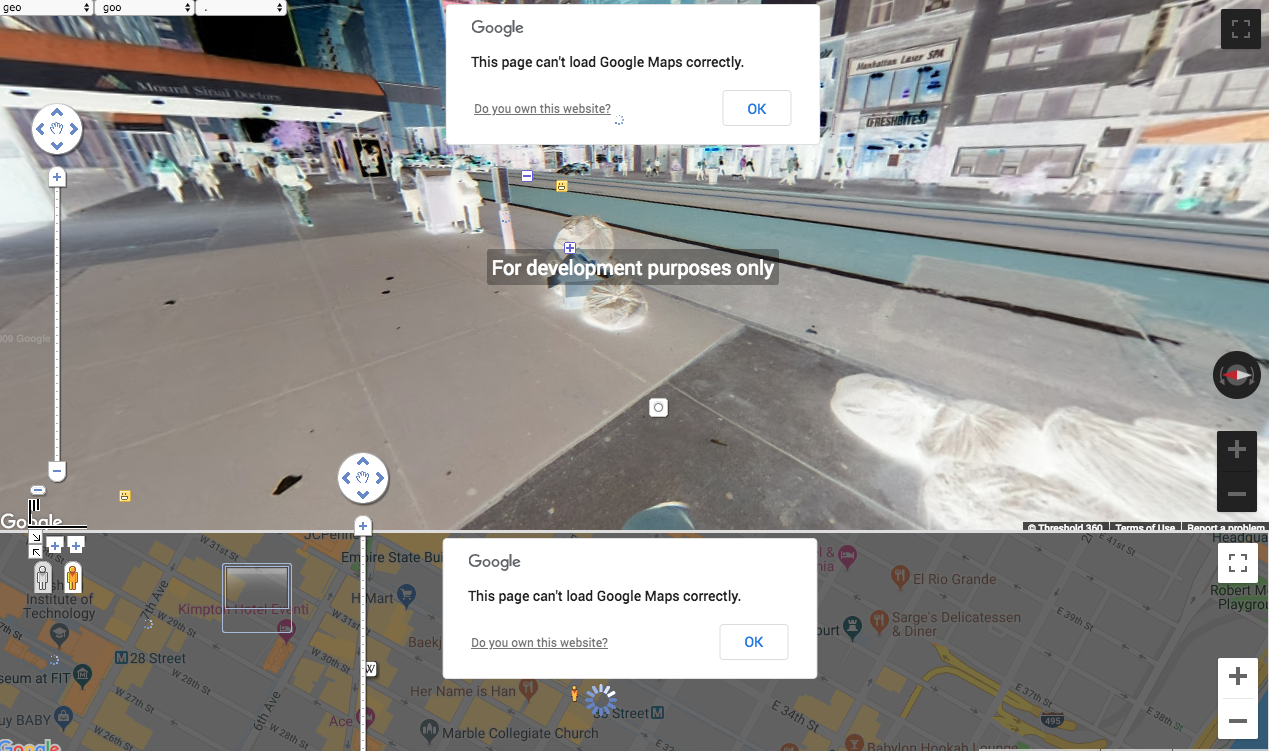
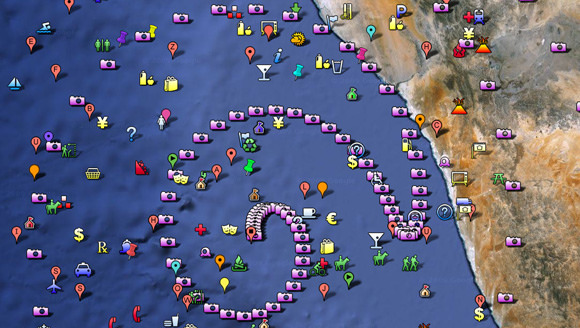
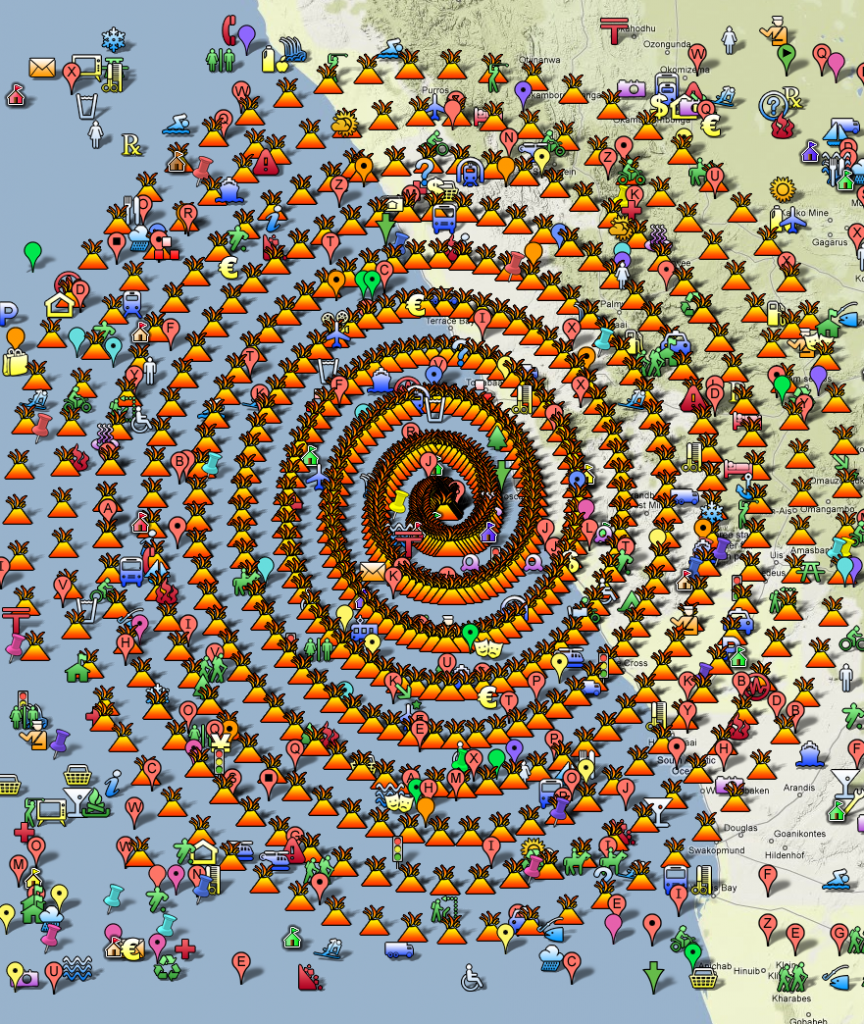
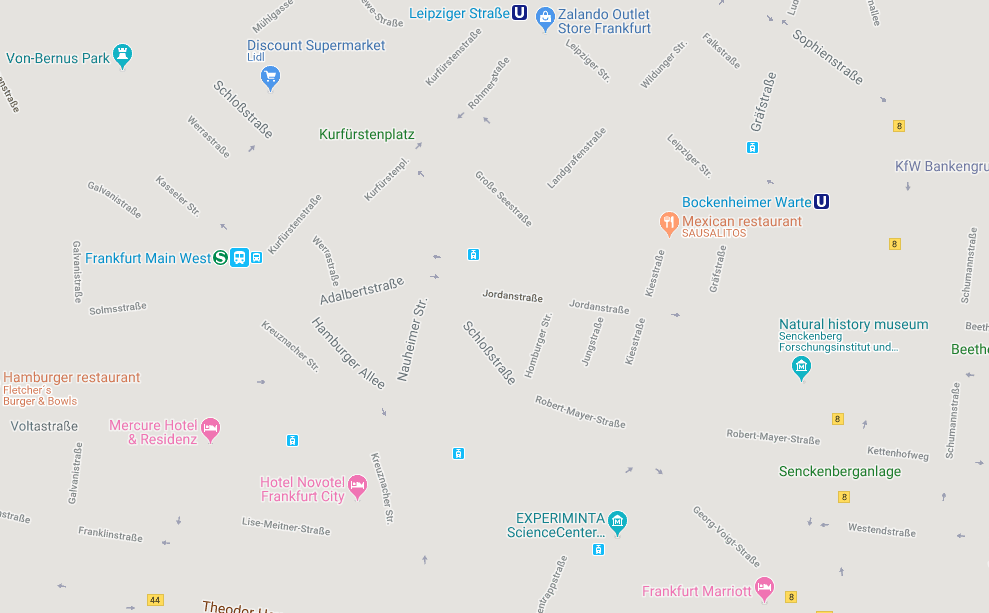
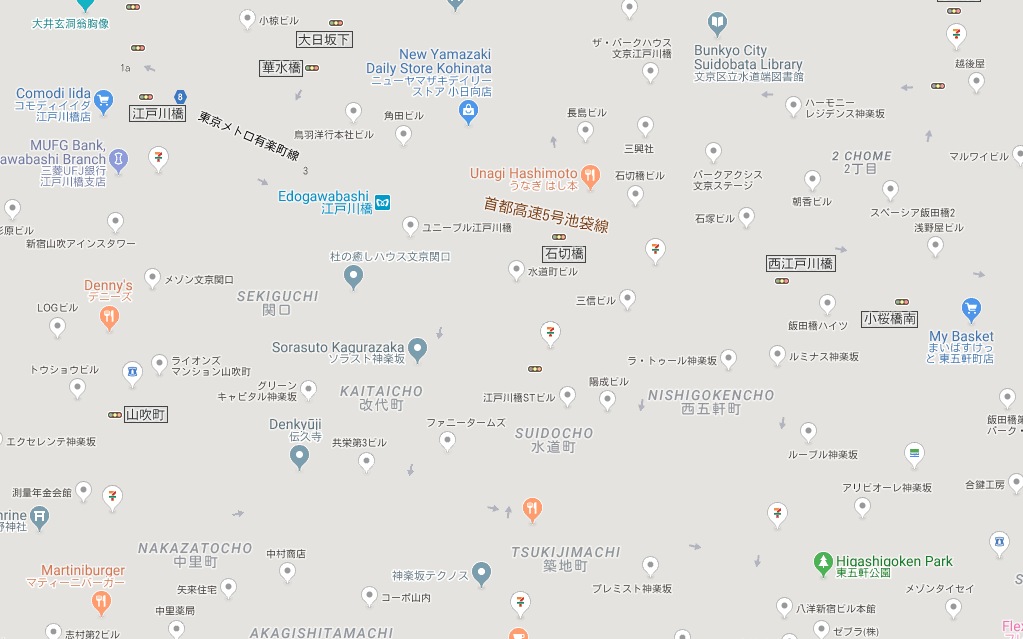
Globalmove.us implements a combination of the Google Maps API and subversive javascript written by the artists to create frenetic drawings (earthworks even) built of Google Maps UI elements. The ability for JODI's hand crafted javascript to accomplish this feat is explicitly allowed and defined by code that is written, hosted and provided by Google. Were this work to be preserved by a collecting institution, how would one ensure that changes made by Google to their Maps API does not destroy the functions implemented by the artist's code?

superbad.comsuperbad.comsuperbad.comsuperbad.comsuperbad.com

Superbad is a noted web art installation created by Ben Benjamin in 1997.

It received a 1999 Webby in the "Weird" category, and was one of nine websites featured in the Whitney Museum Biennial in 2000. Superbad began as a test bed for Benjamin's web design for technology corporations ranging from E! Online to Nippon Telegraph and Telephone. It heavily samples Japanese popular culture. [1]

The site consists of a veritable maze of inter-linked visual, conceptual "subprojects" ranging from two-tone and technical-looking to wacky, colorful, and even bizarre. Often a subproject will have clickable elements linked to other pages within that subproject, or to another, or that just provide visual richness (for example, the "follow" subproject has a grid of circles with arrows that follow the mouse cursor; each circle is a link to a different page within the site). Some of the pages contain narrative elements. There are 143 different pages. His main page serves as a hub to all his subprojects. Clicking anywhere on the "bad" will link to somewhere within each subproject. [1]

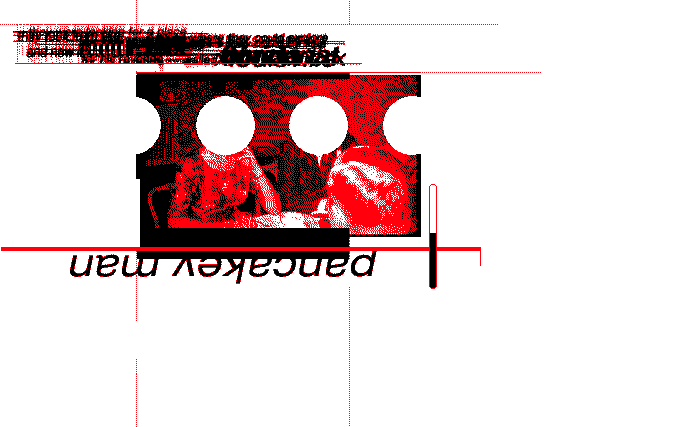
Internet provocateurs JODI pioneered Web art in the mid-1990s. Based in The Netherlands, JODI (Joan Heemskerk and Dirk Paesmans) were among the first artists to investigate and subvert conventions of the Internet, computer programs, and video and computer games. Radically disrupting the very language of these systems, including interfaces, commands, errors and code, JODI stages extreme digital interventions that destabilize the relationship between computer technology and its users. [1]

JODI (Joan Heemskerk and Dirk Paesmans) was formed in 1994. Joan Heemskerk was born in 1968 in Kaatsheue, The Netherlands. Dirk Paesmans was born in 1965 in Brussels, Belgium. Heemskerk and Paesman both attended Silicon Valley's electronic arts laboratory CADRE at San Jose State University in California; Paesmans also studied with Nam June Paik at the Kunstakademie in Dusseldorf. JODI's works are typically seen online. Their recent solo exhibitions include INSTALL.EXE at Eyebeam, New York, which toured to [plug-in], Basel, and BuroFriedrich, Berlin; and Computing 101B at FACT Centre, Liverpool, England. Their works have also been exhibited at Centre for Contemporary Art, Glasgow; Kunstverein Bonn; Stedelijk Museum, Amsterdam; Zentrum fur Kunst und Medientechnologie, Karlsruhe, Germany; Documenta X, Kassel, Germany; Harvard Art Museum, Massachusetts; EAI at ICA, Phillidelphia; and Lisson Gallery, New York, among many others. [1]

Misusing technological tools and languages has been a trademark for Jodi.org (Joan Heemskerk and Dirk Paesmans) since the mid-nineties, when they emerged as the pioneers of a movement which later became internationally known as net.art. Starting by applying this creative strategy to browsers, subverting websurfing logics and hacking the graphic interface, they then moved to videogames and finally to the so-called Web 2.0, deconstructing platforms such as Blogger, Google Maps and now Twitter. [2]

Selected net art pieces [3]

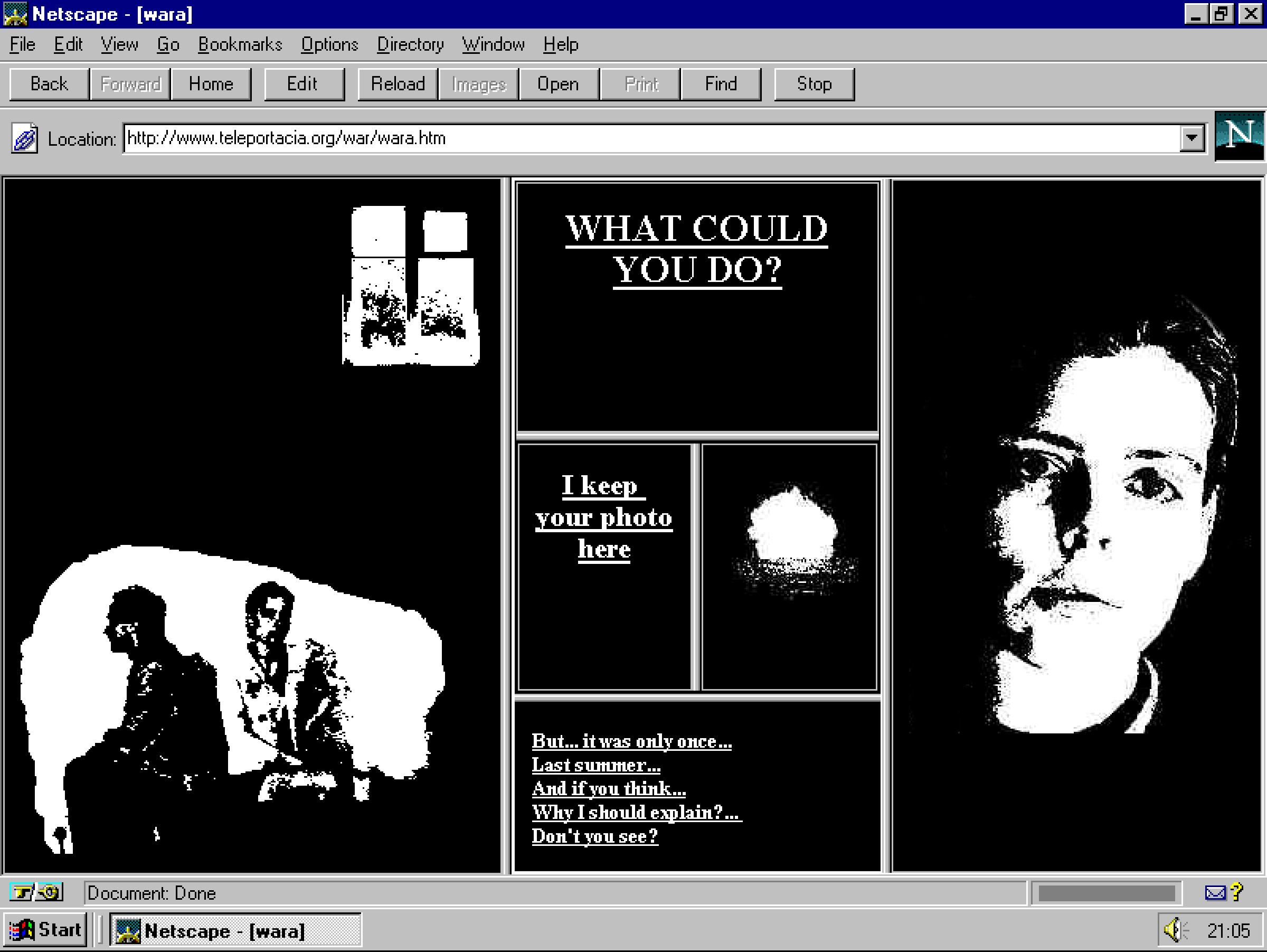
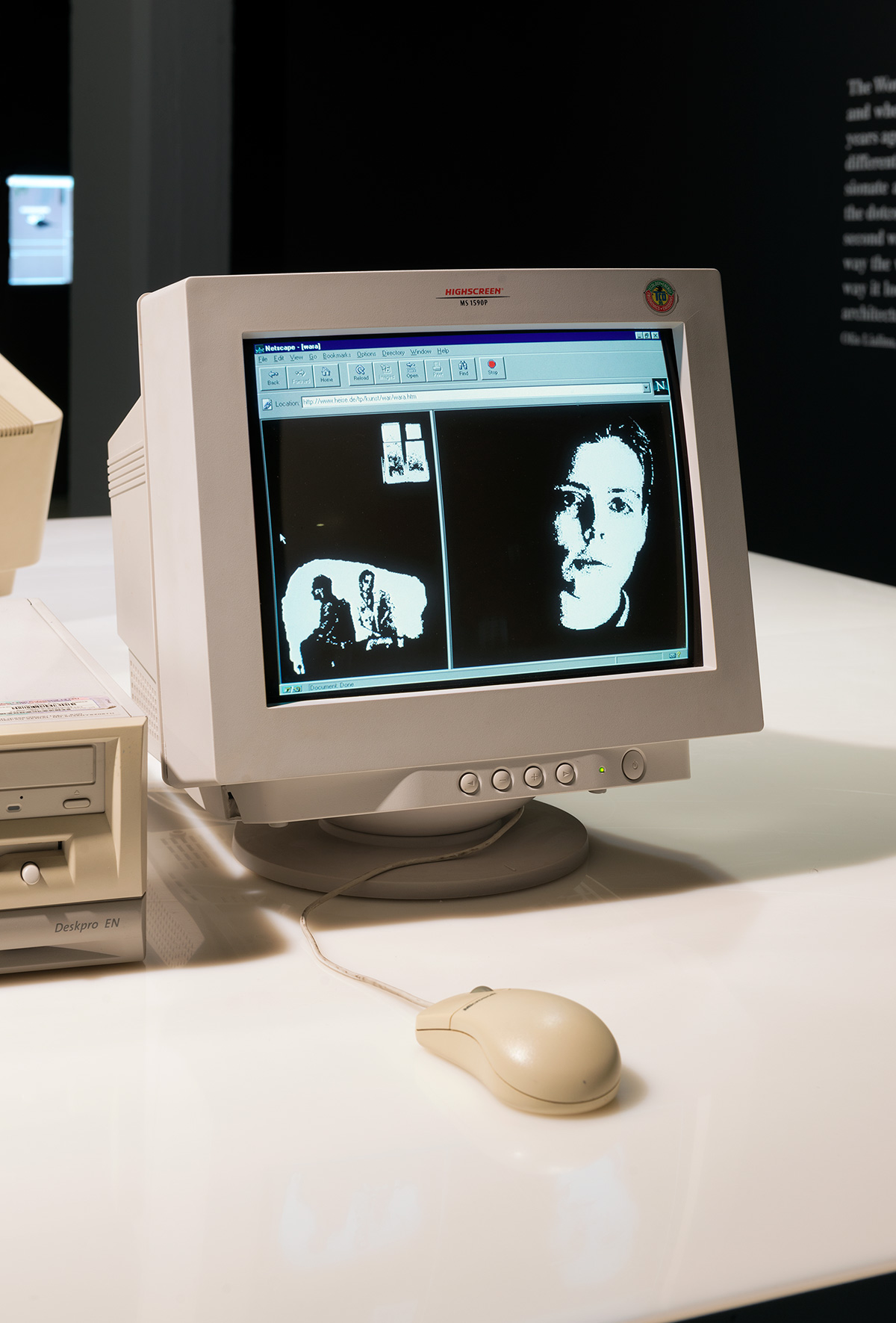
My Boyfriend Came Back From the War is an example of interactive hypertext storytelling. The work consists of nested frames with black and white web pages and (sometimes animated) grainy GIF images. When clicking hyperlinks in the work, the frame splits into smaller frames and the user reveals a nonlinear story about a couple that is reunited after a nameless military conflict. The lovers find it difficult to reconnect; the woman confesses that she has had an affair with a neighbour while the returned soldier proposes marriage. The story unfolds to the point where the screen has become a mosaic of empty black frames. [1]

Olia Lialina calls the work a netfilm, because of its similarity with cinematic narrative. The grainy black-and-white images and intertitles refer to early silent movies. Of its filmic qualities, curator Michael Connor wrote of the work, "the work adapts cinematic montage to the web ... separate frames are joined together by HTML code and the browser itself and experienced in both space and in time, employing what Lev Manovich has characterized as spatial and temporal montage." [1]

https://anthology.rhizome.org/my-boyfriend-came-back-from-the-war

Rhizome champions born-digital art and culture through commissions, exhibitions, digital preservation, and software development. Founded by artist Mark Tribe as a listserve including some of the first artists to work online, Rhizome has played an integral role in the history of contemporary art engaged with digital technologies and the internet. Since 2003, Rhizome has been an affiliate in residence at the New Museum in New York City.[1]

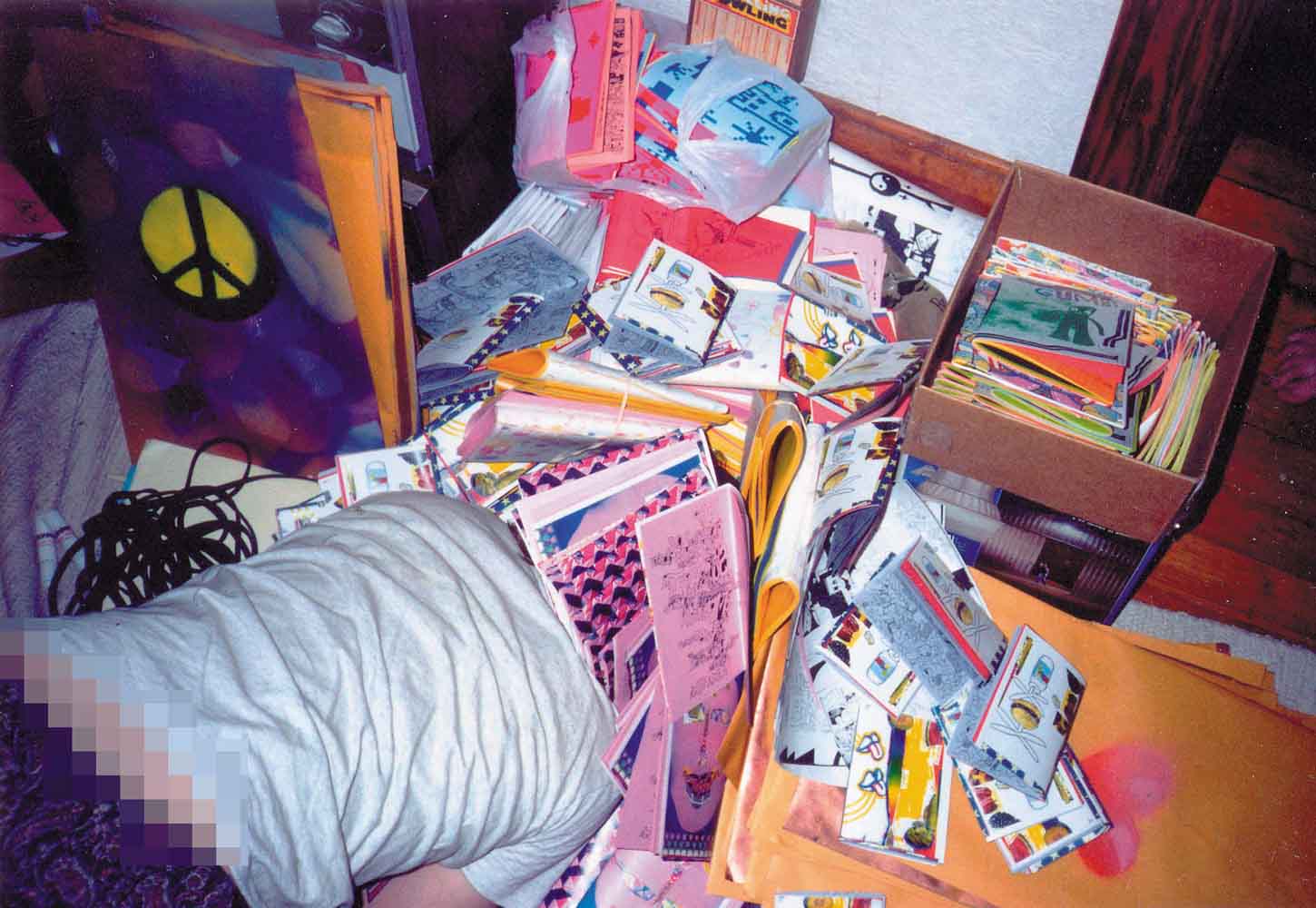
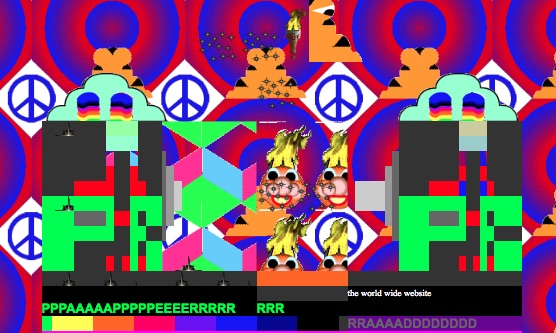
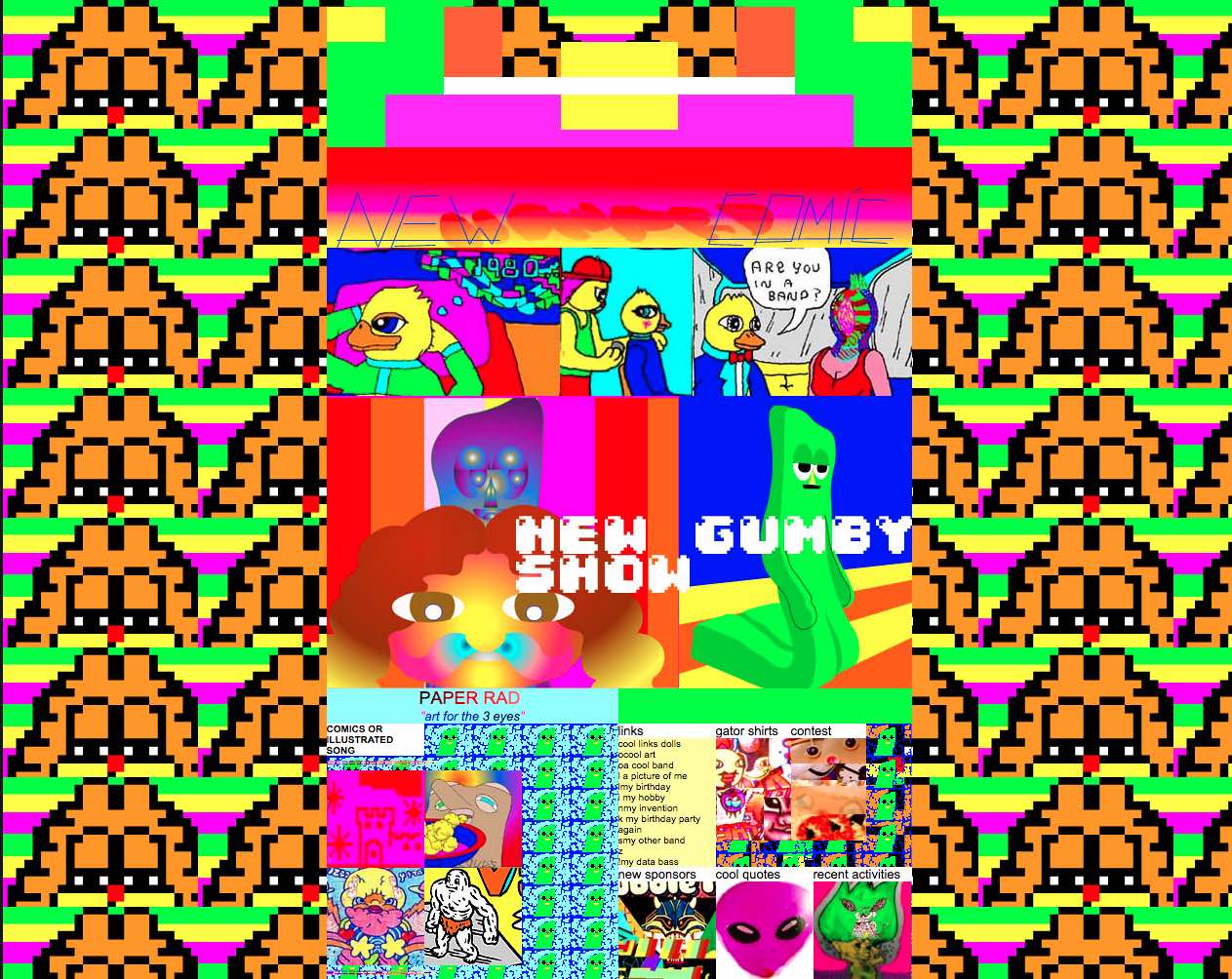
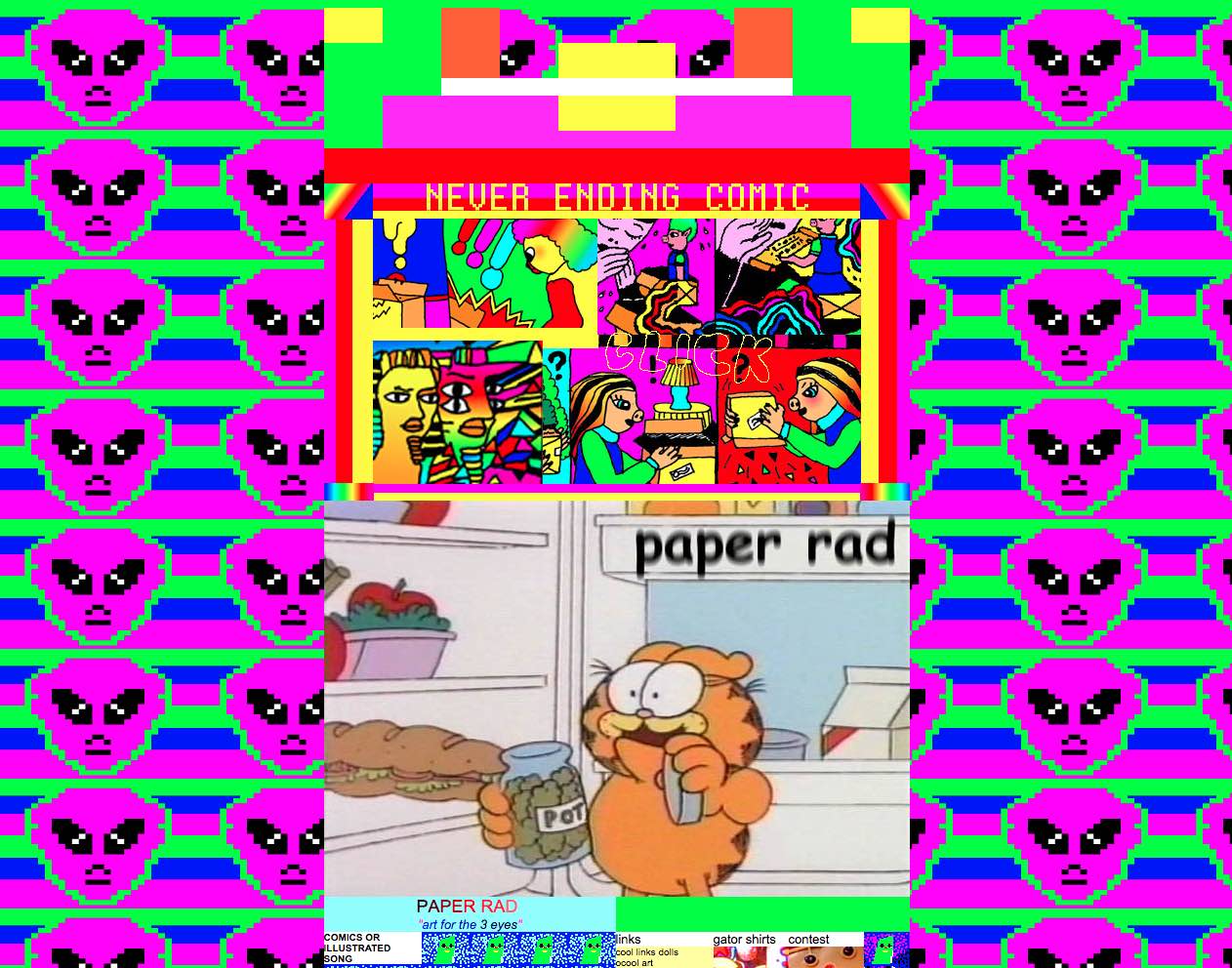
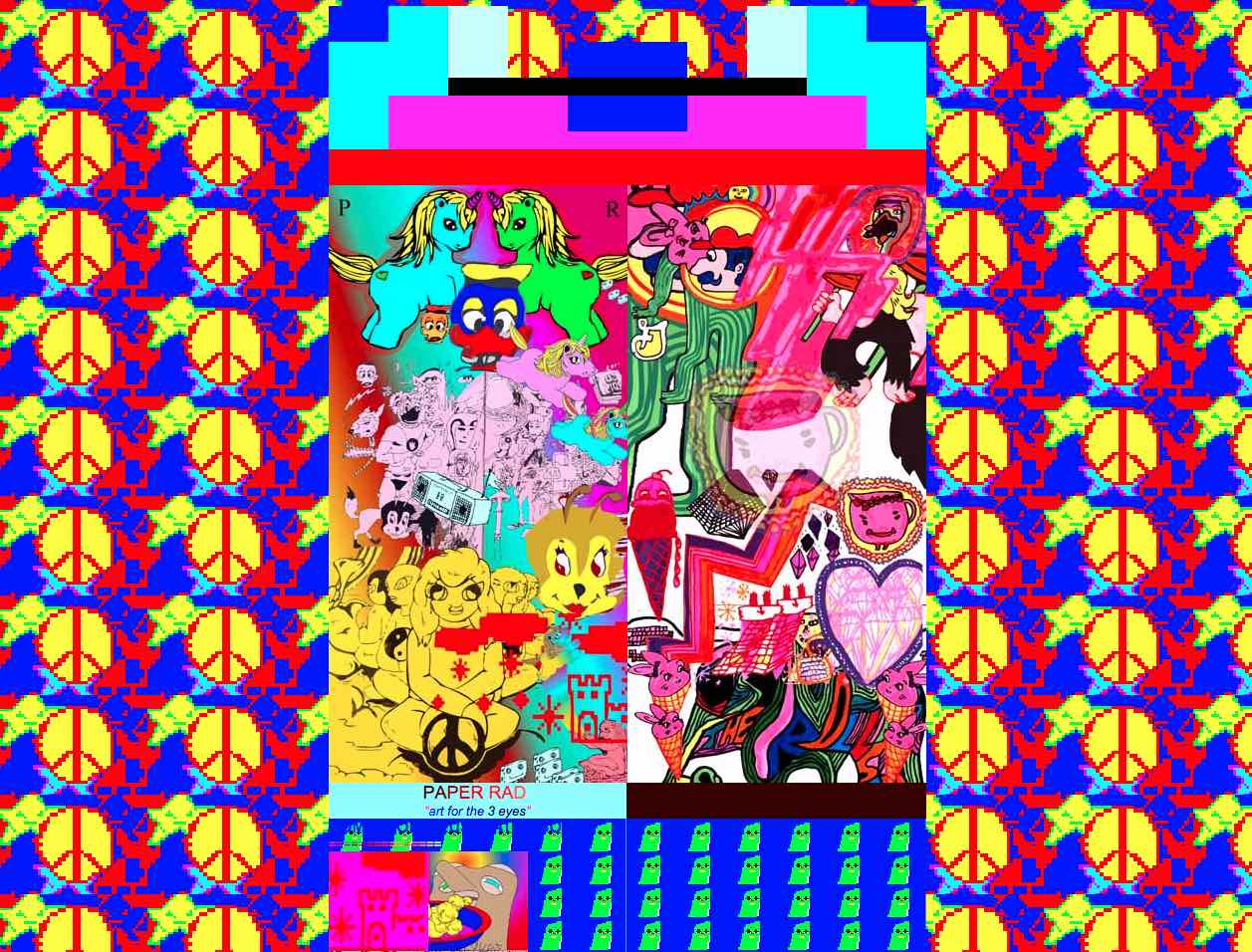
One of the most important collectives to emerge in the last decade, Paper Rad exploded at the edge of a cultural time zone—before the social web—when subculture was still palpable and also clearly becoming impossible to sustain. They emerged in the early ’00s within a community dedicated to DIY art practice that had strong roots in Providence, Rhode Island, as well as cities like Detroit, Baltimore, Boston, and towns in Western Massachusetts became known for a cartoon cosmos that felt like a psychedelic, subversive response to American pop culture that was hatched out of a sincere and deep engagement to it. Their work began with ’zines and music, and eventually grew to encompass digital animation, videos, installations, and their website—paperrad.org—which became an increasingly central part of their work as it drew attention and followers. [1]

... the page was changed daily, continually layered with new content or reorganized spatially. Amid this constant development, there are a few distinguishing elements to the website that endured throughout its seven-year life. First, it carried over the DIY ethos and aesthetics from the culture from which it emerged—paperrad.org was not an easy-to-navigate online artist’s CV but existed more like a maze of found, remixed, and original content. Visitors were only able to track the identities of participating members through deep research, which lent the site a mysterious and open feel, as if Paper Rad could be as small as one person or as large as a thriving subculture. A second distinguishing factor was that Paper Rad created their own discreet world that blended influences from both analog and digital culture. In the Paper Rad cosmos, hacked and re-versioned My Little Ponies mingled with animated gifs and characters originally rendered in printed ’zines, like Tux Dog, which were digitized and made open source. This straddling of different pop cultural realms—television and the internet, mass media and amateur media—became a trademark of Paper Rad, as did a disregard for medium specificity. The Paper Rad website, presenting recycled cartoon characters like Gumby in Flash animation sagas, was evidence of the eroding boundaries between media we are so familiar with today. [1]

Paper Rad's visual projects often employ bright fluorescent palettes juxtaposed with primary colors to create a distinctive "lo-fi" look. It adopts a variety of techniques and elements to achieve this look, including pop art, collage, punk art, as well as imagery from popular culture. The multimedia projects incorporate MIDI audio, poor recordings of original sound effects and voices, pixelization, and other crude audio and visual components. Paper Rad recycled or appropriated obscure sounds and images from a variety of sources, including old cartoons, commercials, and late-night television. [2]

The collective–which consisted of siblings Jessica and Jacob Ciocci, Ben Jones, and other collaborators–cultivated a unique interest in exploring artistic strategies from other media, especially comics and zines, through web-based and multimedia works. Serially updated during the group’s most active period (2001-2008), paperrad.org was both an archive and a artwork, a riot of brightly colored compositions featuring graphics and a mazelike compilation of characters from otherwise overlooked aspects of ’70s and ’80s pop culture. [3]

Paper Rad Homepages 01-08 Collected by Rhizome

Selected Webpages

Fata MorganaFata MorganaFata Morgana

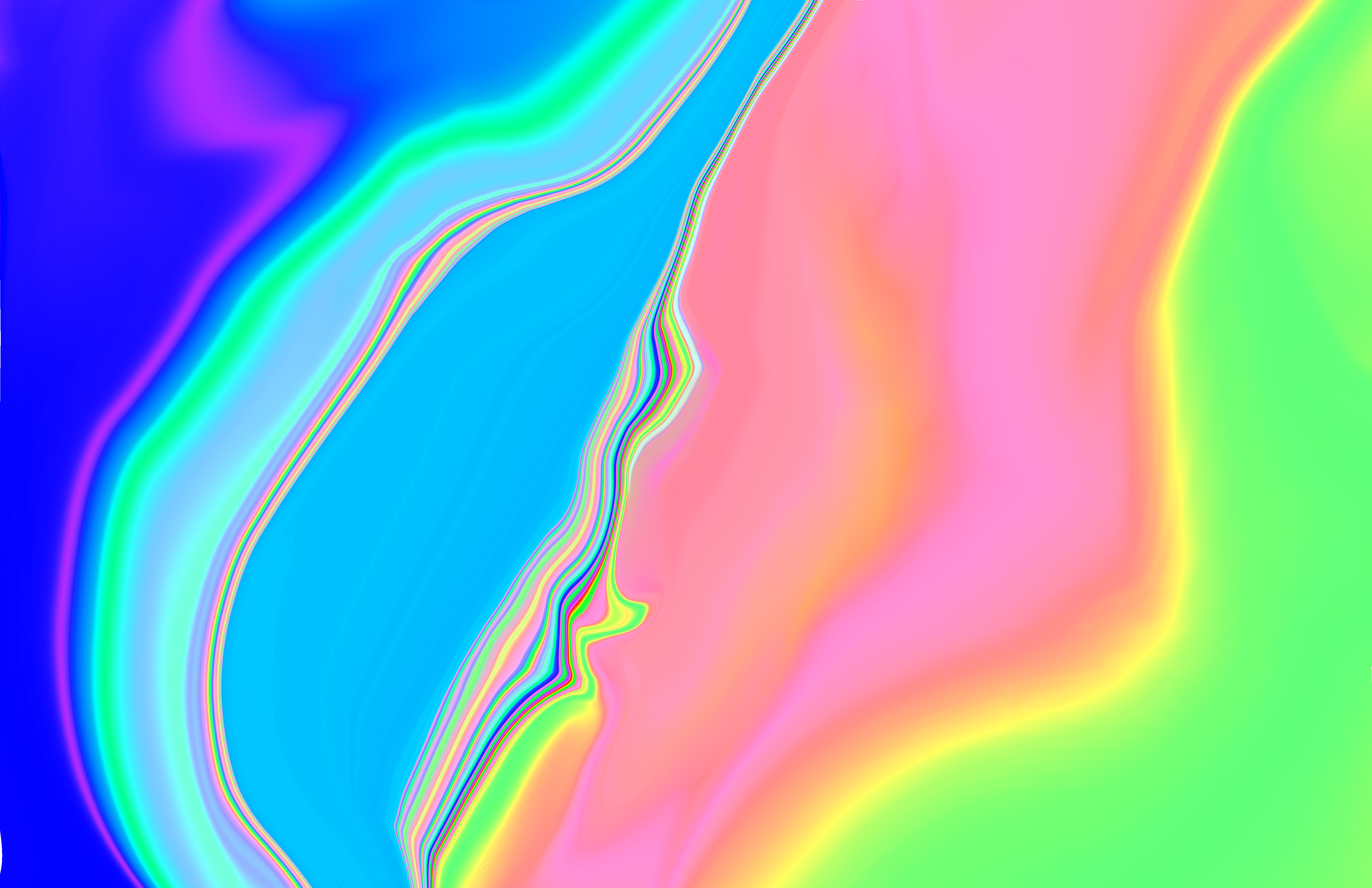
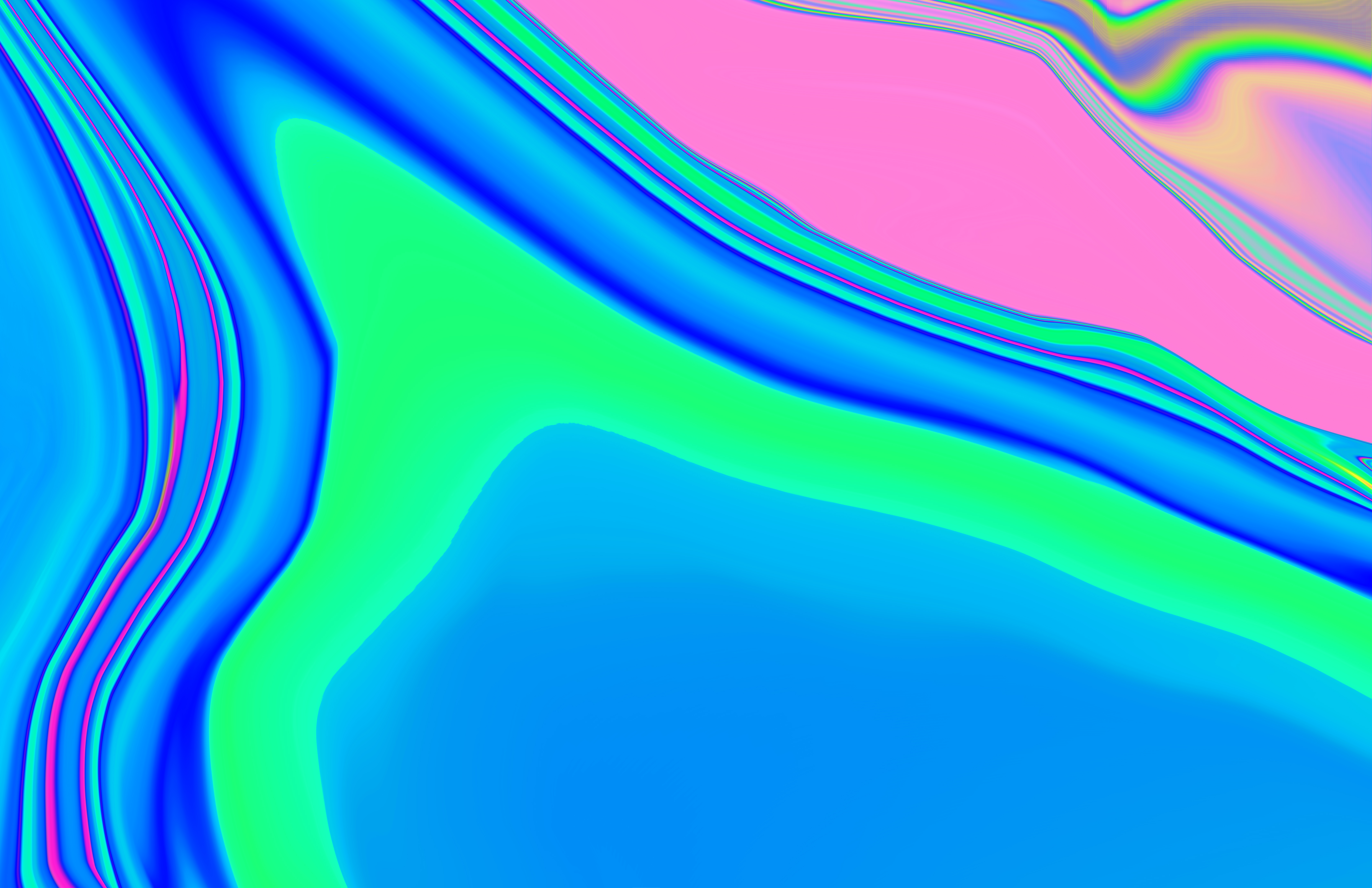
A Fata Morgana is an unusual and very complex form of mirage. It is usually seen in a narrow band right above the horizon. Fata Morgana mirages tremendously distort the object or objects which they are based on, such that the they often appear to be very unusual, and may even be transformed in such a way that it is completely unrecognizable. Fata Morgana can be seen on land or at sea, in polar regions or in deserts.[1]

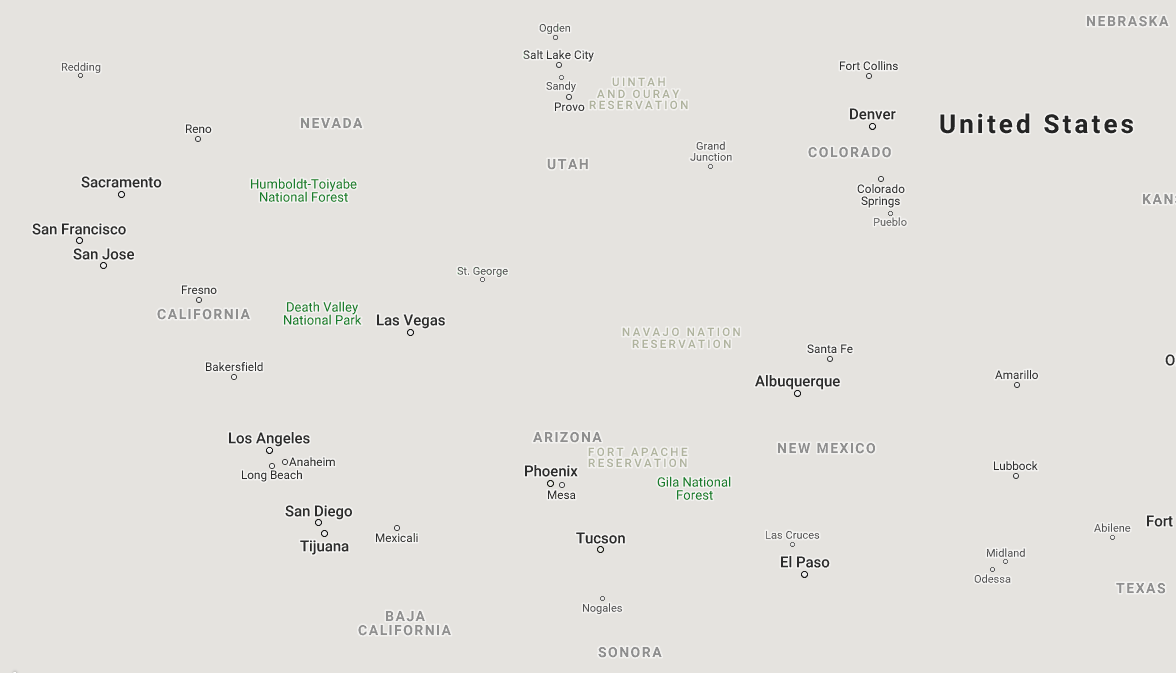
Solarsteinn / Fata Morgana by Damon Zucconi is an application that removes the map from googlemap, leaving only the names of places. Like in the phenomena of optical illusions / mirage, Zucconi speculates on the actual existence of real locations:[1]

Seasoned explorers, vehemently insisting on what they had seen, set down mountains and islands on their charts where there was nothing but empty sky ... Expeditions sent out later to verify these new lands sometimes saw the same fata morgana, further confusing the issue. Only by prolonging their arduous journeys, thereby observing a constant receding of the image, did they prove that the land was not there at all. [2]