foundyou.online - Directory for New Media Art
Open Filters

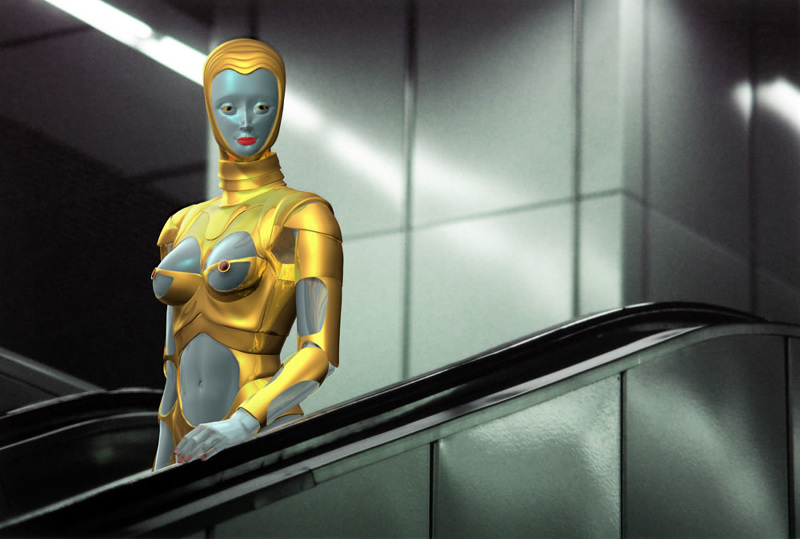
Claudia Hart (born 1955 in New York, NY) is an artist and associate professor in the Department of Film, Video, New Media, Animation at the School of the Art Institute of Chicago, Chicago, Illinois. She is represented by bitforms gallery, New York. Hart has been active as an artist, curator and critic since 1988. She creates virtual representations that take the form of 3D imagery integrated into photography, animated loops and multi-channel animation installations. [1]

Hart's work applies a feminist perspective to a discussion of digital technology and a critique of the media. Much of her work attempts to introduce women into a male-dominated technological culture and condemn the violent impulses of a masculine digital production environment. In her artist statement, Hart says, "By creating virtual images that are sensual but not pornographic within mechanized, clockwork depictions of the natural, I try to subvert earlier dichotomies of woman and nature pitted against a civilized, "scientific" and masculine world of technology. In my own way, I am staging a romantic rebellion against technocratic and bureaucratic culture." [1]

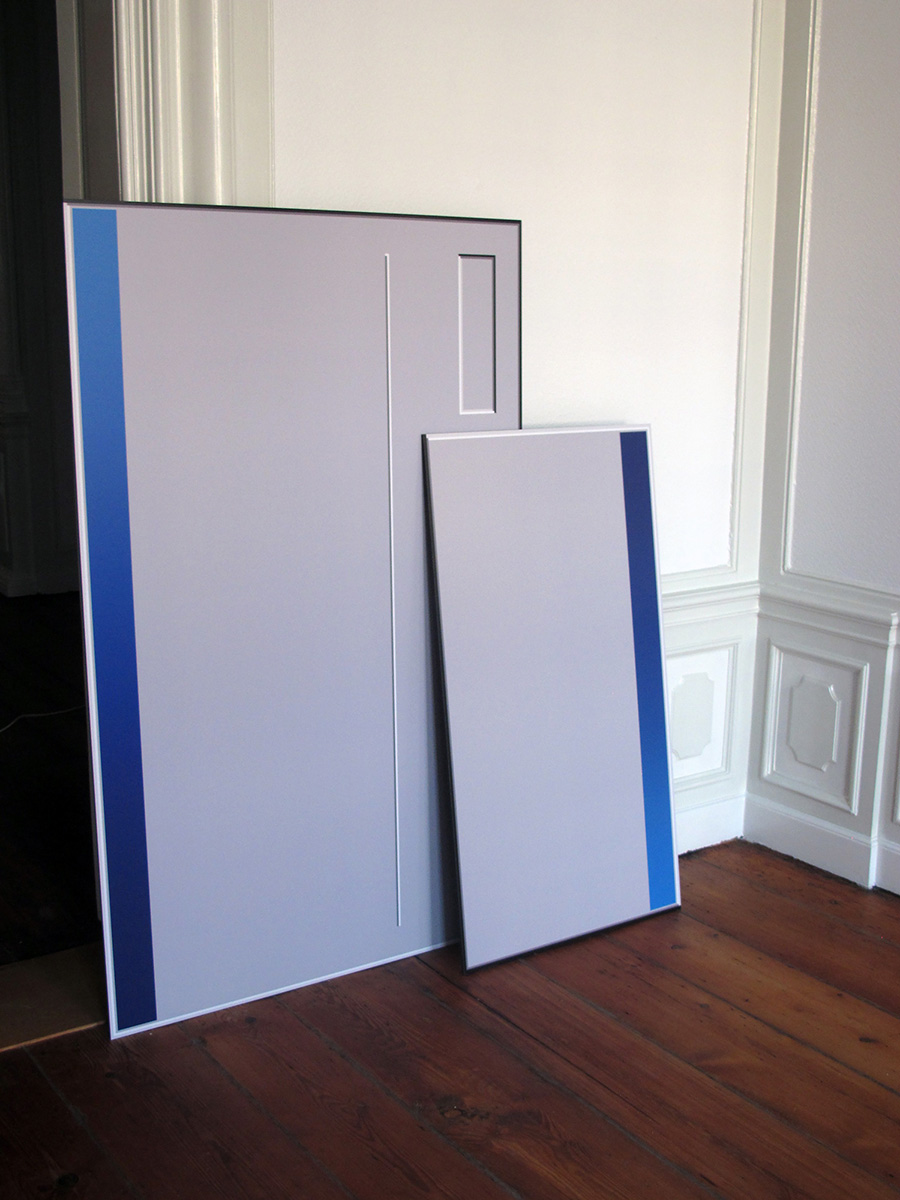
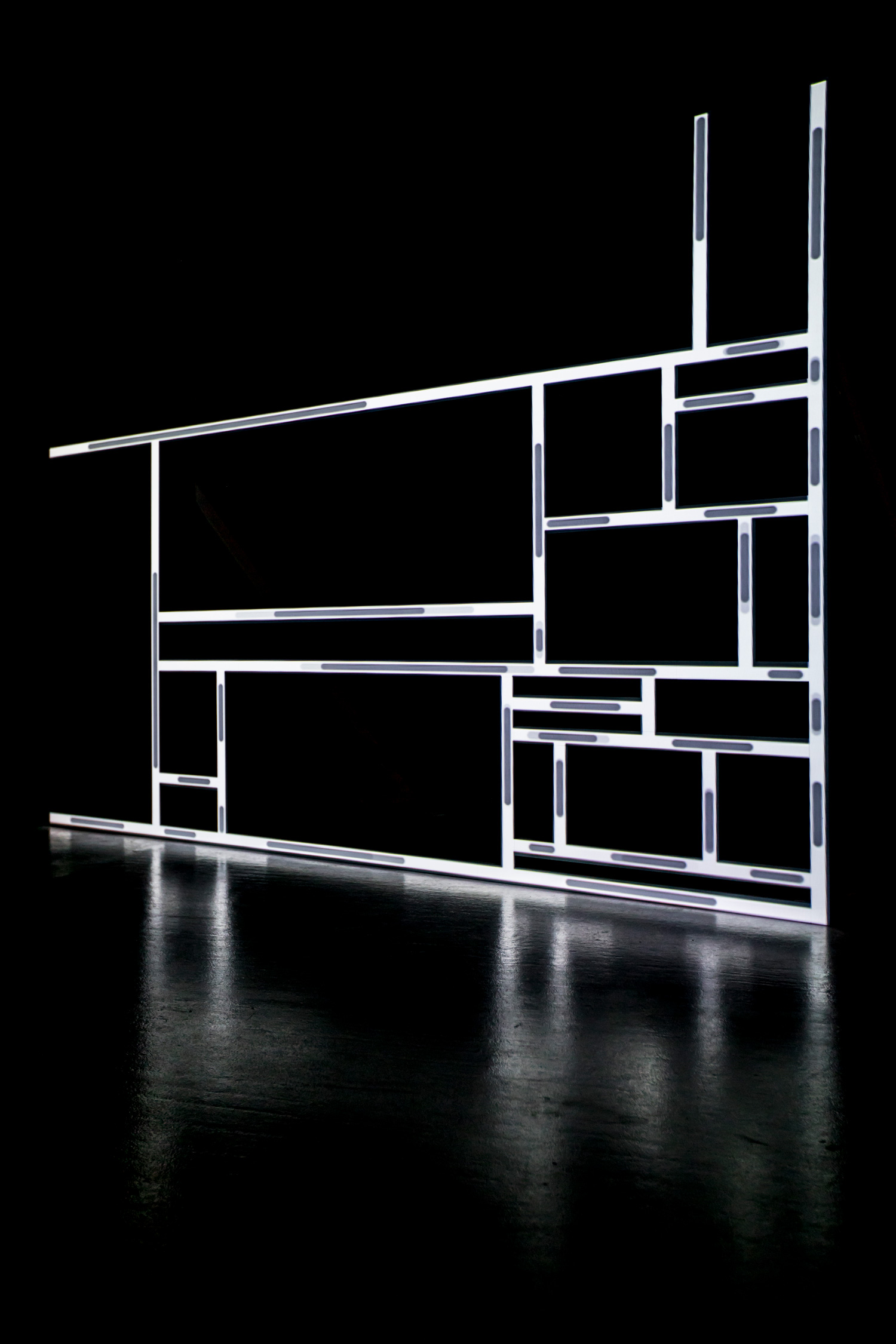
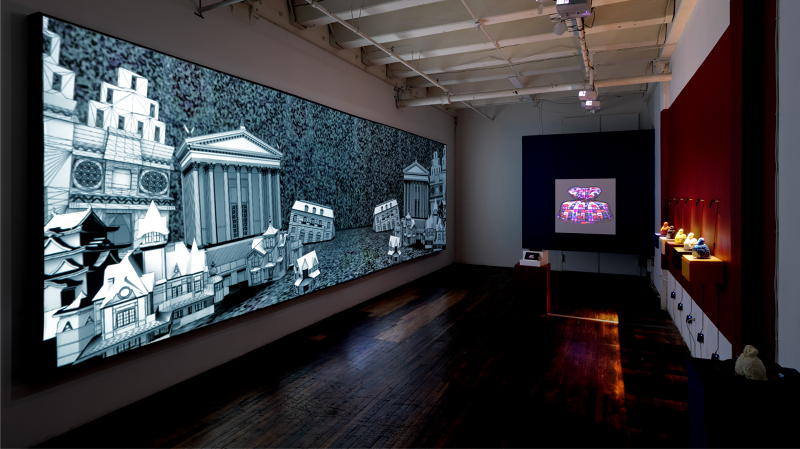
Jan Robert Leegte is among the first artists who were involved in the 90s NetArt movement. Since 1997, he creates art in the form of websites, which he connects to art historical movements such as minimalism, land art and conceptualism. Leegte also translates the themes of his work to offline media such as print, sculpture and projections. A reoccurring theme in his work is the sculptural materiality of interfaces of computer programs. Like the early graphic design of cursors, selection boxes and menu bars that were to give the user the impression of actually physically pressing the buttons with graphic shadows. Leegte often uses these components and by placing them in a new context, giving them their own, sculptural legitimacy. [1]

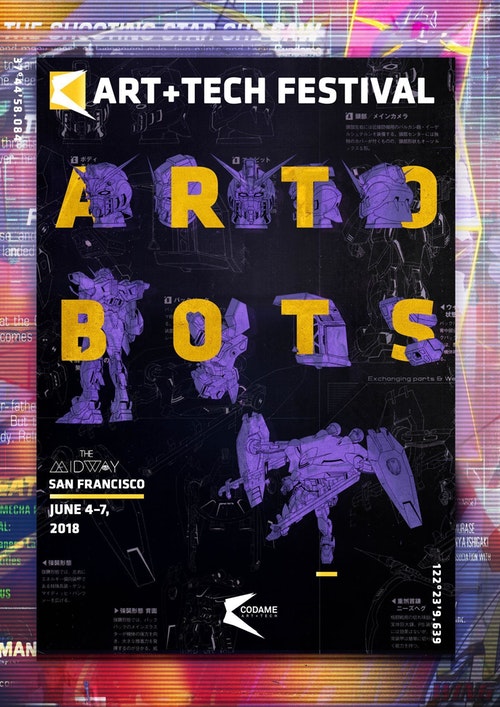
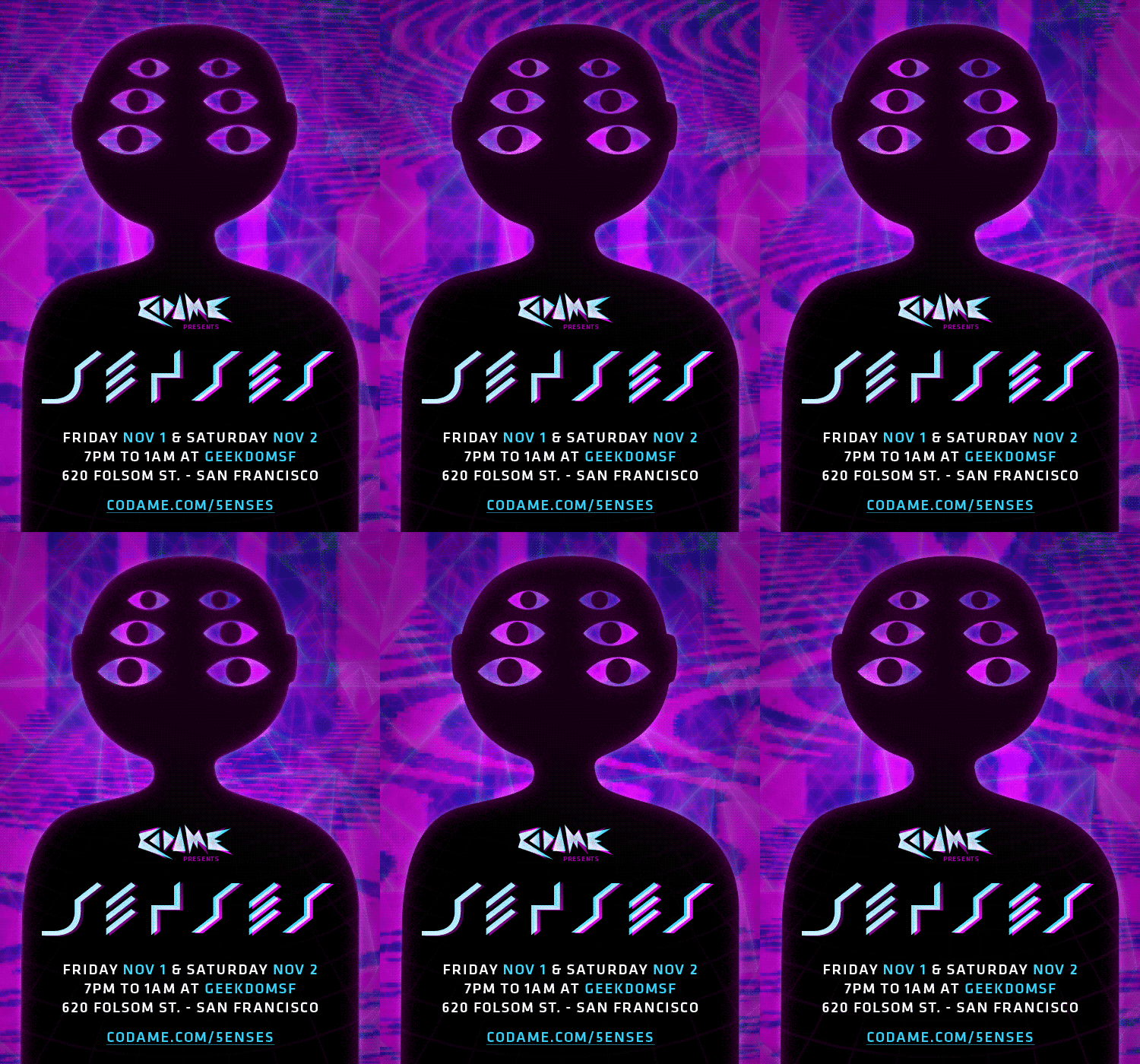
CODAME shapes the future through inspiring experiences and playful ART+TECH projects. CODAME events, installations, and workshops connect people of all specialties and backgrounds. Join us to continue the visionary celebration, running since 2010! [1]

Leveraging technology for creativity requires cultivation. By valuing questions over answers CODAME creates spaces encouraging exploration and discovery. Artists, entrepreneurs, innovators, amateurs, and leaders are all welcome on our journey. Startups, corporations, non-profits, and collectives alike have participated in CODAME style way-finding! [1]

CYFEST is one of the largest international media art festivals, it was founded in St. Petersburg in 2007 by independent artists and curators. The festival promotes the emergence of new forms of art and high technology interactions, developing professional connections between artists, curators, engineers and programmers around the world and exposing wide audiences to the works in the field of robotics, video art, sound art and net art.

From Hackers of Resistance:

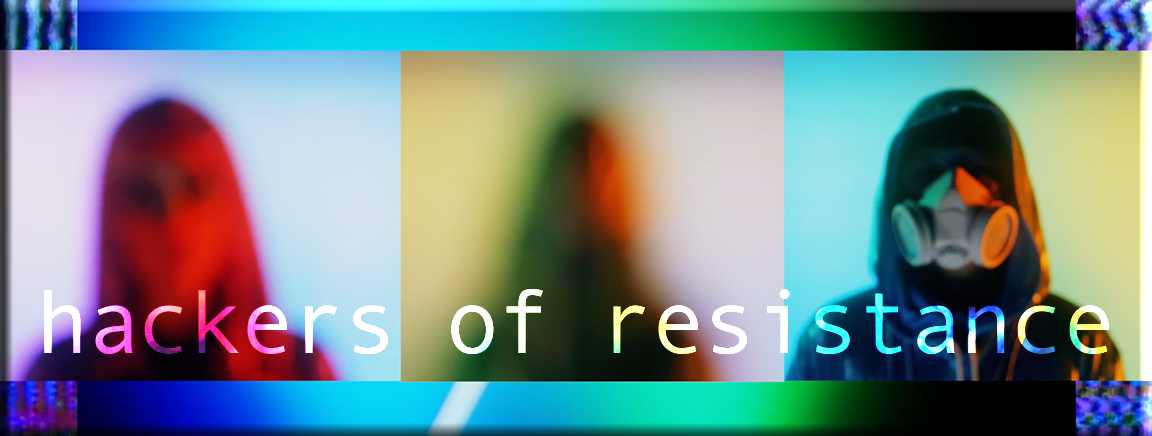
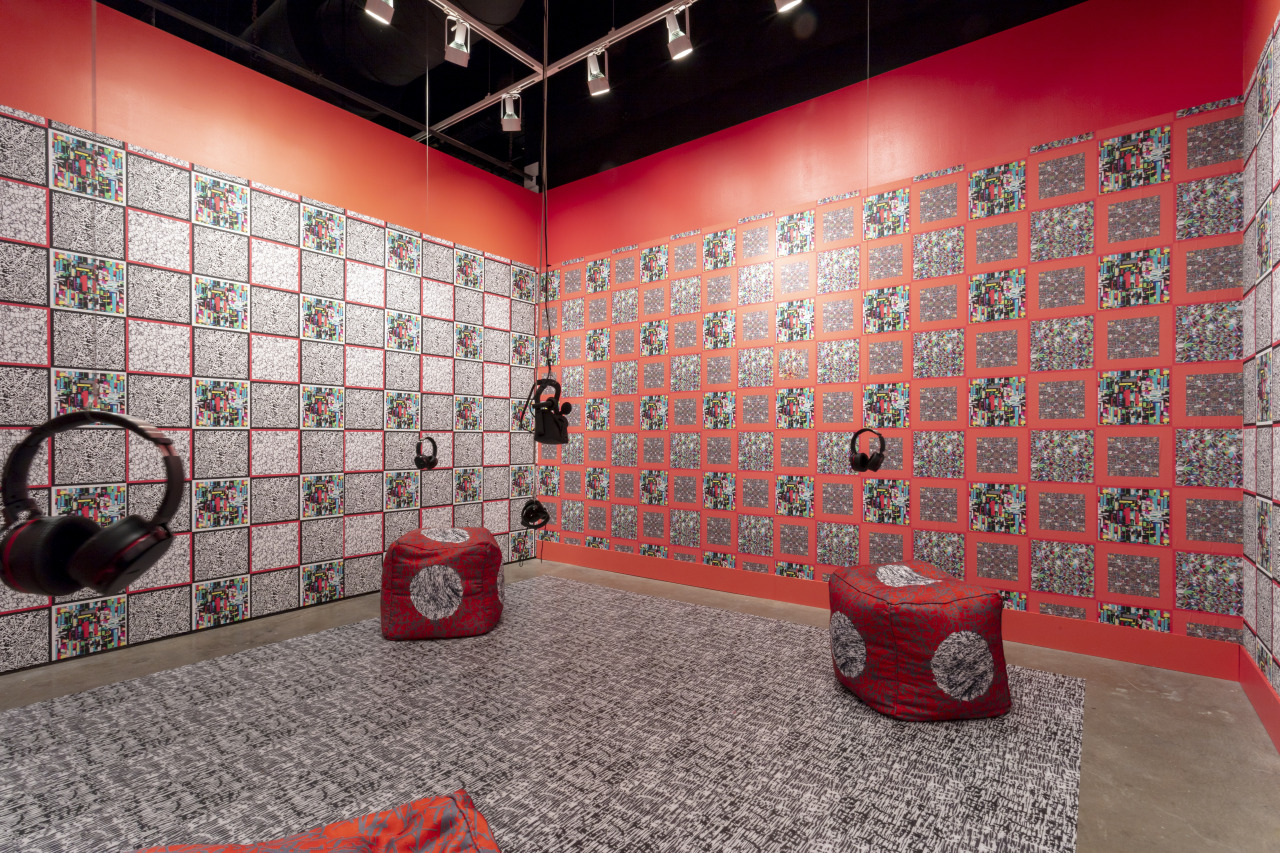
The Hackers of Resistance (HORs) is a queer transfeminist hacker collective of artists, activists, researchers, cyborgs, witches, and technologists, of color. Co-conspirators, we build tools to defend our community, educate people to be secure, to demand and make ourselves heard, to fight back and hack tools of oppression. H0Rh0use is 0ur imm3rsive mUltim3dia heisT.

From Ada Gender New Media & Technology:

Hackers of Resistance (HORs) is a hyperreal-multimedia-installation-performance-video-game reimagining feminist activism. It’s immersive theater, video installation, and game design—but mostly, it’s a universe. A power fantasy of the oppressed, we subvert traditionally-white-American-centered dystopian narratives by placing WoC hackers as superheroes willing to risk it all for solidarity (our vision of utopia). Our stylized hyperreality uses shimmery-neon aesthetics, socially-aware comedy, and DIY charm to address serious concerns like the fate of minorities in the hands of the current administration. Some of the projects the HORs are developing and tinkering with are cybersecurity labs, anti-facial recognition, counter-surveillance, social engineering, bio-hacking, dildo-hacking, and DIWO 3D printable abortion kits in collaboration with our incarcerated sister organization Marias Clandestinas.

From Wikipedia:

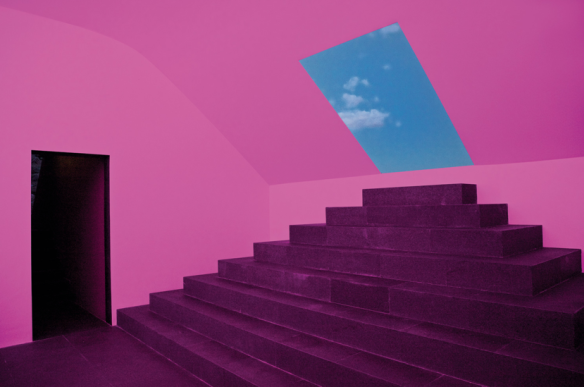
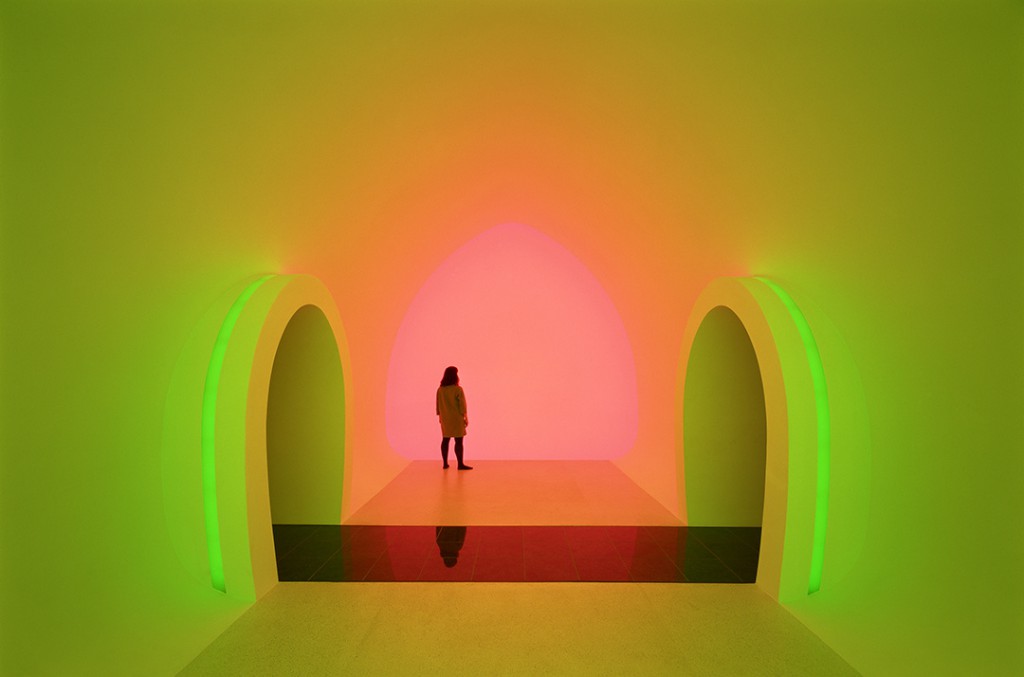
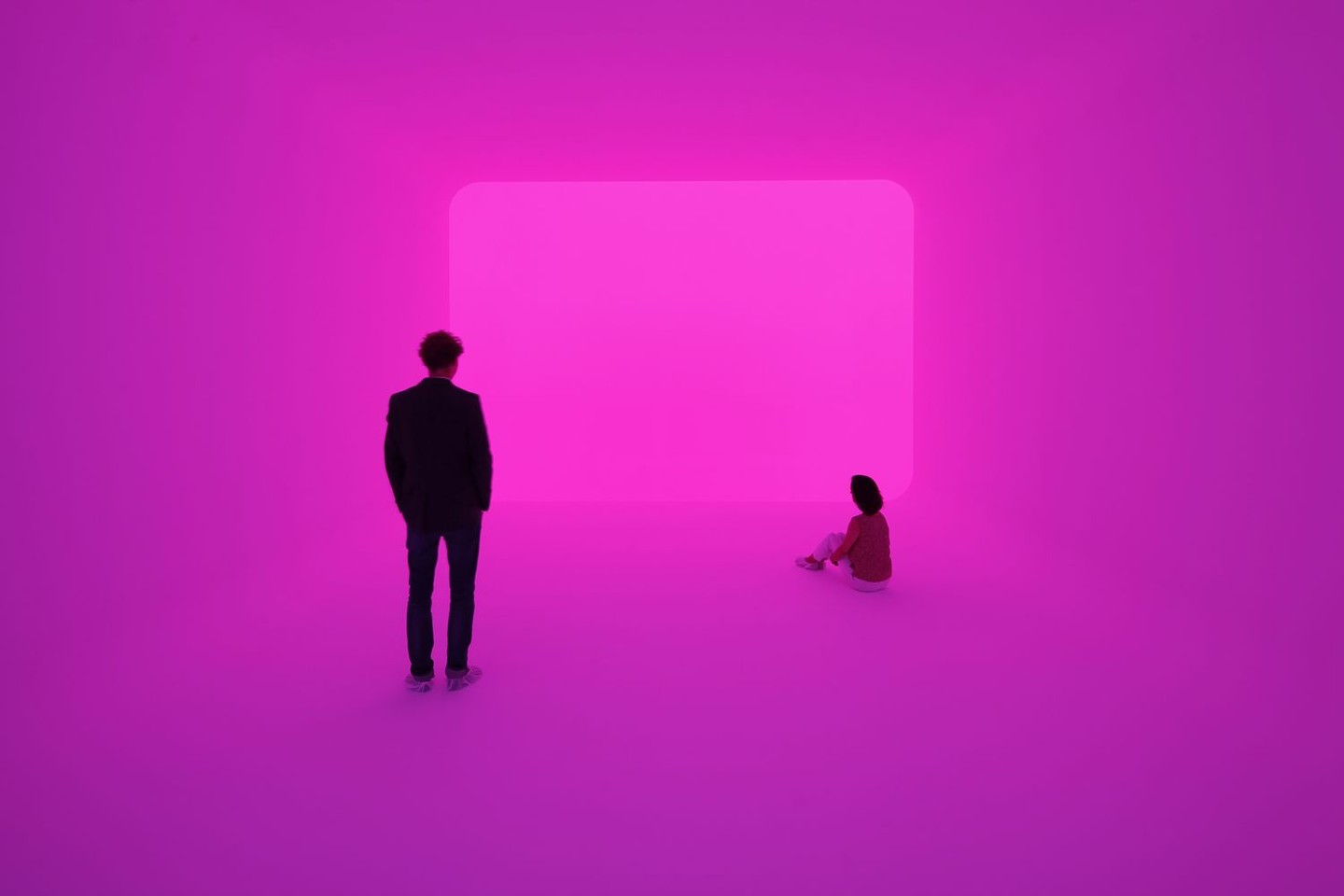
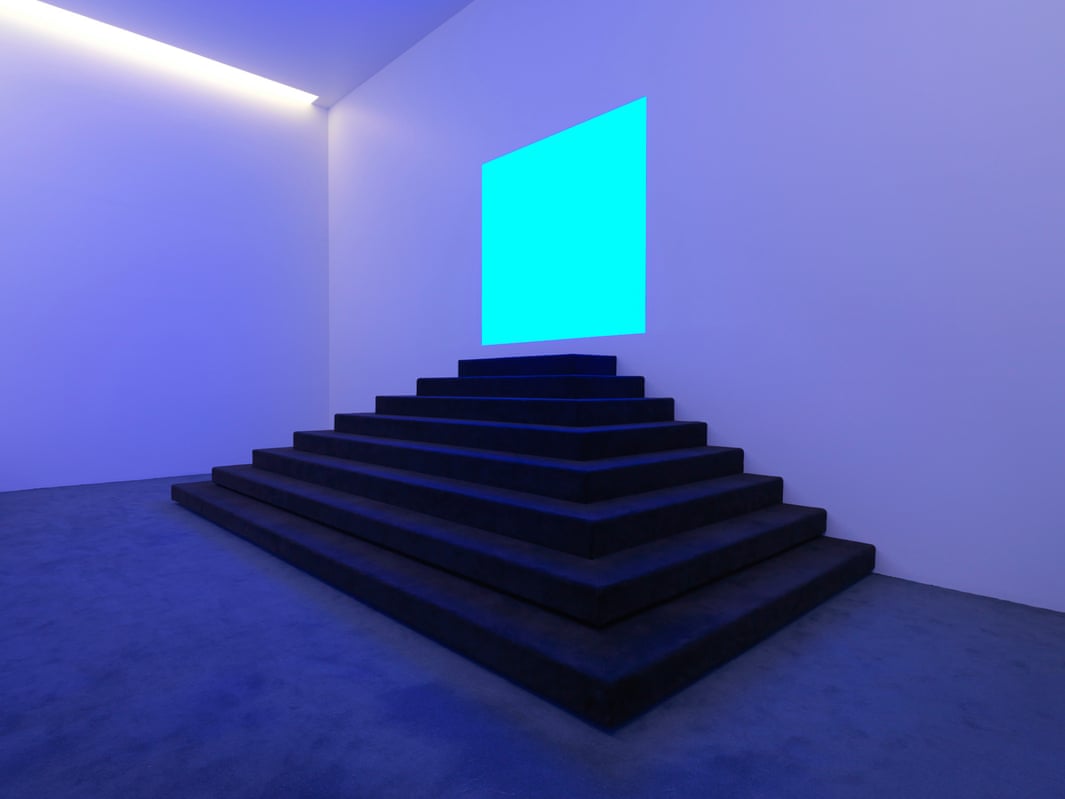
James Turrell (born May 6, 1943) is an American artist primarily concerned with Light and Space. Turrell was a MacArthur Fellow in 1984. Turrell is best known for his work in progress, Roden Crater, a natural cinder cone crater located outside Flagstaff, Arizona that he is turning into a massive naked-eye observatory.

Access to Roden Crater is limited to friends, though devoted fans can gain access by completing the "Turrell Tour", which involves seeing a Turrell in 23 countries worldwide. During May 2015, Roden Crater was open to a select group of 80 people, as part of a fund raiser, by allowing visits of 20 people per day during the course of four days, at a cost of $6,500 per person. As Roden Crater has been long shrouded in secrecy, fans have attempted to sneak in without the artist's permission. Some have succeeded.

In the 1970s, Turrell began his series of "skyspaces" enclosed spaces open to the sky through an aperture in the roof. A Skyspace is an enclosed room large enough for roughly 15 people. Inside, the viewers sit on benches along the edge to view the sky through an opening in the roof.

From Wikipedia:

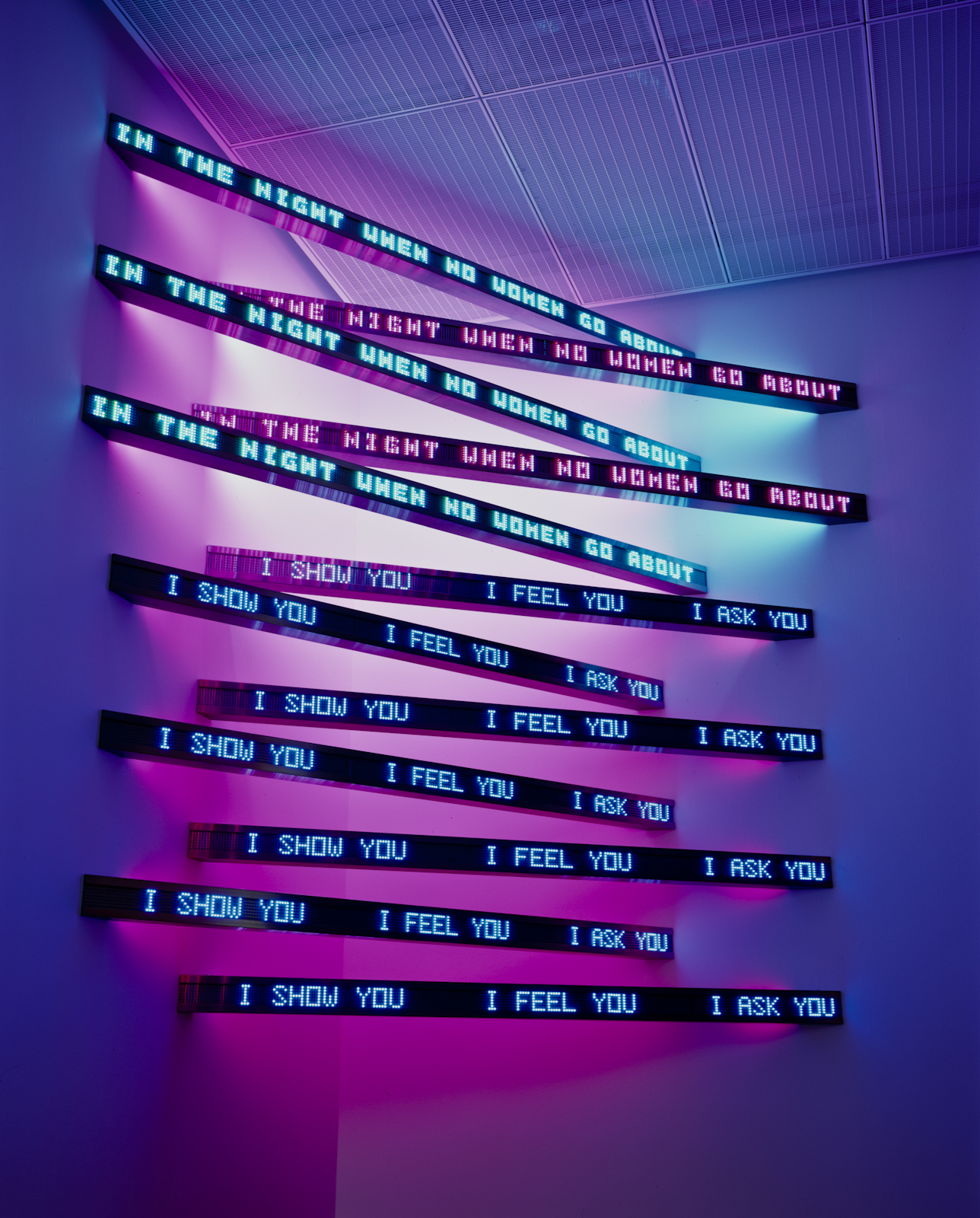
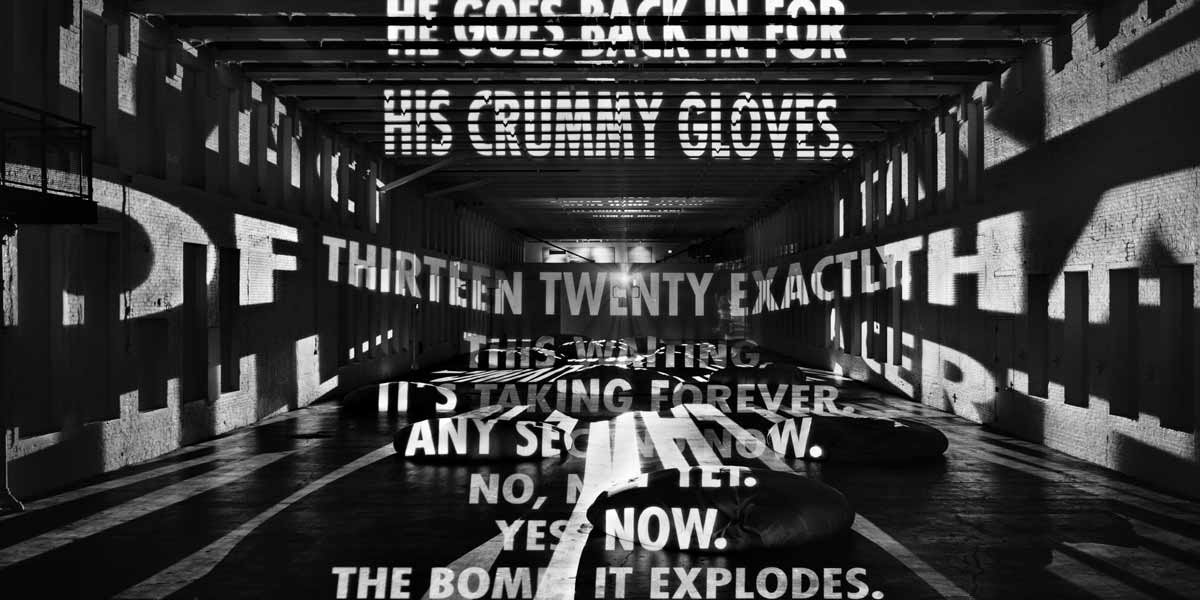
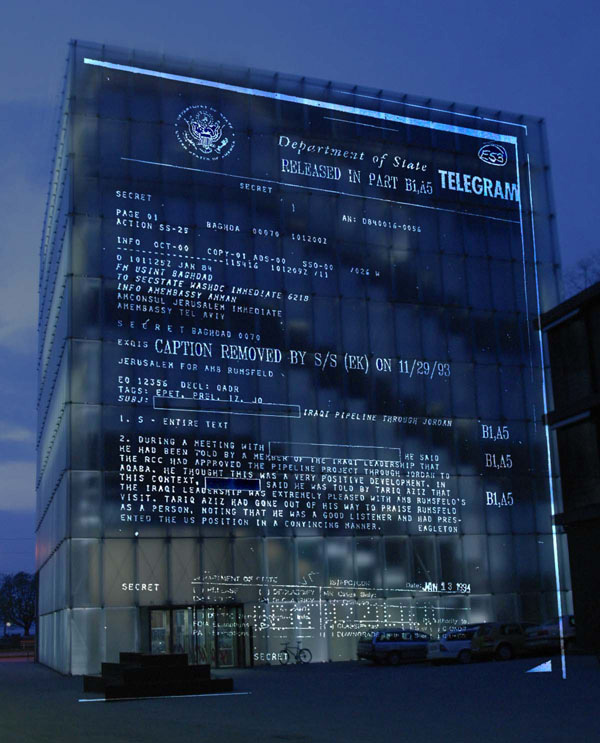
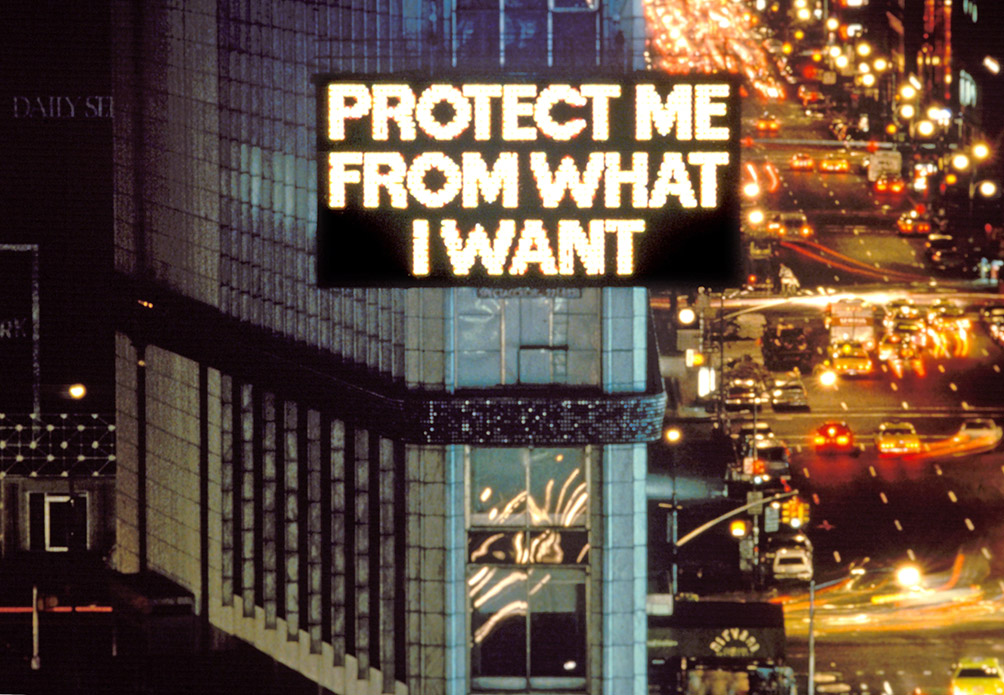
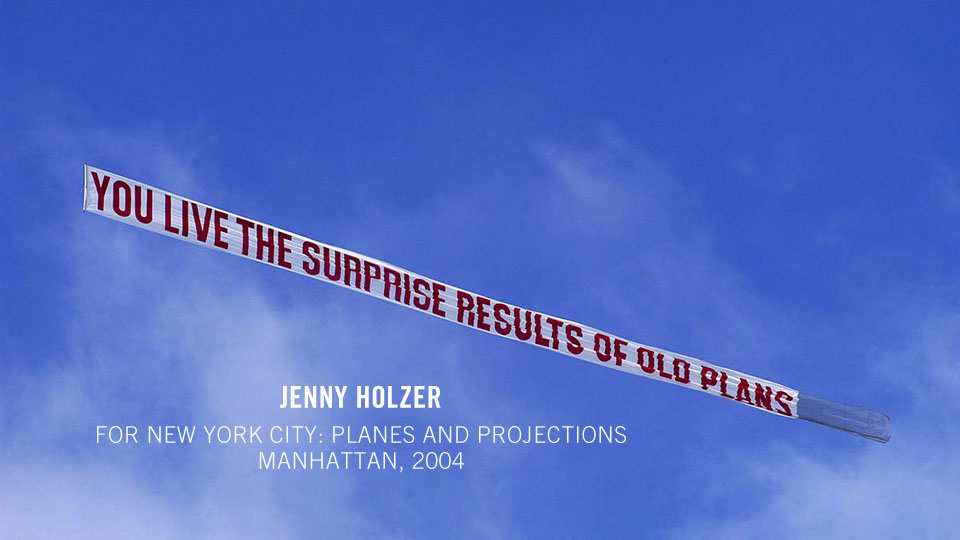
Jenny Holzer (born July 29, 1950, Gallipolis, Ohio) is an American neo-conceptual artist, based in Hoosick Falls, New York. The main focus of her work is the delivery of words and ideas in public spaces.

Holzer belongs to the feminist branch of a generation of artists that emerged around 1980, looking for new ways to make narrative or commentary an implicit part of visual objects. Her contemporaries include Barbara Kruger, Cindy Sherman, Sarah Charlesworth, and Louise Lawler.

The public dimension is integral to Holzer's work. Her large-scale installations have included advertising billboards, projections on buildings and other architectural structures, and illuminated electronic displays. LED signs have become her most visible medium, although her diverse practice incorporates a wide array of media including street posters, painted signs, stone benches, paintings, photographs, sound, video, projections, the Internet, and a race car for BMW. Text-based light projections have been central to Holzer’s practice since 1996. As of 2010, her LED signs have become more sculptural. Holzer is no longer the author of her texts, and in the ensuing years, she returned to her roots by painting.

From Wikipedia:

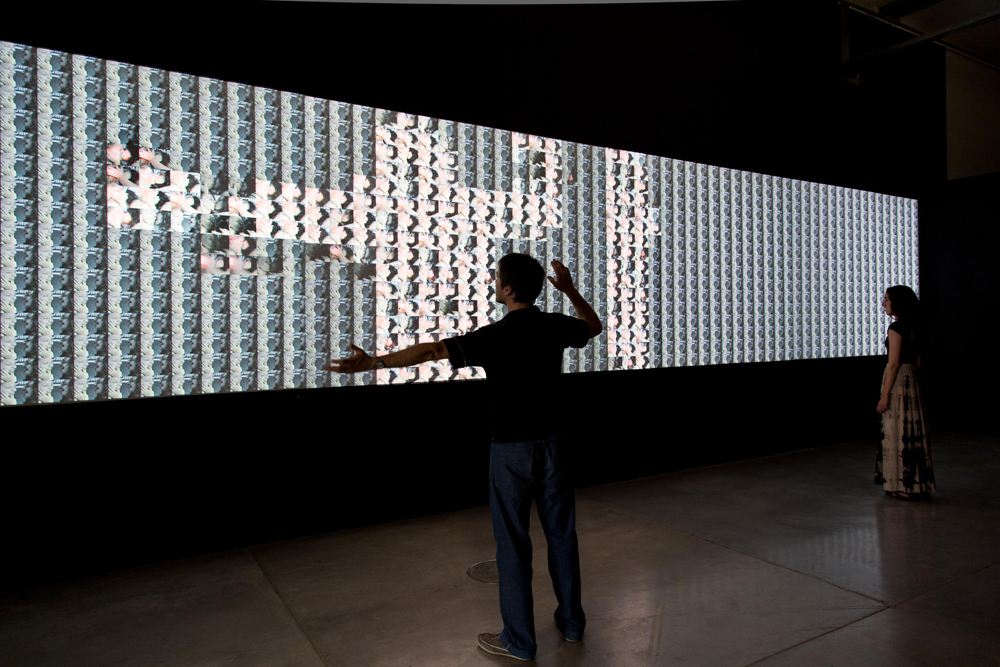
Lozano-Hemmer is best known for creating and presenting theatrical interactive installations in public spaces across Europe, Asia and America. Using robotics, real-time computer graphics, film projections, positional sound, internet links, cell phone interfaces, video and ultrasonic sensors, LED screens and other devices, his installations seek to interrupt the increasingly homogenized urban condition by providing critical platforms for participation. Lozano-Hemmer’s smaller-scaled sculptural and video installations explore themes of perception, deception and surveillance. As an outgrowth of these various large scale and performance-based projects Lozano-Hemmer documents the works in photography editions that are also exhibited.

From Wikipedia:

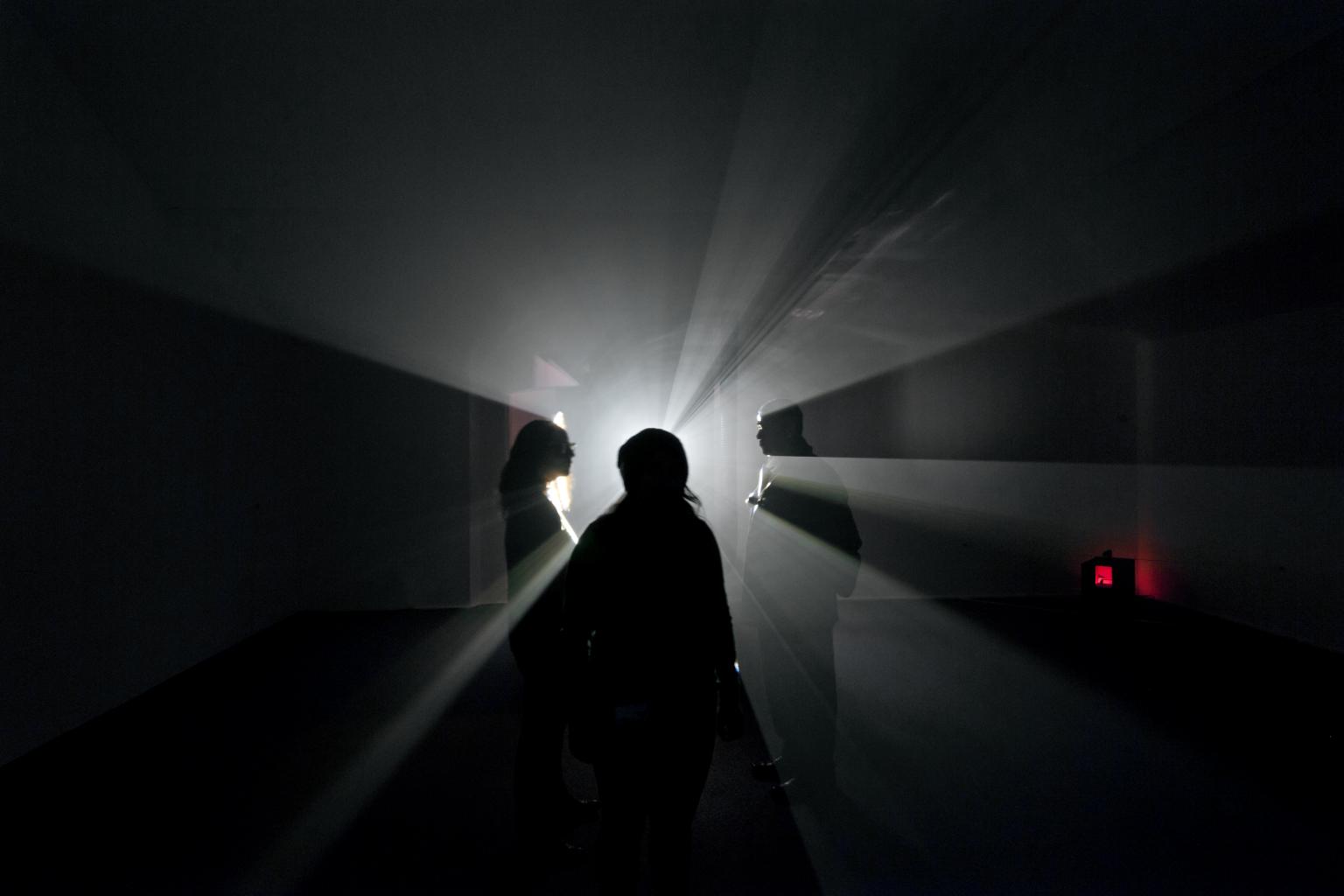
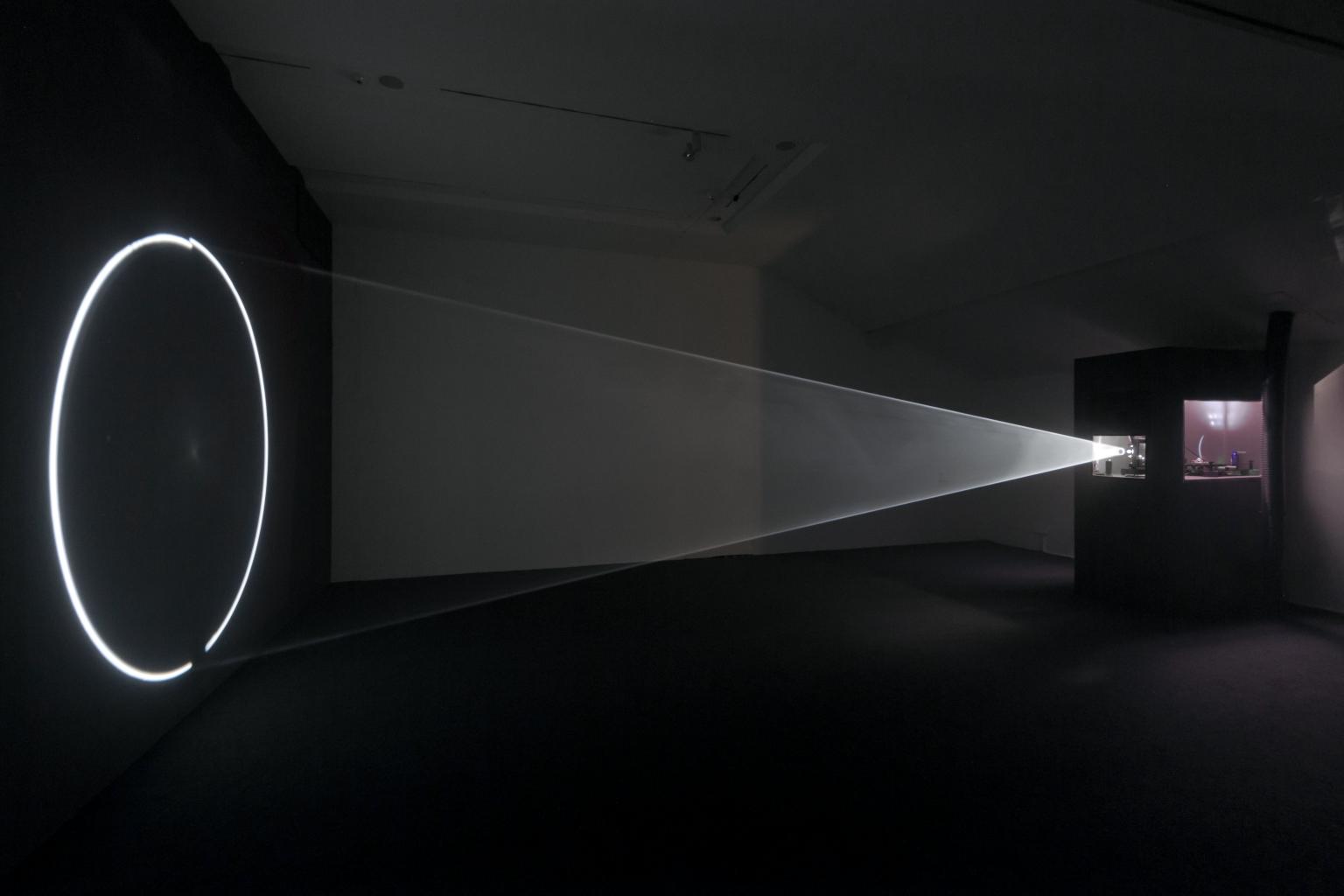
The idea for Line Describing a Cone came to McCall on his voyage from London to New York, where he produced the film in 1973. Though he had already created a number of other 16mm films, Line allowed him to actualize his ideas on the relationship between viewer and film and the medium of film itself. The thirty-minute film begins with a single white dot projected onto a black surface. As time progresses, the dot begins to form a curved line, tracing the circumference of a circle until the end of the line reaches its starting point. Meanwhile, particles in the air reveal the path of light in the space between the projector and the wall, making visible a cone of light. If the artist's display specifications are met, this beam of light projects between thirty and fifty feet. The circle that is projected onto the surface sits approximately twelve inches above the ground, and its diameter spans seven to nine feet. The exhibition space lacks seating, inviting the viewer to interact with the ray of light beaming from the projector to the screen. When multiple spectators view the piece together, these encounters with the light, at once an interruption and component of the piece, become an interaction with other audience members.

Line Describing a Cone reflects McCall's interests in film and sculpture. Line addresses the medium of film by removing the narrative demands and addressing the specific properties of the medium itself such as projection, frames, and light. Moreover, by emphasizing the physical space between the projector and screen McCall calls attention to the sculptural dimensions of projection. In his artists's statement written to judges of the Fifth International Experimental Film Competition, McCall writes:

"It deals with the projected light beam itself, rather than treating the light beam as a mere carrier of coded information, which is decoded when it strikes a flat surface… Line Describing a Cone deals with one of the irreducible, necessary conditions of film: projected light. It deals with this phenomenon directly, independently of any other consideration. It is the first film to exist in real, three-dimensional space."