foundyou.online - Directory for New Media Art
Open Filters
Rewire
https://www.youtube-nocookie.com/embed/BFnaohzbktA

Rewire Festival is an annual international festival for adventurous music, held since 2011 in The Hague, Netherlands. The festival presents a broad program with a focus on contemporary electronic music, neo-classical, new jazz, experimental pop, sound art and multidisciplinary collaborations. It has featured artists such as Laurie Anderson, James Holden, Godspeed You! Black Emperor, Ricardo Villalobos, Arca & Jesse Kanda, Nils Frahm, Animal Collective, Nina Kraviz, and The Field (the band). Venues differ from churches, old factories and abandoned spaces to the more institutional theatres and pop venues. According to Resident Advisor "[The festival] prides itself on musical diversity first and foremost."[1]

Phase Space is a DIY makerspace, multimedia art studio, and experimental collective based in Brooklyn, NY.

We are dedicated to the exploration of video, sound, performance, creative coding, math + science, and interdisciplinary art practices.[1]

References:1. https://phasespace.nyc/about2. Phase Space Archive [Phase Shift]3. Phase Space Archive [Phase Shift]

National Sawdust’s mission is rooted in music discovery that is open, inclusive, and based in active mentorship of emerging artists, while building new audiences and communities of music devotees.[1]

National Sawdust engages artists in an ecosystem of incubation to dissemination, programming groundbreaking new music in our state-of-the-art Williamsburg venue, and developing and touring new, collaborative music-driven projects — the National Sawdust DNA produces and presents world-class artistic work which embraces a wide stylistic approach to music. [1]

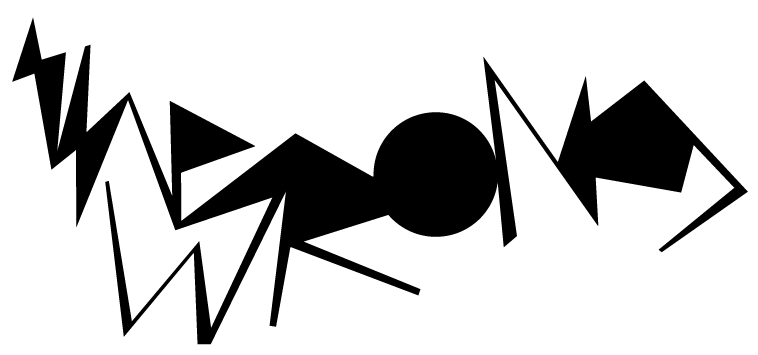
From https://thewrong.org/about:

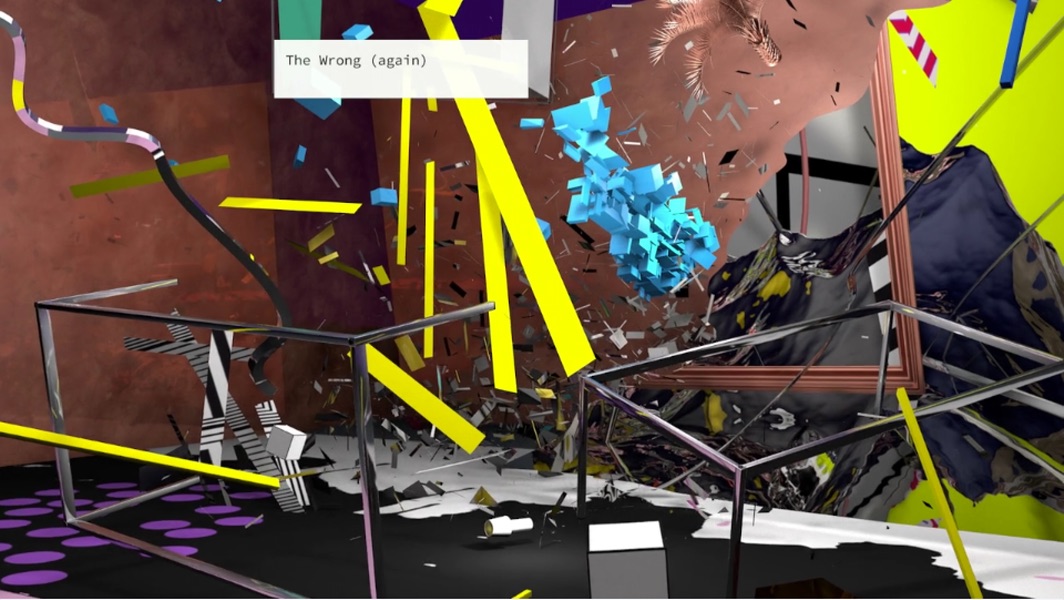
the wrong was born in 2o13 as a collaborative effort to create and promote digital art & culture, launching a global art biennale open to participation, happening both online & offline

“counting its viewership in the millions, the wrong just might be the world’s largest art biennale — the digital world’s answer to venice” - the new york times

since 2o13, more than 55oo artists and curators have officially participated in the wrong biennale

in march 2o2o, following the end of the 4th edition & in the midst of the covid19 pandemic outbreak

the wrong announces its next biennale editions for november 1st, 2o21, november 1st, 2o23 and november 1st, 2o25

and adds two complementary strains:

the wrong website new daily feed of contemporary digital art & culture links

the wrong tv new online tv platform for digital art, music & culture. 24/7 free live streaming

in april 2o2o, aware of the unavoidable digital migration of degree shows for the upcoming 2o2o class of art students around the world, the wrong introduces

the wrong degree show an annual online exhibition, open to participation, to showcase degree shows by graduating art students of schools and universities around the world

The Link Art Center is a curatorial platform promoting contemporary artistic research and critical reflections on the core issues of the information age: it organizes events, publishes books, collaborates and networks with individuals, groups, companies, institutions on a local and international level.[1]

Founded on March 9, 2011 as “Link Center for the Arts of Information Age” by Fabio Paris, Lucio Chiappa and Domenico Quaranta, joined by Matteo Cremonesi in 2014, the Link Art Center acted as a curatorial platform focused on the promotion of contemporary artistic research and critical reflections on the core issues of the information age, through the organization of events, editorial activity, collaboration and networking with individuals, groups, companies and institutions on a local and international level.[2]

Link Cabinet was a single web page hosting solo shows where artists exhibited a single, site-specific artwork. A project by Matteo Cremonesi for the Link Art Center (2014 - 2019) [3]

A publishing initiative of the Link Art Center, Link Editions uses the print on demand (POD) approach, which allows to reduce production costs and environmental impact of publishing to the minimum, and to circulate editorial products online. Edited by Domenico Quaranta, from 2011 to 2018 Link Editions published fifty books.[1]

Link Editions is a publishing initiative of the LINK Center for the Arts of the Information Age. LINK Editions uses the print on demand approach to create an accessible, dynamic series of essays, pamphlets, catalogues and artist books. A keen advocate of the idea that information wants to be free, Link Editions releases its contents free of charge in .pdf format, and on paper at a price accessible to all. Link Editions is a not-for-profit initiative and all its contents are circulated under a Creative Commons license.[4]
Société is an exhibition platform founded in 2015 and situated the former electricity factory “Société Bruxelloise d’Électricité” built in the 1930s in the Tour and Taxi neighborhood. It is initiated, directed and curated by the artist couple Manuel Abendroth and Els Vermang, of the artis trio LAb[au].[1]

As an artist run space, Société pursuits a non-commercial activity, promoting a dialogue between artists on current artistic issues. Through two thematic exhibitions a year, they explore the field of contemporary artistic research while taking into account new forms of artistic expression and new technologies which support them. Their exhibitions contextualize these reflections in an artistic continuity, connecting different generations of artists while also promoting the Belgian scene.[1]

References:1. https://www.societe-d-electricite.com/general-information2. SOCIÉTÉ [Société d'Électricité]

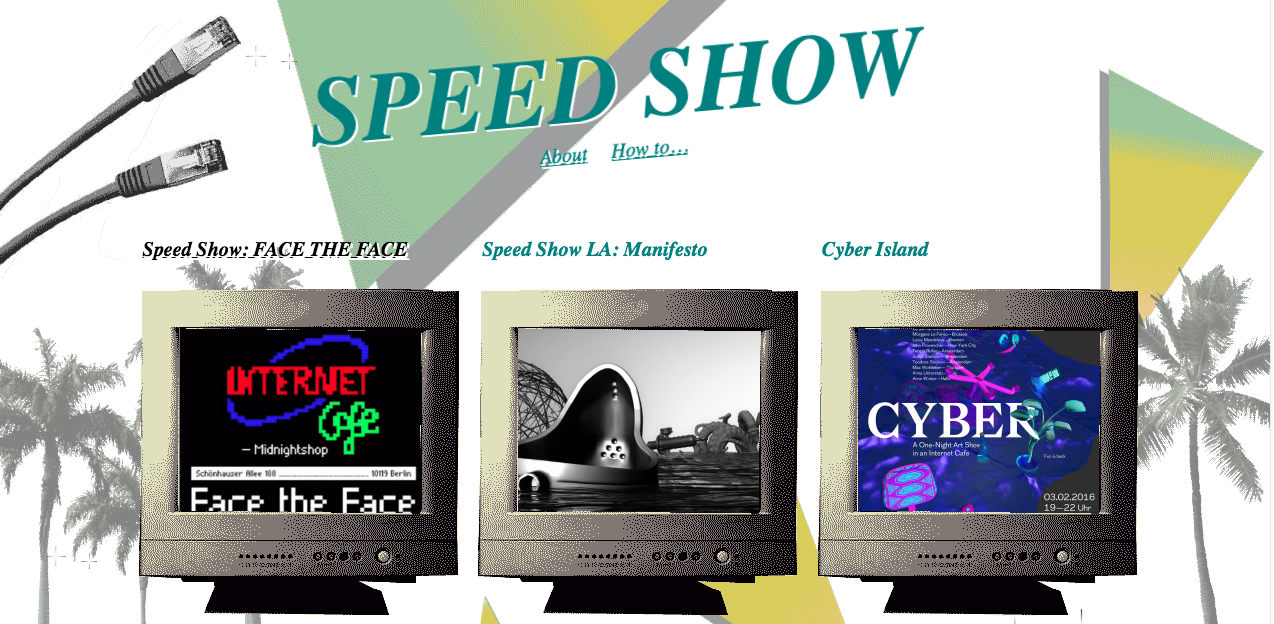
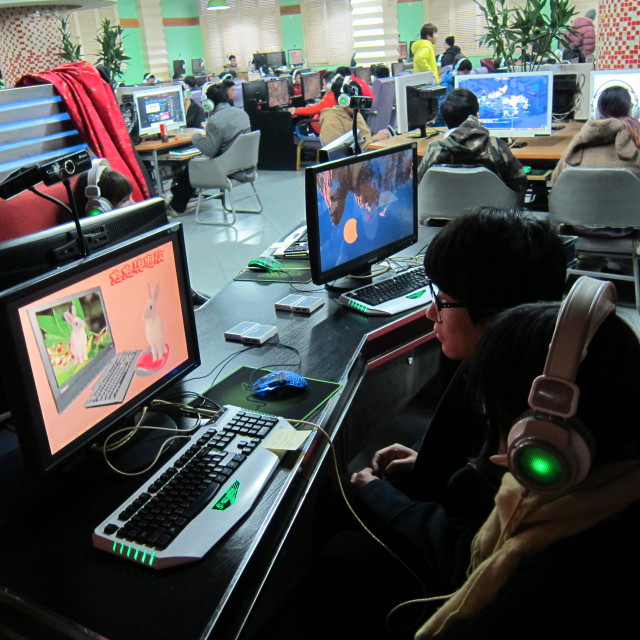
The SPEED SHOW exhibition series was conceived by the artist Aram Bartholl in June 2010. The basic idea of this exhibition format is to create a gallery like opening situation for browser based internet art in a public cyber-cafe or internet-shop for one night. The exhibition format is free and can be applied by anyone at any place. (See how to instructions)[1]

The SPEED SHOW exhibition format:

Hit an Internet-cafe, rent all computers they have and run a show on them for one night. All art works of the participating artists need to be online (not necessarily public) and are shown in a typical browser with standard plug-ins. Performance and live pieces may also use pre-installed communication programs (instant messaging, VOIP, video chat, etc). Custom software (except browser add-ons) or offline files are not permitted. Any creative physical modification to the Internet cafe itself is not allowed. The show is public and takes place during normal opening hours of the Internet cafe/shop. All visitors are welcome to join the opening, enjoy the art (and to check their email).[1]

References:1. http://speedshow.net/about/2. SPEED SHOW vol.1 – TELE-INTERNET [Aram Bartholl]3. SPEED SHOW [speedshow.net]
No FunExhibition view, Carroll/Fletcher, London
https://player.vimeo.com/video/11467722

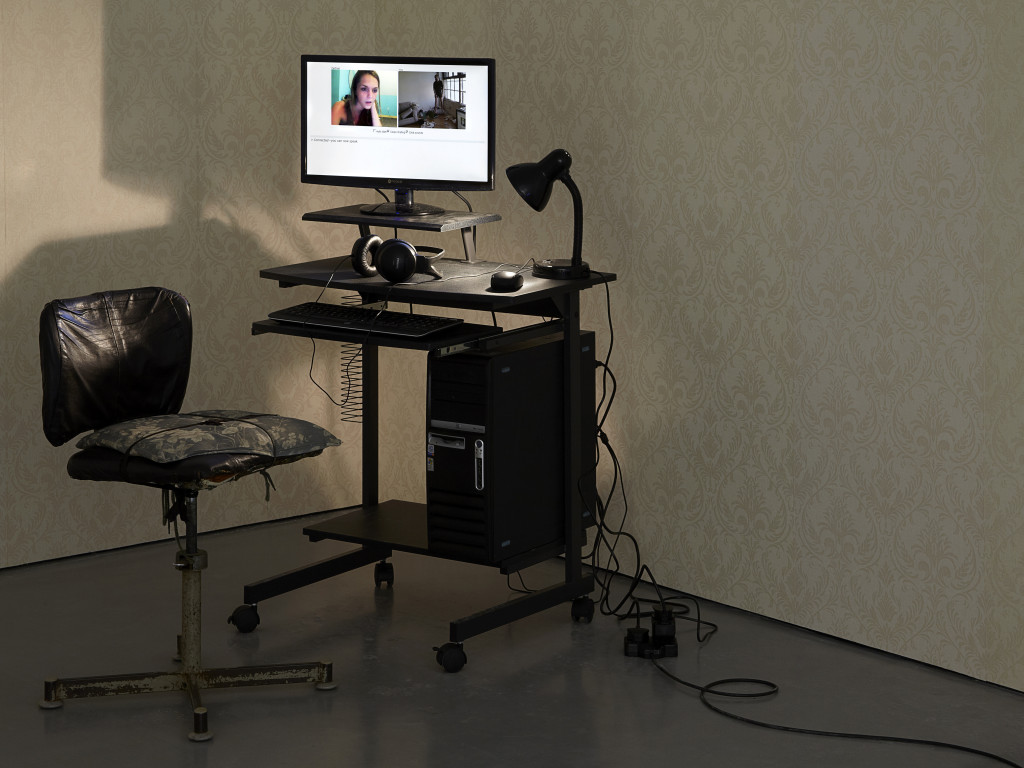
No Fun is the video of an online performance in which we simulated a suicide and filmed viewers’ reactions. It is staged on a popular website that pairs random people from around the world for webcam-based conversations. Thousands watched him hanging from the ceiling, swinging slowly for hours, without being able to know whether it was reality or fiction. They unwittingly became the subject of the work. [1]

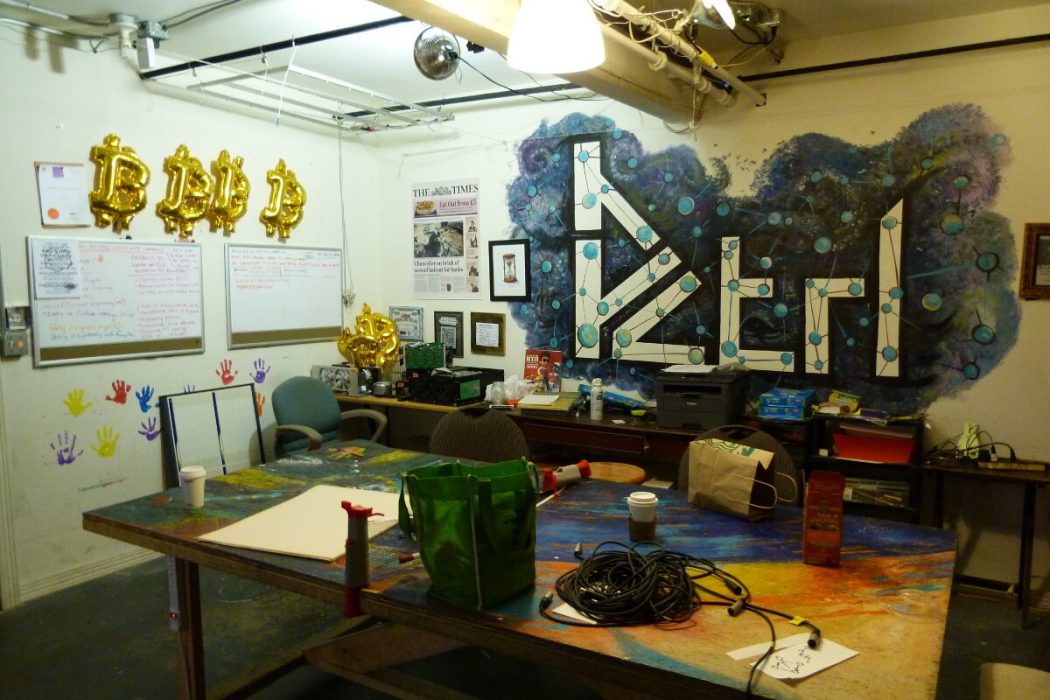
Named DCTRL–pronounced “decontrol”–the location is a radical, artist-run basement that has acted as the crucible for the majority of the city’s blockchain companies. Local hacktivists debate ideas in a central room with well-worn, movable couches; congregate in a small jam space with a free-for-use keyboard and rudimentary soundproofing; and sit quietly in a separate, disorderly area earmarked for coding. The walls are covered with haphazard meme-related murals, and the washroom is marked with a sign that reads “cemetery.”[1]

The space, newcomers are told, is a do-ocracy: an organizational structure that lets individuals choose their own tasks independently. It’s part of the location’s aim to translate blockchain’s ideology of decentralization into the lives of its visitors. It’s also one of the reasons that Vancouver’s blockchain community is unique.[1]

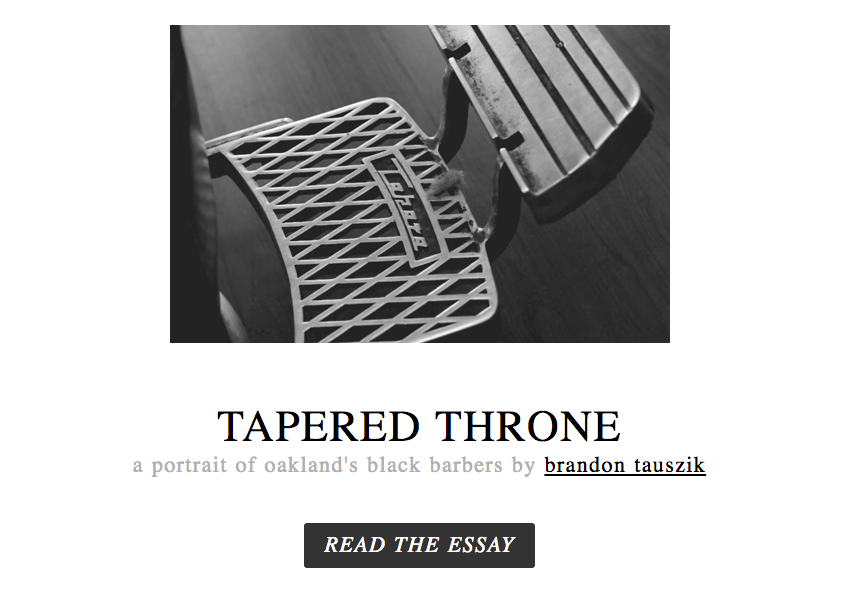
Brandon Tauszik’s GIF images of black barbers in Oakland, California reveal the resolve of a group of ardent professionals. The project illuminates the position of barbers as conduits of black communities; of Oakland. Behind these portraits are the aspirations of men who are not just making a living, but who see the value of their labors in the development of black community life. Like the GIF images themselves, these men and their shops are not static. Even as they stand behind their barber’s chair with arms propped up clutching the clippers, they are constantly in motion and in tune with the comings and goings of the people in their city.[1]

References:1. http://taperedthrone.com/2. Tapered Throne [Brandon Tauszik (taperedthrone.com)]